

One payment brand is surging across American search boxes right now: Apple Pay. Search interest is up triple digits, the trend is still active, and it is not hard to see why. Apple Pay is having its biggest news week of 2026. The iOS 27 update released on September 14 gave the Apple Pay checkout its most significant redesign in years. Fresh reporting says the service is about to launch in India — one of the last major economies where it was unavailable — starting with credit cards from Axis Bank. And Apple is reportedly building out a team to explore stablecoin and digital-asset integration into Apple Pay, with peer-to-peer payments and merchant settlements on the roadmap.
Here is the part most marketers are still missing: Apple Pay is no longer just a payment button. It is a marketing channel. The wallet sits at the exact moment a customer decides to buy, it follows them into the store on their wrist and in their pocket, and it can carry your loyalty program, your coupons, and your brand long after the receipt prints. Apple Pay marketing is the discipline of treating that moment as media — and the brands doing it well are quietly adding double-digit percentage points to their conversion rates.
The numbers make the case on their own. Stripe ran a large controlled experiment across its checkout products, testing more than 50 payment methods on a base processing $1.4 trillion a year, and merchants who offered Apple Pay saw conversion rise 22.3% and revenue rise 22.5% versus merchants who did not. Surfacing Apple Pay through an express checkout element early in the flow — instead of hiding it at the end — produced roughly double the conversion lift. Worldpay data puts digital wallets at 53% of global ecommerce transaction value, with 69% of US adults having used a digital wallet in the past year. And PYMNTS found that 31% of consumers used a mobile wallet in a store in the previous seven days, up from just 14% less than two years earlier.
This guide breaks down eight Apple Pay marketing strategies that turn tap-to-pay into a growth engine — from checkout design to wallet passes to the iOS 27 changes you need to know about this month.
Strategy 1: Lead your checkout with express payment, not card forms
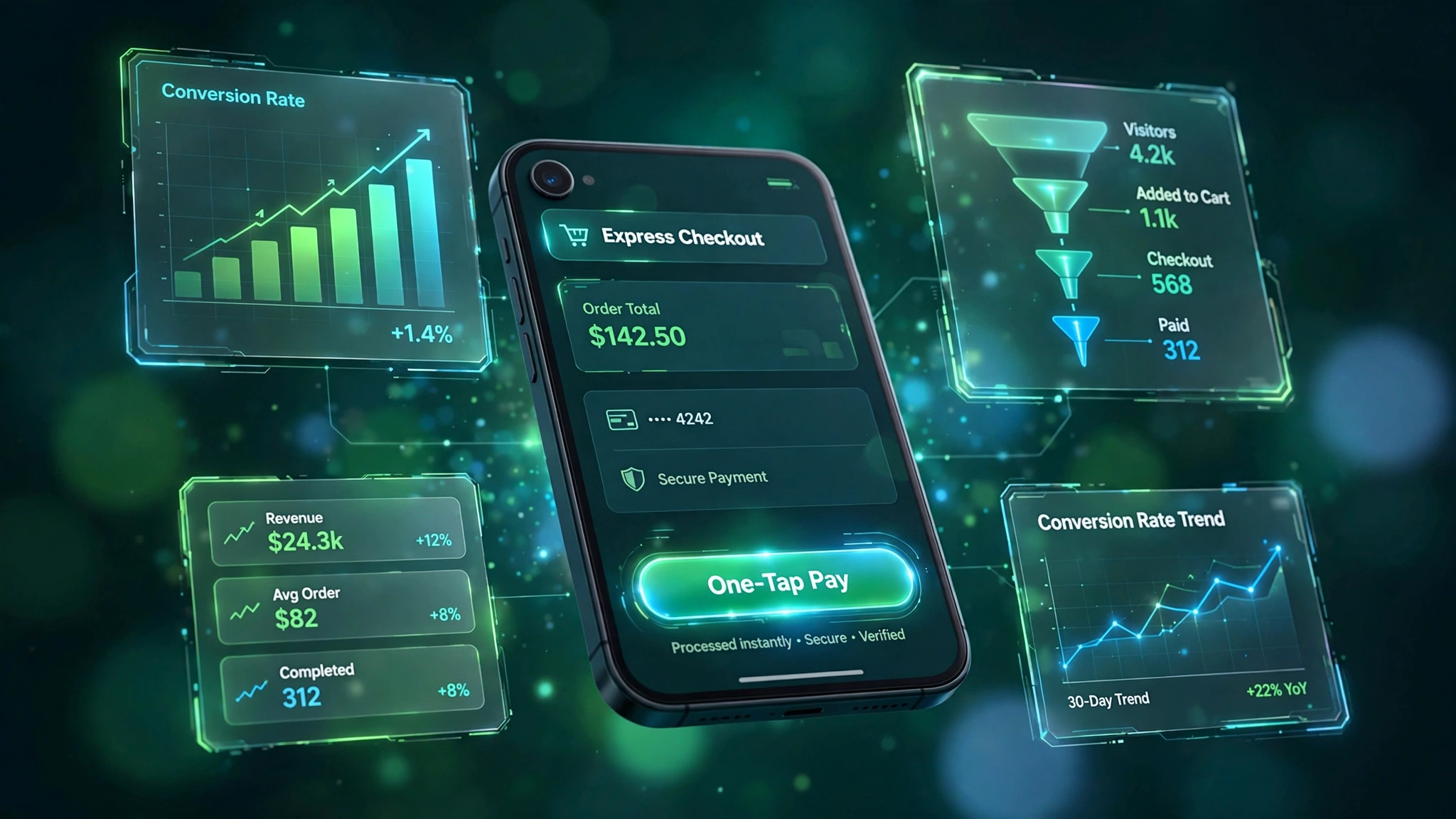
The single highest-ROI move in Apple Pay marketing costs almost nothing: move the wallet buttons to the front of your checkout. Every extra form field between a shopper and the buy button is a place where intent dies, and manual card entry on a phone keyboard is the worst offender. Apple Pay replaces the entire gauntlet — card number, expiry, billing address, shipping address — with one biometric tap.
The data behind this is unusually strong for a checkout tactic. Stripe’s published test results showed merchants offering Apple Pay gaining 22.3% in conversion and 22.5% in revenue compared with merchants who did not offer it. But placement turned out to matter almost as much as presence: when Apple Pay was surfaced through an express checkout element at the start of the flow rather than at the end, the conversion lift roughly doubled. One ecommerce best-practices roundup from this year documented a fashion retailer whose mobile conversion jumped 24% immediately after adding Apple Pay, Google Pay, and Shop Pay — a textbook Apple Pay marketing win. The store had solid mobile traffic but only offered manual credit-card entry before.
The Apple Pay marketing playbook here is specific. On iOS devices, show Apple Pay first; on Android, lead with Google Pay. Place the express buttons above your standard checkout form, never below it and never buried behind a “more payment options” disclosure. On Shopify this is a toggle under payment settings; on WooCommerce it comes through Stripe’s gateway plugin. Then test the variables that matter: button ordering, above-the-fold versus below-the-fold placement, and whether showing every wallet or only the device-relevant one performs better for your audience. Small changes here produce outsized Apple Pay marketing returns because they touch every single transaction.
Think of it this way: your most expensive traffic — the paid clicks, the hard-won organic visits — all converges on the checkout. Apple Pay marketing starts by refusing to let a clumsy card form waste it.
Strategy 2: Redesign your checkout thinking for the iOS 27 Apple Pay sheet
With iOS 27, Apple rebuilt the Apple Pay checkout screen — the sheet shoppers see in apps and on the web — and reviewers are calling it the service’s best upgrade in years. Two long-standing flaws got fixed. First, switching cards is finally intuitive: additional cards now appear on either side of the default card, so shoppers can simply swipe between them instead of hunting through a hidden menu. Second, the sheet shows more information at once, using colorful icons to mark the shipping method, shipping address, billing address, and totals so everything is parseable at a glance.
Why does a design refresh matter for Apple Pay marketing? Because trust at the moment of payment is fragile, and the new sheet raises the bar for what “clear” looks like. If your checkout passes a messy order summary to Apple Pay — vague shipping lines, totals that do not match what the shopper saw on your site, promo discounts that vanish in the sheet — the contrast with the polished new interface will make your store look broken by comparison. Shoppers double-click to pay with confidence when the sheet confirms exactly what they expected.
Audit your Apple Pay sheet the way a mystery shopper would. Place a test order and screenshot every field: product names, quantities, shipping method and cost, tax, discounts, and the final total. Make sure each line matches your site’s cart exactly. If you offer multiple shipping speeds, verify the selected method is labeled clearly in the sheet, since the iOS 27 icons draw the eye to exactly that detail. And confirm your rewards balances, pay-later options, and stored funds surface correctly where your processor supports them — the new sheet is designed to display them, and shoppers will notice their absence. Treat this audit as recurring Apple Pay marketing hygiene: re-run it after every iOS update and every checkout change.
This is the unglamorous side of Apple Pay marketing: the wallet is only as trustworthy as the data you feed it. Get the sheet right and the payment feels instant and safe; get it wrong and you have built a beautiful express lane to an abandoned cart.
Strategy 3: Turn Apple Wallet into a marketing surface with passes
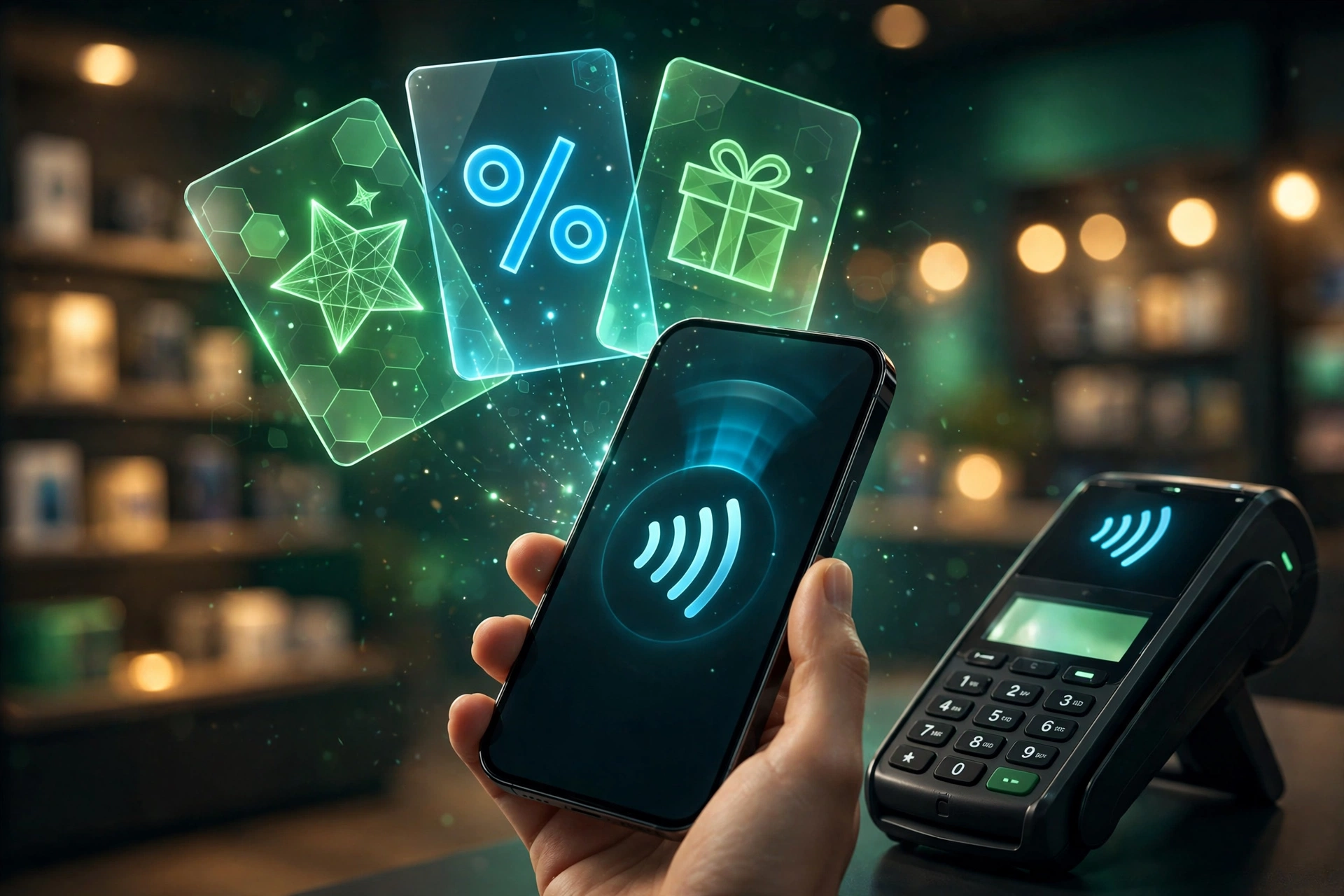
Apple Pay gets the attention, but the sleeper asset in Apple Pay marketing is Apple Wallet itself. Wallet passes — loyalty cards, coupons, event tickets, boarding-style order cards — live on the lock screen, update in real time, and can trigger location-based notifications when a customer walks near your store. That is a push-notification channel you do not have to pay Apple or Meta to access, sitting on hardware your customer already carries.
The mechanics are straightforward for brands. A loyalty pass in Apple Wallet shows the customer’s points balance and tier, updating automatically after each purchase. A coupon pass puts a scannable offer one swipe from the lock screen instead of buried in an email inbox. An event or appointment pass carries the date, time, and a reminder. Because passes update dynamically, a “20% off this weekend” message can appear on the pass itself — no app install required, no email open needed.
The Apple Pay marketing angle is retention economics. Acquiring a customer is expensive; keeping one is cheap, and wallet passes keep your brand one gesture away at the exact moments that drive repeat purchases. Coffee chains and airlines figured this out years ago — your boarding pass and your coffee loyalty card both live in Wallet for a reason. Ecommerce brands are now catching up: order-status passes that update from “shipped” to “out for delivery” keep your brand on the lock screen through the most anticipation-heavy days of the customer relationship, and a well-timed points-balance update is a nudge to come back and spend.
Start with one pass type tied to your highest-value repeat behavior — loyalty points for a consumable brand, appointment reminders for a services business, VIP early-access passes for a fashion label. Measure redemption and repeat-purchase rate against your email benchmarks. Most brands find the wallet pass outperforms email on visibility even when the list is a tenth the size, because the lock screen is the most valuable real estate in mobile and almost nobody is advertising on it yet — making passes one of the highest-leverage Apple Pay marketing assets you can build.
Strategy 4: Win the in-store tap-to-pay shopper
Apple Pay marketing is not only an ecommerce game. The in-store numbers are moving fast: PYMNTS research found 31% of consumers used a mobile wallet in a store in the previous seven days, more than double the share from under two years earlier, with Apple Pay holding the in-store lead at 15.9%. Wallets are becoming a mainstream habit, not an early-adopter quirk — and the checkout counter is now a marketing moment.
The first step is table stakes: accept contactless payments and say so. In-store signage with the Apple Pay mark at the register and on the door removes the last hesitation for wallet-first shoppers, and staff who can answer “do you take Apple Pay?” with an instant yes keep the line moving. It sounds basic, but plenty of retailers still accept tap-to-pay without advertising it — leaving wallet users to fumble for a physical card they would rather not carry. That is Apple Pay marketing at the physical point of sale: remove doubt, keep the line moving.
The sharper Apple Pay marketing play is connecting the tap to your data. When a customer pays with a wallet pass-linked loyalty card, you can tie the in-store purchase to their profile without a separate loyalty scan — one tap pays and earns points simultaneously. That closes the loop between your online ads and offline revenue: the customer who clicked your Instagram ad on Tuesday and tapped to pay on Saturday becomes one measurable journey instead of two disconnected events. For multi-location brands, that attribution is worth more than the transaction itself.
Finally, think about the moment after the tap. A digital receipt delivered to Wallet — rather than a paper slip destined for the trash — can carry a review request, a referral code, or a “your points balance is now X” update. The customer just paid; they are holding their phone; their satisfaction is at its peak. Few marketing surfaces get a better audience than that, and Apple Pay marketing puts your brand there for free.
Strategy 5: Use pay-later messaging to lift average order value
The iOS 27 Apple Pay sheet surfaces pay-later and installment options more prominently at checkout — and that is a merchandising opportunity, not just a payments feature. When shoppers see “4 payments of $37.50” instead of “$150 due today,” price friction drops, carts get bigger, and the customers who were going to buy one item start considering two.
The Apple Pay marketing move is to merchandise the installment option the way you would a sale. Do not leave it as fine print in the payment sheet. Test product-page badges like “or 4 interest-free payments with Apple Pay” near the price, especially on products above your average order value. In cart-abandonment emails, remind hesitant shoppers that the installment option exists — a meaningful share of abandonment is sticker shock, and reframing the price into smaller pieces directly addresses it. For higher-ticket categories like furniture, electronics, and premium fashion, installment messaging can be the difference between a browse and a buy.
A few cautions keep this responsible. Only promote installments where your processor and the customer’s card actually support them, and keep the total cost identical — the iOS 27 sheet makes the terms visible, so any mismatch between your product page and the sheet will erode trust instantly. Frame installments as flexibility, never as a reason to overspend; the brands that treat pay-later as a customer-friendly option rather than a debt trap keep both their conversion lift and their reputation. That discipline is what separates durable Apple Pay marketing from short-term conversion hacking.
Done right, this is Apple Pay marketing at its most direct: the wallet does not just close the sale faster, it makes the sale bigger.
Strategy 6: Ride the Apple Pay India launch wave
Here is the news driving this week’s search spike: after nearly twelve years, Apple Pay is reportedly about to launch in India — starting as soon as next month with Axis Bank credit cards, according to Bloomberg’s Mark Gurman, with HDFC Bank and ICICI Bank expected to follow. The initial rollout is card-based tap-to-pay, without support for India’s dominant UPI system at launch.
If you sell into India — or plan to — this is an Apple Pay marketing opening. India’s iPhone user base skews premium: these are exactly the high-intent, high-spending shoppers every brand wants, and they are about to get their first native one-tap checkout. The brands that enable Apple Pay on their Indian storefronts on day one will own the “it just works” moment while competitors scramble to catch up. Announce it, badge it on your India site, and run launch-week creative around the novelty — “now checkout in one tap” is a genuine differentiator in a market where it has never existed, and a first-mover Apple Pay marketing story worth telling.
There is a nuance worth respecting. UPI processed over 24 billion transactions in a single recent month — it is how India actually pays, from online carts to street vendors, and a card-only Apple Pay will not displace it for everyday purchases. The smart Apple Pay marketing play in India is positioning, not replacement: Apple Pay for your premium checkout experience and high-value orders, UPI alongside it for everything else. Offer both, order them by customer value, and let the shopper choose.
More broadly, the India launch is a reminder to audit your wallet coverage every time Apple enters a new market. Each expansion hands you a fresh cohort of wallet-native shoppers. The brands that treat each launch as a mini go-to-market — localized creative, launch messaging, checkout QA — compound a small edge every time. That is how Apple Pay marketing becomes a durable advantage rather than a one-time setup task.
Strategy 7: Get future-ready for stablecoin rails
The most forward-looking item in this week’s Apple Pay news: Apple is reportedly hiring a lead to explore integrating regulated stablecoins and digital assets into Apple Pay, covering peer-to-peer payments and merchant settlements. Details are thin — no timeline, no named stablecoins — but the direction is clear. The wallet is heading toward a world where the money moving through it is not always a card network transaction.
You do not need to accept crypto tomorrow. But Apple Pay marketing in 2026 means building a payment stack that can absorb what Apple ships next without a rebuild. Practically, that means three things. First, keep your payment architecture modular: a processor and gateway setup where new payment methods can be toggled on rather than re-engineered. Second, watch the fee economics — stablecoin settlement could eventually undercut card interchange on some transactions, and the first brands to route eligible volume through cheaper rails will bank the margin. Third, prepare your messaging: “pay your way” positioning ages well whether the new option is a stablecoin, a new wallet, or something unannounced. Build that flexibility now and your Apple Pay marketing stays ahead of the curve instead of scrambling to catch up.
There is also a brand angle. The merchants who were early on Apple Pay in 2014 looked modern for years on the strength of a single toggle. Payment-method leadership is a cheap form of innovation signaling: it tells customers you are current without requiring you to invent anything. When Apple eventually ships whatever comes next for the wallet, the Apple Pay marketing winners will be the brands whose checkout already says “yes” on day one — and whose launch email is already written.
Strategy 8: Measure wallet marketing like a revenue channel
The final Apple Pay marketing strategy is the one that makes the other seven accountable: instrument the wallet as a channel with its own P&L. Too many brands enable Apple Pay, watch overall conversion tick up, and never learn which part of the lift came from the wallet — which means they never optimize it. Without measurement, Apple Pay marketing is just hope with a logo.
Start by segmenting your analytics by payment method. What is the conversion rate of Apple Pay sessions versus card-entry sessions? What is the average order value for each? What is the repeat-purchase rate of customers whose first order used a wallet? Stripe’s published numbers give you a benchmark — a 22.3% conversion lift and 22.5% revenue lift for merchants offering Apple Pay — but your own segmented data tells you where your specific upside lives. If wallet users convert better but spend less per order, your opportunity is Strategy 5 (installment messaging). If they spend more but rarely return, your opportunity is Strategy 3 (wallet passes for retention).
Then run the tests. A/B test express-checkout-first versus form-first layouts. Test Apple Pay badge creative on product pages (“One-tap checkout available”) against a control. Test wallet-pass enrollment prompts at order confirmation — “add your loyalty card to Apple Wallet” — and measure 90-day repeat rates for enrolled versus non-enrolled customers. Each test is cheap, each one compounds, and together they turn Apple Pay marketing from a set of tactics into a managed growth channel with targets and owners.
One metric discipline matters more than the rest: attribute revenue to the wallet honestly. Wallets remove friction, which means they disproportionately capture customers who were already going to buy — the incrementality question is real. Holdout tests, where a slice of traffic does not see the express buttons, are the only honest way to measure true lift. The brands that do this math keep investing in Apple Pay marketing with confidence; the brands that do not eventually starve it of budget because they cannot prove it worked.
Apple Pay marketing mistakes to avoid
Even strong Apple Pay marketing programs stumble on the same handful of errors. A few failure patterns show up again and again. The most common: burying wallet buttons behind a “more payment options” link or at the very bottom of the checkout, which throws away most of the placement lift the data promises. Next is ignoring device context — showing Google Pay first to iPhone users, or Apple Pay to Android users who cannot use it, which just adds visual noise. Third is the sheet-mismatch problem from Strategy 2: totals, shipping, and discounts in the Apple Pay sheet that do not match the cart, which the iOS 27 redesign makes painfully obvious. Fourth is treating the wallet as payments-only and never building a pass, leaving the retention channel empty. And fifth is launching wallet support with no measurement plan, so nobody can say whether it worked.
None of these is hard to fix. Each one is a checklist item, a QA pass, or a single A/B test. The throughline of good Apple Pay marketing is respect for the moment: the customer has their thumb on the sensor and their intent at its peak. Everything you do should make that moment faster, clearer, and more rewarding — never slower, murkier, or more confusing.

The wallet wars are entering their next phase. Apple Pay just got its best checkout redesign in years, it is about to open a massive new market in India, and stablecoin rails are on the horizon. Digital wallets already drive more than half of global ecommerce transaction value, nearly a third of US consumers tapped one in a store this past week, and merchants offering Apple Pay are posting conversion lifts above twenty percent. The question for your brand is not whether the wallet matters — it is whether your Apple Pay marketing treats it as a growth channel or just a checkbox. If you want help turning Apple Pay and the full mobile-wallet stack into a measured revenue channel — express checkout design, wallet passes, loyalty integration, and the analytics to prove the lift — talk to the team at KKeyQik. We build checkout experiences that convert, and we would love to build yours. Learn more about our search engine optimization, paid advertising, and video marketing services, or explore more digital marketing growth strategies on our blog — including our recent guides to paywall marketing, product launch marketing, and AI marketing with Claude Opus 5.5.
Sources: Google Trends US Trending Now (active only), Sep 24 2026; 9to5Mac on the iOS 27 Apple Pay checkout redesign (Sep 2026); MacObserver on iOS 27 Wallet and Apple Pay changes (Sep 2026); Bloomberg / Mark Gurman reporting on the Apple Pay India launch via Team-BHP, Gizbot, and TechWithStev (Sep 2026); BSCN via HokaNews on Apple’s reported stablecoin exploration for Apple Pay (Sep 2026); Chargeflow / Stripe published test results on Apple Pay conversion impact (Apr 2025); Worldpay Global Payments data on digital wallet adoption (2026); PYMNTS on US in-store mobile wallet usage (2026); Ecommerce Times on digital wallet adoption growth (May 2026).
Frequently Asked Questions
Apple Pay has moved beyond a payment button into a marketing channel — it sits at the purchase decision, carries loyalty programs and offers, and follows customers in-store. Treating the wallet as media is the core idea of Apple Pay marketing.
Move wallet buttons to the front of the checkout flow instead of burying them behind card forms. Published payment research cited in the guide shows express wallet placement materially lifts mobile conversion, making this one of the highest-ROI checkout changes.
The iOS 27 redesign made the payment sheet clearer and more informative, which raises the bar for merchants. Audit your checkout data — product names, totals, shipping details — so what the sheet shows matches your site exactly and builds trust at the payment moment.
Wallet passes — loyalty cards, coupons, tickets — live on the lock screen, update in real time, and can trigger location-based notifications. That is a direct retention channel on hardware customers already carry, without paying for ad impressions.
Accept contactless payments and advertise it clearly with signage and trained staff. Then connect the tap to loyalty so one gesture pays and earns points simultaneously, closing the loop between online ads and offline revenue.
Surface installment messaging near the price on product pages and in cart-abandonment emails, since reframing a total into smaller payments reduces sticker shock. Keep terms identical between your page and the payment sheet to protect trust.
Apple Pay is reportedly launching in India, starting with major bank credit cards — one of the last major markets it had not entered. Brands selling into India should enable wallet checkout early and treat the launch as a go-to-market moment with localized creative.
Apple is reportedly exploring stablecoin and digital-asset integration for payments and settlements. Merchants should watch the roadmap, keep checkout infrastructure flexible, and avoid building rigidly around a single payment rail.
Audit your wallet coverage, fix your checkout data quality, launch one wallet pass tied to repeat behavior, and merchandise installments responsibly. Small, concrete steps compound into a durable wallet advantage.
Wallets compress the distance between intent and purchase, carry your brand beyond the transaction, and create owned retention surfaces. The brands that treat payments as marketing — not just plumbing — capture the compounding benefits.