

Introduction
“Data breach” is one of the fastest-rising searches in the United States right now — searches for the term are up 500% in the last day alone. Every time a company’s name lands in that search box, something predictable happens: customers Google the brand, the headlines write themselves, and the marketing team gets pulled into a fight it never planned for.
Here is the uncomfortable truth most data breach marketing playbooks skip: a data breach is not an IT incident with a marketing footnote. It is a marketing incident with an IT footnote. The servers get fixed in weeks. The brand takes the better part of a year to recover. Research published this year found that seven in ten breached companies live with reputational damage for six months or longer, and half report lasting damage to brand trust that never fully heals.
That means the response playbook — what you say, where you say it, and how fast — belongs to marketing just as much as it belongs to the security team. This guide is a complete data breach marketing playbook: nine field-tested strategies for protecting revenue, keeping customers, and rebuilding trust when the worst happens. Every data breach marketing tactic here is built for real businesses, written in plain language, and designed to work even if you don’t have an in-house crisis team.
Why a Data Breach Is a Marketing Problem, Not Just a Tech Problem
When a breach happens, executives usually treat it as a technical event: contain the intrusion, patch the hole, notify the lawyers. All of that matters. But the damage that actually shows up in the revenue numbers is commercial, not technical. Customers don’t churn because a server was misconfigured — they churn because they no longer believe you’ll keep their information safe.
The 2026 numbers make that painfully concrete. According to a data breach report published this August, 64% of consumers said they would stop using a brand after a major breach, and 38% reported taking real action — deleting accounts or switching providers — after receiving a breach notification. Two-thirds of shoppers now weigh a company’s cybersecurity reputation before buying, putting data safety on the same level as price and product quality. That’s not a security metric; that’s a conversion metric, and it’s exactly why data breach marketing belongs squarely in the marketing department’s territory.
For small and midsize businesses, the data breach marketing math is brutal. SMBs now make up 43% of breach victims, and the average small business absorbs about $2.75 million in breach losses — more than many companies’ entire annual IT budgets. On the national level, the average US breach now costs $10.22 million, an all-time high. Most of that isn’t servers and forensics. It’s lost customers, stalled deals, and advertising that suddenly stops converting.
The good news is that marketing can move those numbers. Companies that disclosed breaches early retained 45% more customers than companies that stalled. Businesses that offered identity protection after a breach kept 32% more customers than those that offered nothing. And breach victims experience a churn rate of roughly 7% — painful, but far from fatal when the response is handled well. In other words, the breach doesn’t decide the outcome. The communication does.
What 2026 Research Tells Us About Breach Fallout
Before we get to strategy, it’s worth internalizing the scale of the problem, because your whole team needs to feel the stakes:
- 64% of consumers would stop using a brand after a major data breach (SQ Magazine, 2026).
- 38% took action — deleted accounts or switched providers — after a breach notification (SQ Magazine, 2026).
- 45% higher customer retention for companies that disclosed early versus those that delayed (SQ Magazine, 2026).
- 32% more customers retained by businesses offering identity protection post-breach (SQ Magazine, 2026).
- 70% of breached companies face reputational damage lasting six months or more (PatentPC, 2026).
- 50% report long-term damage to brand trust, in some cases permanent (PatentPC, 2026).
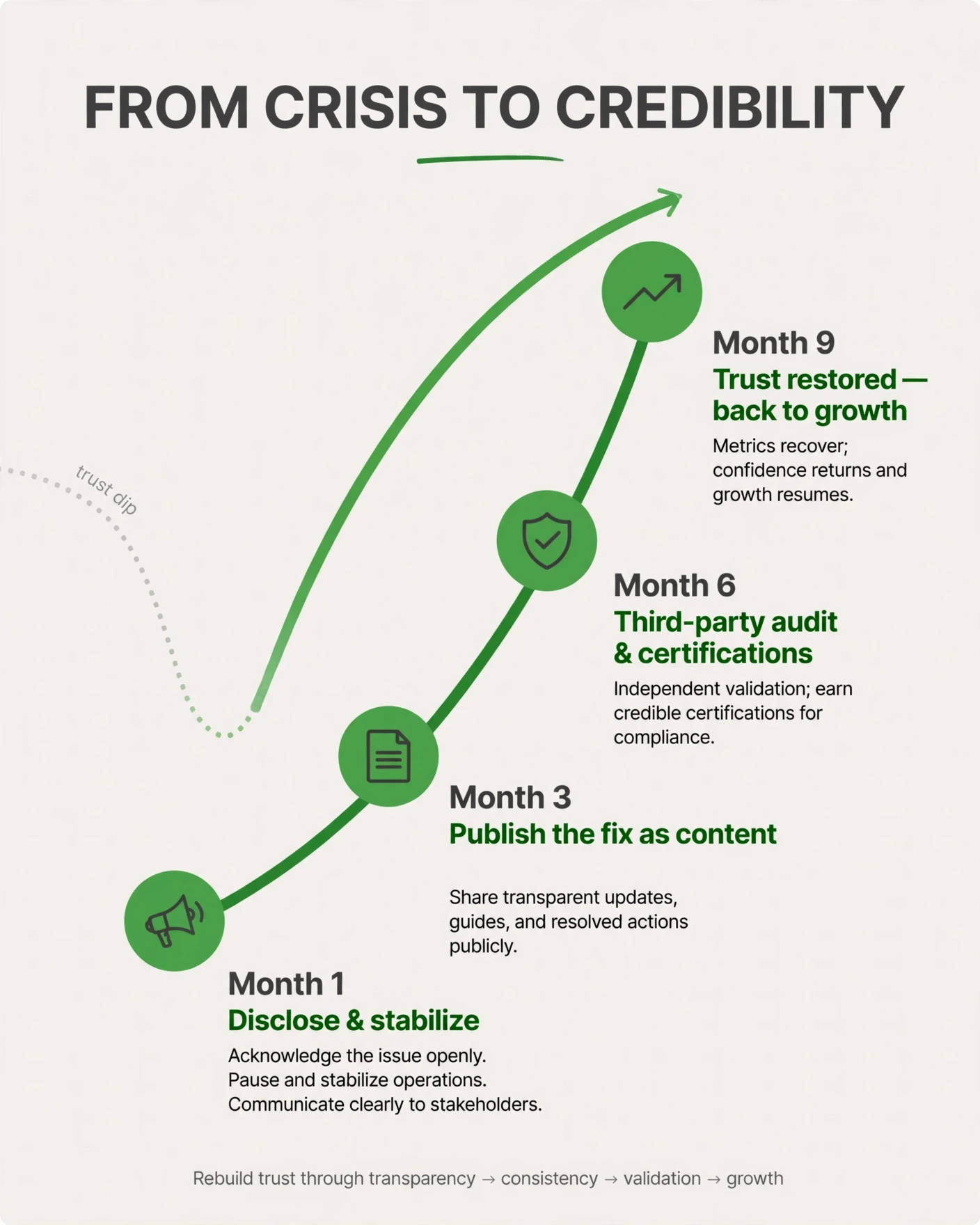
- 9 months is the average time for a breached company to fully restore customer confidence (PatentPC, 2026).
- $10.22 million is the average cost of a US data breach in 2026, an all-time high (SQ Magazine, 2026).
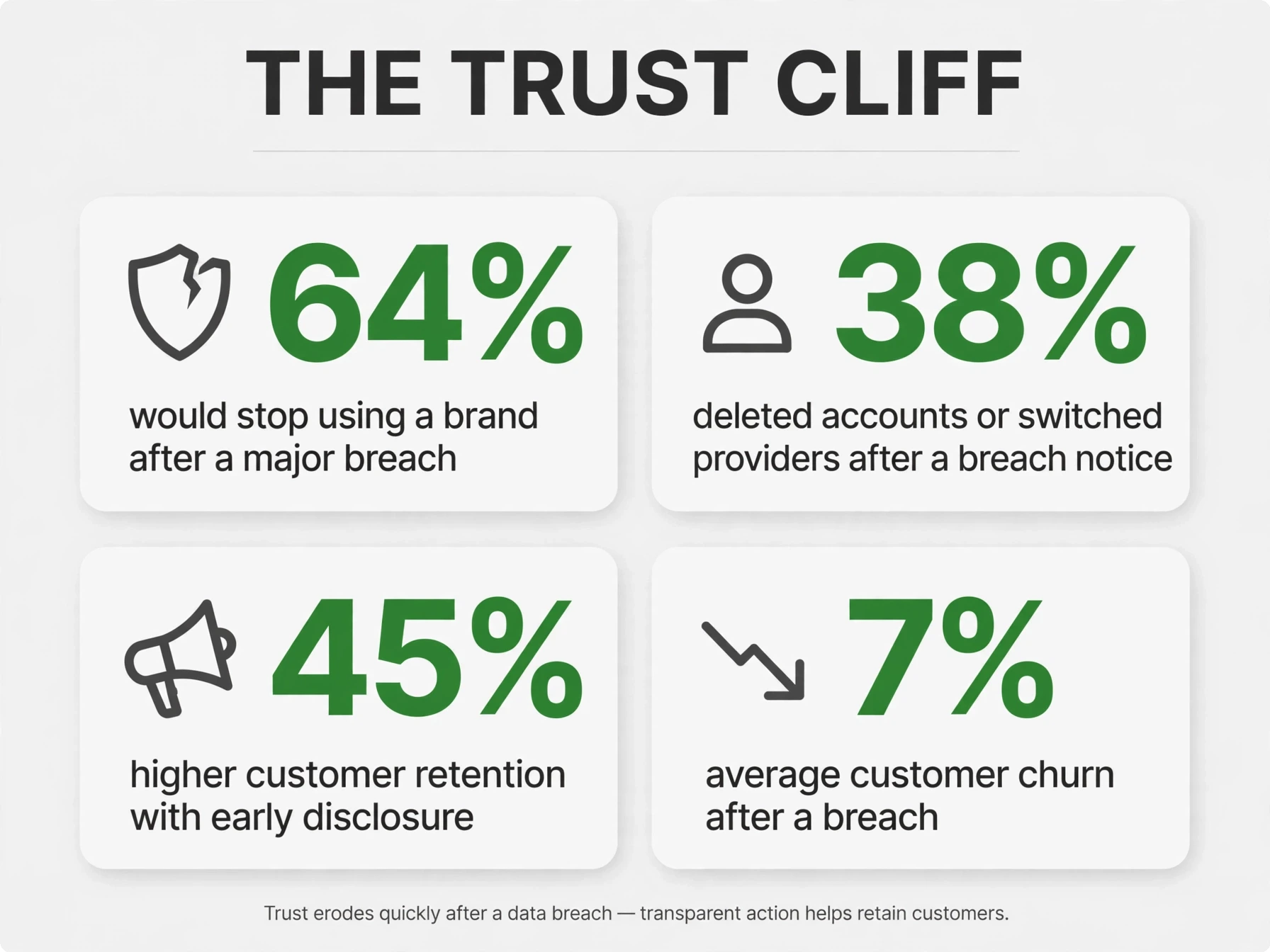
Read that list twice. Good data breach marketing treats every one of those numbers as a conversion problem, not an IT problem — and then reads strategy one, because speed is where trust is either saved or lost.
Strategy 1: Disclose Fast — The First 72 Hours Decide Everything
The single most powerful lever in data breach marketing is also the simplest: tell people sooner rather than later. Research shows that companies which disclosed breach news early held onto 45% more customers than those that delayed. Every day of silence reads as concealment to a customer who finds out through a headline instead of through you.
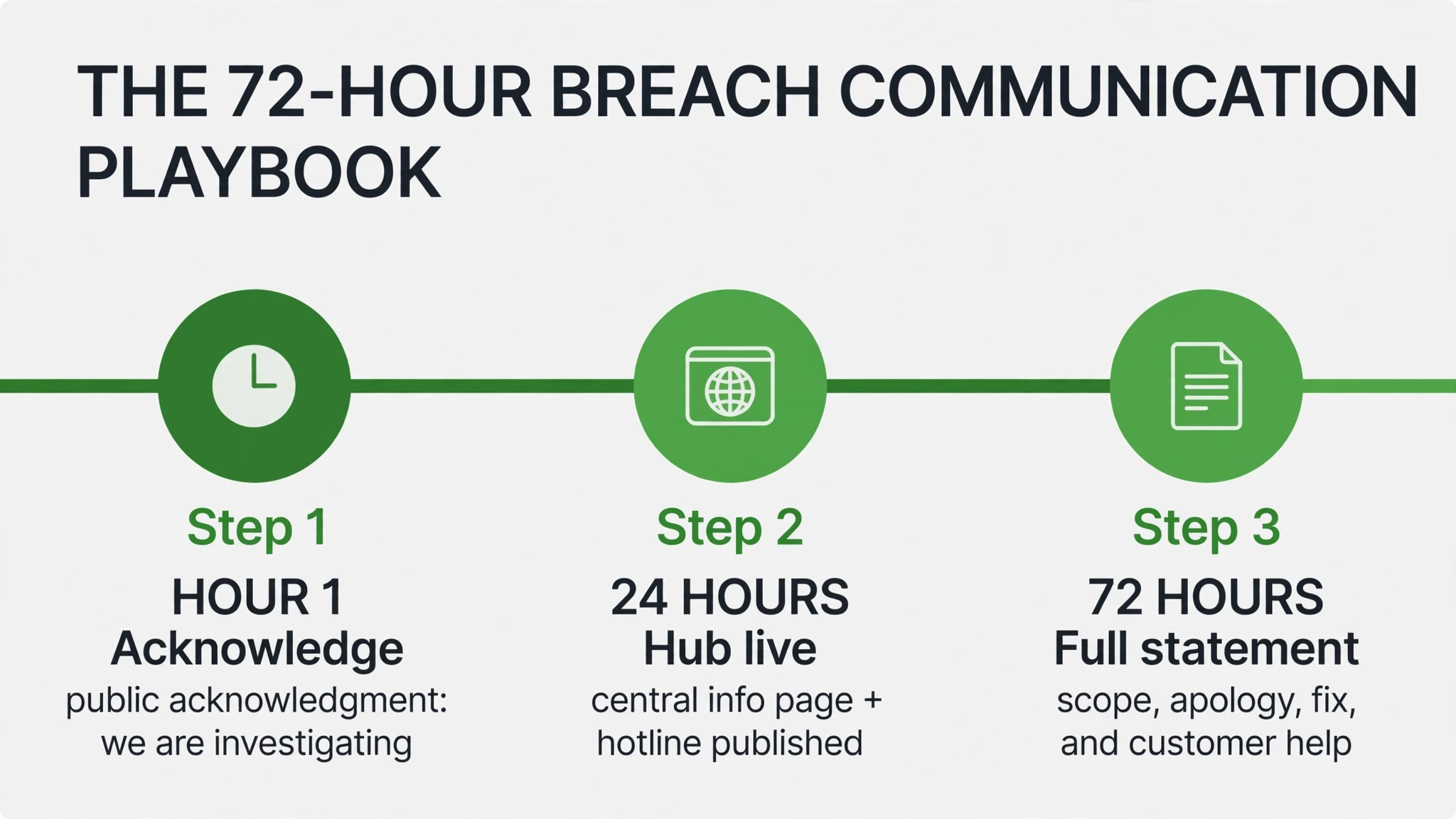
Speed doesn’t mean recklessness. In the first 72 hours you will rarely have the full picture — and that’s fine. What customers need in hour one is not a forensic report; it’s three things: acknowledgment, scope honesty, and a next step. A statement like “We discovered unauthorized access to our systems on Tuesday. We are working with cybersecurity specialists to determine what was affected. Here is what you can do right now” covers all three. It names the event without overclaiming, it admits the investigation is ongoing, and it gives the reader agency.
The counterintuitive part: partial information shared early beats complete information shared late. Companies that wait for “the full story” hand the narrative to journalists, and journalists frame it for clicks. By the time the polished statement arrives, trust has already been priced into the coverage. Set a hard internal rule for your data breach marketing response — first public acknowledgment within 72 hours of discovery, sooner if media is already circling — and let marketing own the clock while security owns the facts.
Strategy 2: Build One Source of Truth
When a breach is public, your data breach marketing response has one first job: control the information battlefield. Your customers will scatter across channels hunting for answers — your homepage, your social profiles, Google results, Reddit threads. If those channels say different things — or worse, if your regular marketing is still running like nothing happened — trust evaporates on the spot.
In data breach marketing, the fix is a single, centralized information hub: a dedicated page on your site that becomes the authoritative answer to every breach question. Target’s response to its famous 2013 breach remains the textbook example — the company stood up a dedicated site and hotline where customers could find facts fast, which kept the conversation anchored to Target’s own telling rather than rumor. That playbook still works. Your hub should carry the official timeline, what happened, whose data was affected, what you’re doing, and the protective steps customers can take — updated every time the facts change.
Just as important: pause the normal marketing machine around it. A cheerful “Summer Sale starts now!” email landing in an inbox three hours after a breach notice is a brand-damaging collision. Audit every scheduled send — email, social, paid ads — within the first hour of the incident, and hold anything tone-deaf until the hub is live.
Strategy 3: Write the Accountability Email Right
The breach notification email is the most-read message in your entire data breach marketing plan. It deserves the same craft you’d put into a product launch. The email structure that consistently performs best in data breach marketing has five beats: the fact, the scope, the apology, the fix, and the help.
Lead with the fact in the subject line and first sentence. “Important: unauthorized access to customer data” in a subject line gets opened; burying the news three paragraphs deep gets forwarded to a lawyer with commentary. State what happened in plain language — no “sophisticated cyber incident involving a third-party vector.” Customers smell euphemism instantly, and euphemism reads as guilt.
Then comes scope: who was affected and what data was involved, to the extent you know. If the investigation is ongoing, say so explicitly and commit to a date for the next update. The apology should be human, not legal — one sincere paragraph beats five hedged ones. Follow it with the concrete fix: what you’ve already done (rotated credentials, engaged forensics, patched the entry point) and what comes next. Close with tangible help: free identity monitoring, a dedicated support line, a link to the hub. TransUnion’s data breach marketing playbook after its breach — offering affected customers free credit monitoring so they could stay ahead of fraud — became a template precisely because it turned a message about harm into a message about care.
One operational detail that matters: send it from a real person’s name with a working reply address, not “do-not-reply.” Trust is a two-way channel, and a reply-black-holed apology is a contradiction your customers will notice.
Strategy 4: Audit Your Marketing Calendar — Pause, Pivot, Resume
A breach creates two marketing tracks: the response track and everything else. The “everything else” track doesn’t have to stop, but it has to change — and this is where disciplined data breach marketing earns its keep. The audit in the first 24 hours should sort every planned piece of content into three buckets: pause, rewrite, or resume.
Pause anything celebratory, promotional, or tone-deaf: launch announcements, discount blasts, “we take security seriously” banner copy that suddenly reads as ironic. Rewrite content that touches trust-adjacent themes — testimonials about reliability, claims about data handling, privacy promises — so nothing contradicts the situation. Resume neutral, useful content on schedule once the response communications are out, because going dark entirely signals paralysis.
This is also the moment to check your automated flows. Drip campaigns, cart-abandonment emails, onboarding sequences — all of them were written for a world where nothing was wrong. A new customer receiving a cheery “Welcome aboard!” while your breach page is trending on Google is a surreal experience that converts exactly nobody. Map every automated touchpoint, adjust the tone or timing, and document the decisions so the whole team acts from the same script.
Strategy 5: Social Media — Monitor, Respond, Never Argue
Social platforms are where breach narratives are born. Within hours of a public breach, expect the full spectrum: concerned customers asking legitimate questions, journalists fishing for quotes, competitors’ fans gloating, and bad actors spreading fabricated screenshots. Your data breach marketing plan needs a social command post before any of that starts.
First, set up listening — the front line of any serious data breach marketing operation. Keyword alerts on your brand name plus “breach,” “hacked,” “leak,” and “data” across the major platforms catch the wave early. Speed matters here too: a calm, factual reply to a viral post within the hour does more for perception than a perfect press release on day three.
Second, reply like a human, not a legal department. Short, direct, empathetic: “You’re right to ask — here’s what we know so far” with a link to the hub. Never argue, never dismiss, never delete critical comments unless they’re spam or misinformation (and if you correct misinformation, do it publicly and politely so the correction travels as far as the claim).
Third, brief your whole team — not just the social manager — on the one approved statement. Nothing torpedoes trust faster than an employee freelancing opinions in a reply thread. A single internal sheet with the official line, the hub link, and a “don’t say this” list keeps everyone aligned.
Strategy 6: Own the Search Results Page
Here’s a scenario that plays out constantly: a customer hears about your breach, Googles “[your brand] data breach,” and the top results are tabloid-style coverage, forum speculation, and a Wikipedia incident page. Your official statement is on page two. That is a marketing failure, and it’s fixable.
Crisis SEO is a discipline of its own, and it’s one of the highest-ROI data breach marketing tactics there is. The hub from Strategy 2 is its foundation. Publish the hub on a short, clear URL and optimize it for the exact query people are typing — your brand name plus “data breach.” Publish the notification email as a newsroom post so Google has a second authoritative result. Update your homepage meta and, where appropriate, add a notice banner linking to the hub; the banner itself becomes a signal of transparency that ranking algorithms and users both notice.
Then, keep publishing. Every weekly update post, every “what we’ve done since” transparency article is another authoritative result pushing speculation down the page. This is where a solid SEO foundation pays for itself — brands with strong organic authority recover their search narrative in weeks; brands starting from scratch fight for months. If you’d like the mechanics of that foundation explained plainly, our search engine optimization services cover exactly how authority compounds over time.
Paid search deserves a line item in every data breach marketing budget too. Bidding on your own brand-plus-breach keywords with a calm, official ad pointing to the hub is one of the cheapest forms of reputation insurance you’ll ever buy. Your competitors’ customers aren’t the audience here — yours are.
Strategy 7: Turn the Fix Into Content
This is the strategy that separates companies that merely survive a breach from companies that come out of one stronger. Every remediation step — the forensic audit, the new authentication systems, the retrained staff, the penetration tests — is data breach marketing content waiting to happen. Customers don’t trust apologies; they trust evidence of change.
Start a running “security updates” series on your blog — the backbone of long-game data breach marketing — and share it through the same channels that carried the breach news. Each entry should be specific and verifiable: “We completed a full third-party forensic review,” “We rolled out multi-factor authentication across all customer accounts,” “We passed an independent penetration test with zero critical findings.” Vague claims like “we take security seriously” are what everyone says; timestamps, vendor names, and test results are what nobody can fake.
One caution: never publish technical details that help future attackers. Your audience doesn’t need port numbers — they need to see a company that moved decisively. Frame each update around what it means for them: “Your account is now protected by X” beats “We implemented X in our infrastructure.”
Over months, this content trail becomes a trust asset. When prospects later research your brand, they’ll find not just a breach but a documented, verifiable recovery arc. That arc is the single most persuasive marketing asset a breached company can own.
Strategy 8: Borrow Credibility — Third-Party Proof
Your own claims about your own security have a credibility ceiling — after all, the last time customers trusted your word on this, they got a breach. The way past that ceiling is borrowed credibility — one of the least-used data breach marketing tactics, and one of the most powerful.
Commission an independent security audit from a recognized firm and publish the summary (not the sensitive details). Pursue relevant certifications for your industry — SOC 2, ISO 27001, PCI DSS — and feature them prominently, because auditors carry the one thing your marketing team currently lacks: impartiality. If you work with a well-known cybersecurity vendor for your remediation, a joint statement or co-authored case study carries weight with both customers and press.
This data breach marketing tactic works for small businesses too. You don’t need a Big Four audit. A completed assessment from a reputable regional security firm, a published incident-review from your managed IT provider, or even a plain-English post-mortem you commission and publish — all of it signals that outside eyes have examined the problem and the fix. The message it sends is simple: we didn’t just mark our own homework.
Strategy 9: Measure Trust, Not Just Traffic
Most companies track the wrong things after a breach: uptime, ticket volume, maybe a dip in sales. Those are lagging indicators — and that blind spot is where most data breach marketing plans quietly die. Data breach marketing needs its own dashboard, because rebuilding trust is a nine-month project and you need to know if the needle is moving.
Track these weekly in the first quarter, monthly after that:
- Sentiment ratio on brand mentions: are breach-related mentions trending negative, neutral, or positive over time?
- Hub engagement: visits, time on page, and how many visitors click through to protective resources — a proxy for “informed and reassured.”
- Support deflection: breach-related ticket volume and resolution time — falling tickets mean rising confidence.
- Review velocity and rating: app-store and review-site ratings in the 90 days post-breach versus the prior quarter.
- Churn and win-back: monthly churn against your baseline, plus how many lapsed customers return after receiving recovery communications.
- Branded search behavior: are people searching your brand alone again, or still searching “brand + breach”?
Share the trend line — not every raw number — publicly in your update series. “Support tickets about the breach are down 60% this month” is a trust metric that markets itself. When the data turns positive, that’s your signal to shift budget back from response marketing to growth marketing. You’ll know it’s time when customers start asking about your product again instead of your security.
Prepare Now: The Pre-Breach Marketing Checklist
Every data breach marketing strategy above is easier if you build it before you need it. Only about a quarter of organizations have a formal incident response plan — and even fewer have a marketing incident plan. This checklist closes that gap in an afternoon:
1. Draft the notification templates now. The first email, the hub page layout, the social statements, the press release — write them while you’re calm. Templates you can fill in beat blank pages at midnight.
2. Pre-approve the disclosure chain. Who signs off on the first statement, and how fast? Name the people, the backups, and the maximum turnaround time. Most disclosure delays are approval delays.
3. Build the listening infrastructure. Brand monitoring tools, keyword alerts, and a social listening dashboard should already be running — not installed during the crisis.
4. Map your pause list. Which campaigns, emails, and ads would stop on day one? Document it so nobody improvises.
5. Line up your auditors in advance. A pre-existing relationship with a security firm means help arrives in hours, not weeks.
6. Train the spokespeople. Crisis tone is a data breach marketing skill, not an IT skill. One short session — human, factual, no euphemisms — pays for itself forever.
The uncomfortable truth is that breaches are a “when,” not an “if.” Small businesses are hit every day, and attackers don’t care about your headcount. The companies that recover fastest aren’t the ones with the biggest security budgets — they’re the ones that decided, in advance, exactly how they’d communicate.
The Bottom Line
A data breach costs money. A badly communicated data breach costs customers — and customers are the harder thing to replace. The nine data breach marketing strategies in this guide share one thesis: trust is rebuilt the same way it was built, through consistent, honest, visible action, communicated clearly and early. Disclose fast. Centralize the truth. Write like a human. Audit your calendar. Own the search page. Turn fixes into content. Borrow credibility. Measure trust. And prepare before you need to.
Data breach marketing isn’t about spin. Spin is what companies do when they hope nobody notices; marketing is what companies do when they know everyone already has. The brands that treat a breach as the start of a transparent recovery story don’t just survive it — in the eyes of the customers who matter most, they come out of it stronger.
If you’d rather have a team that handles the entire data breach marketing playbook — crisis communication, search narrative, content, and the long rebuild — KKeyQik’s digital marketing services cover the full stack, from SEO to social and content. And if you want to pressure-test your own readiness before anything happens, reach out to our team — we’d rather help you prepare than help you recover.
Related reading: For more on how trust shapes consumer behavior, see our breakdown of Apple Pay’s marketing playbook — payments live or die on the same trust dynamics. And if your business depends on recurring revenue, our analysis of paywall and subscription marketing shows why subscriber trust is the real moat.
Sources
- SQ Magazine — “Data Breach Statistics 2026: Key Trends, Costs & Risks Revealed” (consumer trust stats: 64%, 38%, 45%, 32%; US breach cost $10.22M; SMB victim share 43%)
- PatentPC — “Post-Breach Recovery Times: How Long Does It Take to Bounce Back?” (70% six-month reputational damage; 50% long-term brand trust damage; 7% churn; 9-month confidence restoration)
- Hive Strategy — “Data Breach Recovery: SaaS Marketing Strategies That Work” (TransUnion credit-monitoring playbook; Target’s dedicated breach site and hotline; centralized communication hub)
- Adweek — “How Marketers Can Protect Their Organization’s Reputation During a Data Breach” (assessing planned messaging against the breach; “stockpile trust” framing)
- Medium / David — “How to Handle PR Crises in Tech Companies Without Losing Trust” (acknowledge fast; own the narrative proactively; turn the crisis into an improvement case study)
Frequently Asked Questions
Respond quickly, take responsibility, and communicate through owned channels first — your website, email list, and social accounts. A fast, honest first statement sets the narrative before speculation fills the gap.
Explain what happened in plain language, what data was affected, and what you are doing about it. Customers forgive mistakes far more readily than cover-ups, and transparency is the foundation of rebuilding trust.
Email your affected customers directly, post a clear notice on your website, and brief your support team with approved talking points. Consistent messaging across channels prevents confusion and rumors.
Outline the concrete steps you have taken — security audits, system upgrades, outside experts brought in, and new safeguards. Customers need to see action, not just apologies, before they trust you again.
Acknowledge the inconvenience, explain the remedy clearly, and follow through visibly. Pairing the response with ongoing updates — what was fixed this week, what comes next — keeps trust rebuilding instead of fading.
Speed, honesty, and empathy consistently outperform legalistic silence. Brands that own the story early and keep customers informed recover faster than those that minimize or delay.
Track support ticket sentiment, customer retention, review scores, and social mentions in the weeks after disclosure. Recovery is measurable — watch whether trust metrics stabilize and climb, not just whether the news cycle moves on.
Most breaches trace back to preventable gaps — weak passwords, unpatched software, or untrained staff. Publishing your improved security practices turns a painful lesson into proof that the business takes protection seriously.
Draft the plan before you need it: designated spokespeople, notification templates, and a clear chain of command. Companies with a rehearsed response communicate faster and more calmly when a real incident hits.
Long-term consistency — keeping promises, communicating openly, and delivering reliable service month after month. Trust is rebuilt in drops and lost in buckets, so every customer interaction after the breach matters.