

Introduction
On October 2, 2026, “nike stock” was one of the fastest-climbing searches in the United States — up 300% on Google Trends and still rising. The reason was not a sneaker drop or a celebrity signing. It was a reckoning.
Nike had just reported fiscal first-quarter results that missed Wall Street’s revenue expectations, told investors to expect a steep revenue decline for the full fiscal year, unveiled a sweeping restructuring plan called “Pace” that includes more job cuts, and watched its shares slide roughly 8.5% in after-hours trading — with the stock already down about 44% on the year.
For most people, that is a finance headline. For marketers, it is something else: a live case study in brand turnaround marketing. Nike is not a struggling startup; it is one of the most recognizable brands on the planet.
And even Nike — with a century of cultural capital, the most famous logo in sports, and a direct line to every athlete on Earth — can lose the plot so badly that it has to tell investors its turnaround “will take time” while cutting jobs and shrinking its geographic footprint from four regions to three.
That is the honest backdrop for this post. Nobody at KKeyQik takes pleasure in a company’s pain — but there is genuine, transferable wisdom in watching a giant brand try to rebuild trust in public.
The Nike stock drop in October 2026 is what brand turnaround marketing looks like at the highest level: the messaging decisions a company makes when the numbers are ugly, the headlines are hostile, and every word gets parsed by analysts.
Below are seven lessons you can steal from Nike’s crisis — plus a practical playbook for running your own brand turnaround marketing when your business hits a rough patch. And if your brand is facing a moment like this right now, KKeyQik builds crisis communication and brand turnaround marketing strategies that protect what matters most.
What Actually Happened: Nike’s Earnings, the Stock Drop, and the “Pace” Restructuring
Before the lessons, the facts — because brand turnaround marketing only makes sense once you see what Nike is actually up against:
The earnings miss. On October 1, 2026, Nike reported fiscal first-quarter 2027 results for the quarter ended August 31. Revenue came in at roughly $11.2 billion, down about 4% from a year earlier, and missed analysts’ expectations (estimates clustered around $11.3–$11.4 billion).
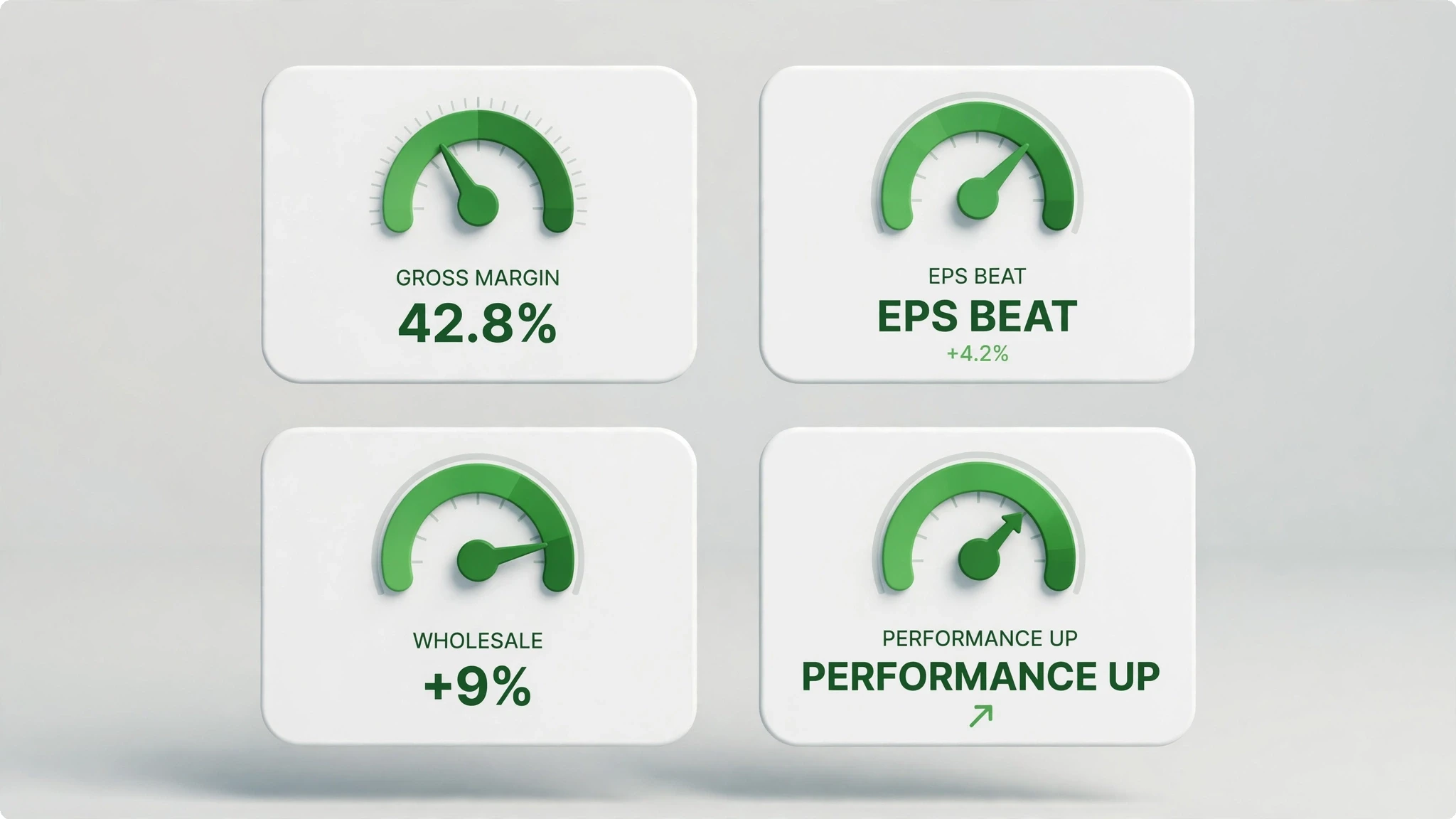
Earnings per share beat estimates at $0.48, and gross margin actually improved by 60 basis points to 42.8% on lower warehousing and logistics costs — but the market ignored the bright spots and focused on the top line.
The stock reaction. Shares fell roughly 8.5% in after-hours trading on Thursday, then slid further in Friday’s premarket session — about 10% down at one point.
The nike stock trend on Google was driven by exactly what you’d expect: searches for “nke stock,” “nke,” and “nike earnings.” The damage compounded a miserable year: the stock had already lost roughly 44% of its value in 2026, and analysts estimate the decline from the start of the year is approaching 50%.
Two weeks earlier, S&P Dow Jones had removed Nike from the S&P 100 index after 18 years.
The guidance cut. The forecast is what really spooked the market. Nike told investors it now expects full-year fiscal 2027 revenue to decline by a high-single-digit percentage — a sharp step down from its earlier outlook of a low-to-mid-single-digit first-half decline.
Bank of America slashed its price target to $24 from $30; Goldman Sachs cut to $30 from $38. Citi called the story “cost-cutting.”
The “Pace” restructuring. Alongside the earnings, CEO Elliott Hill announced a new restructuring program called “Pace.” The plan: cut more jobs (the company said it doesn’t yet know how many roles, with employee notifications beginning in 2027), collapse four geographic regions into three (the Americas; Asia Pacific plus Greater China; and EMEA), modernize the supply chain, and open a new campus in India.
The company expects the program to deliver about $2.5 billion in savings through fiscal 2031, at an implementation cost of roughly $1 billion — including about $300 million in severance.
The China problem. The single biggest weight on the business is Greater China, where revenue fell 22% on a reported basis (26% in constant currency) — yet another quarterly decline in a region that now accounts for roughly 15% of Nike’s annual revenue.
North America, by contrast, looked steadier: sales grew about 2%, with wholesale up 9%. Nike’s own direct-to-consumer business was the soft spot globally — Nike Direct revenue fell 8% to $4.14 billion, with digital sales down 13% and owned-store sales down 5%. Converse plunged 28% to $263 million.
The CEO’s candor. On the earnings call, Hill was blunt: “Our Nike performance business is not yet large enough to offset the pressure we’re seeing in Nike sportswear, Jordan brand, and Greater China.”
Reviving the weak areas, he said, “will take time” — and the company is deliberately reducing the volume of Jordan retro launches to repair long-term brand health, even though that decision will hurt near-term sales.
That is the situation Nike’s marketing and communications teams woke up to: a stock in freefall, a full-year warning, layoffs on the horizon, and a China business in sustained decline.
Every brand turnaround marketing lesson in this post is drawn from how Nike is handling — or mishandling — this moment.
Why a Nike Earnings Miss Belongs on a Marketing Blog
It is tempting to file the nike stock story under “finance news” and move on. That would be a mistake, because at its core this is a story about brand trust — and brand trust is a marketing asset that shows up on no balance sheet:
Investors are an audience too. When Nike’s shares fall 8.5% overnight, that is an audience verdict on the brand’s narrative.
Brand turnaround marketing starts with recognizing that customers, employees, partners, and investors are all reading the same headlines — and the story you tell has to work for all of them at once.
Restructuring is rebranding in disguise. When a company renames its survival plan “Pace,” cuts jobs, and redraws its map of the world, it is not just doing finance — it is doing positioning.
Every element of the “Pace” announcement is a messaging choice, and those choices are marketing decisions wearing a finance costume.
Your business will have a Nike moment. Not at Nike’s scale — but the pattern is universal: a bad quarter, a lost client, a product that flops, a market that shifts under you.
The difference between brands that recover and brands that fade is rarely the size of the problem. It is the quality of the brand turnaround marketing they run while solving it. Nike’s October 2026 earnings saga is a masterclass you didn’t have to pay for — so let’s extract the tuition value.
Lesson 1: Announce the Bad News Yourself, Before the Market Does It for You
The single smartest thing Nike did this week was bundle the pain. The company didn’t drip out bad news — it reported the revenue miss, the high-single-digit guidance cut, the China collapse, and the “Pace” job-cut plan all at once, on the earnings call, in the CEO’s own voice.
That is textbook brand turnaround marketing: own the disclosure.
Here is why it matters. Bad news abhors a vacuum. If Nike had announced the earnings miss on Thursday and waited a week to unveil the layoffs, the intervening days would have been filled with anonymous sources, leaked memos, and speculative headlines — and the company would have spent the restructuring announcement playing defense against its own rumor mill.
By front-loading everything, Nike got to frame the story as “we see the problem and we have a plan,” instead of letting the story frame itself as “how much worse will it get?”
Small businesses face the same dynamic at smaller scale. When you lose a big client, raise prices, discontinue a beloved product, or have to cut staff, the temptation is to say nothing and hope nobody notices.
They always notice — and the version they hear will be worse than the version you would have told. Brand turnaround marketing starts with a counterintuitive rule: the fastest way to rebuild trust is to be the first one to say the uncomfortable thing.
Customers forgive bad news far more readily than they forgive feeling ambushed by it.
The practical brand turnaround marketing move: write your own headline before anyone else does. A plain-spoken email or video beats ten days of speculation. Speed is a trust strategy.
Lesson 2: Name the Plan, Not Just the Pain
Notice what Nike called its restructuring: “Pace.” Not “Project Turnaround.” Not “Efficiency Initiative.” Pace. It is a forward-motion word — speed, rhythm, stride — the kind of word a running company would use to describe getting its legs back.
That single naming decision is one of the most instructive brand turnaround marketing moves in the whole episode.
There is a reason for this. Human beings do not rally around cost cuts; they rally around a direction. When a company announces “we’re cutting jobs to save $2.5 billion,” the headline is the cuts.
When it announces “Pace, our plan to get the company moving again,” the headline is the movement — even though the underlying actions are identical. The name doesn’t change the substance, but it changes what people *remember* about the substance.
This is the part of brand turnaround marketing that small businesses almost always skip. When you’re in a rough patch, you talk about the rough patch: “times are tough,” “we’re tightening our belts,” “the market is difficult.” All true — and all forgettable.
What Nike’s “Pace” teaches is to give your recovery a name and a narrative arc. A local retailer running a comeback doesn’t need a corporate program name; it needs a story its customers can follow: “the rebuild,” “our next chapter,” the new collection, the renovated space, the refocused menu.
A name turns a painful interlude into a *journey* — and journeys have destinations people want to arrive at.
One caution from the Nike case: the name has to earn itself. “Pace” works because it connects to what the company actually sells — movement. If your recovery narrative doesn’t connect to what your brand actually stands for, it reads as corporate wallpaper — and in brand turnaround marketing, authenticity is the whole game.
Name the plan, yes — but name it in your own voice, not a consultant’s.
Lesson 3: Protect the Brand Even While You’re Cutting Costs
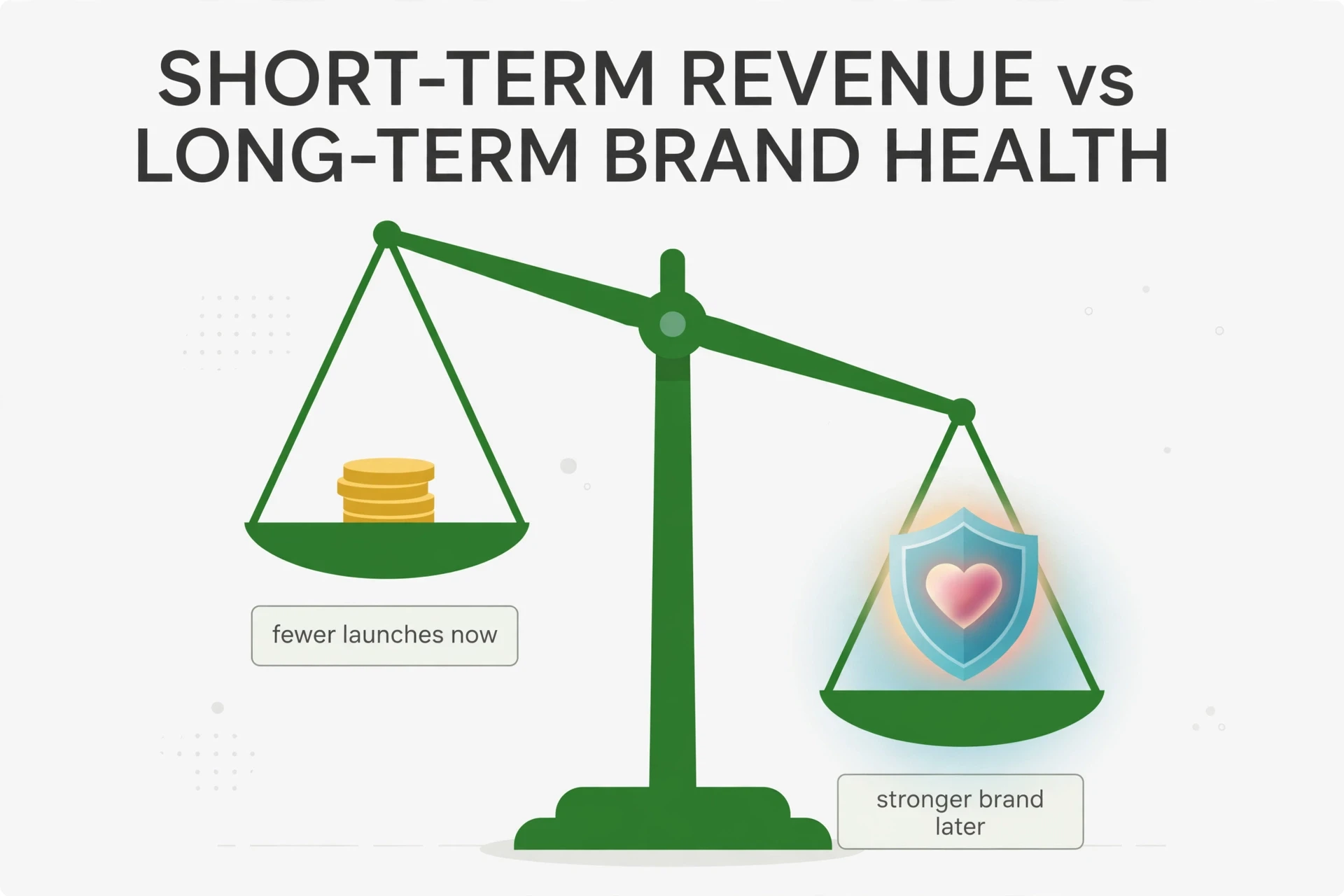
Buried in the earnings fallout is the most admirable decision Nike made: the company is deliberately *reducing* the number of Jordan retro sneaker launches — knowing full well it will hurt next year’s sales — because oversaturation is damaging the brand’s long-term health.
Think about what that means. A company guiding to a high-single-digit revenue decline, with its stock down nearly half this year, is choosing to sell *less* of one of its most famous product lines on purpose.
That is brand turnaround marketing with genuine discipline. The easy move in a revenue crisis is to chase every dollar: more launches, more promotions, more discounting — anything to fill the hole this quarter.
And indeed, analysts noted that Nike has already leaned too hard on promotions, training customers to wait for the sale.
But the Jordan decision shows the company understands the core of brand turnaround marketing — something most struggling brands forget: once a market learns to wait for the discount, the brand’s price is no longer the brand’s to set.
Every pair of retro Jordans sold at the wrong price in the wrong channel makes the next pair worth a little less in the customer’s mind.
Small businesses make the same trade-off constantly, just with different stakes. The restaurant that slashes prices to fill tables during a slow month. The agency that takes any client at any rate to keep the lights on.
The retailer that runs a permanent “sale” until nobody remembers the real price. Each of those moves feels like survival — and each of them quietly teaches the market that your brand is worth less than you said it was.
Nike’s Jordan pullback is the opposite instinct — the brand turnaround marketing instinct: accept a smaller today to protect a bigger tomorrow.
The brand turnaround marketing principle: cut costs, never cut positioning. Fire the underperforming ad channel, renegotiate the lease, trim the headcount you truly can’t sustain — but don’t touch the things that make people believe your brand is special.
Protect the flagship product’s pricing. Protect the quality of the core experience. Protect the symbols customers associate with you.
In a downturn, your premium perception is the asset most worth defending, because it is the asset that takes longest to rebuild — ask anyone who has tried to un-train a market from expecting 40% off.
Lesson 4: Fix the Distribution, Not Just the Budget
Here is the quiet scandal inside Nike’s numbers: the company that spent a decade preaching direct-to-consumer as the future of retail just reported that Nike Direct revenue fell 8%, with digital sales down 13% and owned-store sales down 5% — while *wholesale* was the relative bright spot, with North American wholesale revenue up 9%.
The DTC-first bet, the one Nike reorganized its entire company around a few years ago, is the channel that’s shrinking. The wholesale partners Nike once sidelined are the ones still growing.
That reversal is a brand turnaround marketing lesson about channel honesty. When a strategy stops working, the instinct is to cut the marketing budget and wait. Nike is doing something more useful: rebalancing the mix.
The company spent the last two years visibly rebuilding relationships with wholesale retailers — the same partners its DTC push had alienated — and those relationships are now the steadiest part of the revenue base.
The lesson isn’t “DTC is dead” or “wholesale is back.” It’s the oldest brand turnaround marketing truth there is: distribution strategy is marketing strategy, and clinging to a channel story that no longer matches customer behavior is a slow way to fail.
For small businesses, the equivalent question is painfully practical: where are your customers actually buying, and is your marketing spend matched to that reality?
The boutique pouring money into its e-commerce site while 80% of revenue walks through the door. The B2B firm obsessed with LinkedIn ads while every deal closes through referrals and partnerships. The restaurant paying for delivery-app placement while its dine-in margins are three times better.
Nike’s mistake was falling in love with a channel narrative; its recovery started when it followed the customer instead.
Run your own channel audit before you cut anything else — it is step one of any honest brand turnaround marketing effort. Map every dollar of marketing spend to the channel where the revenue actually lands.
Kill the sacred cows — the “strategic” channel that’s been losing money for two years, the platform you keep because competitors are there, the campaign you inherited and never questioned. Brand turnaround marketing isn’t about spending less everywhere; it’s about spending honestly somewhere. When retail brands face disruption, the survivors are usually the ones who admitted which channels were actually working first.
Lesson 5: Localize the Comeback — One Global Message Won’t Survive Contact With Reality
Nike’s results tell two completely different stories depending on where you look. In North America, sales grew 2% and wholesale surged 9% — a business stabilizing. In Greater China, revenue cratered 22–26%, a market where the company now faces intense local competition, shifting tastes, and a promotional bloodbath.
Same brand, same quarter, opposite trajectories. That is why the “Pace” plan collapses four regions into three — the company is admitting that its old geographic map no longer describes how the world actually buys.
This is a brand turnaround marketing trap that catches companies of every size: the single-message recovery. When things go wrong, leadership writes one story — one press release, one all-hands speech, one customer email — and broadcasts it everywhere.
But a turnaround message that works in a stabilizing market sounds tone-deaf in a collapsing one, and a message calibrated for crisis sounds panicky where things are fine.
Nike can’t run the same brand turnaround marketing story for its North American customers and its Chinese ones, because they’re living in different realities.
The small-business version is the company with two locations, two product lines, or two customer segments having very different years. The temptation is to communicate one narrative — usually an average of the two truths, which ends up being true of neither.
Brand turnaround marketing demands segmentation of the message, not just the audience: acknowledge what’s working where it’s working (North America’s wholesale rebound is a genuine bright spot worth celebrating), and speak plainly about the fix where things are broken (China needs product and channel reinvention, not pep talks).
Practically, this means running the recovery as a portfolio, not a monolith. Different messages for different segments, different timelines, different proof points.
Your loyal, still-buying customers need reassurance and continuity; the customers you’ve lost need a reason to believe something actually changed. One email blast won’t do both jobs — and recognizing that is the difference between brand turnaround marketing and a press release.
Nike learned the hard way that the map is not the territory — your marketing map should be redrawn every time the territory moves.
Lesson 6: Lead With the Numbers That ARE Working
In the middle of a brutal earnings report, Nike’s management did something smart that too few crisis communicators do: they surfaced the proof points.
Gross margin up 60 basis points to 42.8%. EPS beating estimates. The performance running business growing in the high single digits. Wholesale in North America up 9%.
These facts didn’t prevent the stock drop — nothing was going to, given the guidance — but they changed the *texture* of the story. The headline could have been “Nike collapses on every front.” Instead, it was “Nike misses on revenue but shows margin discipline and a plan.”
That is not spin; those are real numbers — and real numbers are the raw material of credible brand turnaround marketing. And in brand turnaround marketing, real bright spots are load-bearing.
The instinct during a rough patch is either to hide everything or to cherry-pick so aggressively that nobody believes you. Both fail.
Hiding everything lets the worst number become the whole story; cherry-picking destroys the credibility you’ll need later. The Nike approach — full disclosure of the bad, plain presentation of the good, no adjectives doing the heavy lifting — is the middle path of serious brand turnaround marketing — and it’s what actually rebuilds confidence.
When the CEO says the performance business “is not yet large enough to offset the pressure,” he’s admitting the bright spot isn’t enough. That honesty is exactly what makes the bright spot believable.
Small businesses can apply this brand turnaround marketing habit immediately in any customer, investor, or team communication. If you lost a major account but grew recurring revenue 20%, say both sentences. If foot traffic fell but average order value rose, report the pair.
Brand turnaround marketing works on a simple psychological principle: people don’t need you to be perfect; they need to see that *something* in the machine is still working, because a machine with one working gear can be fixed, while a machine with none gets scrapped.
Give your audience the working gears — the retention rate, the repeat-customer number, the product line that’s thriving, the review score that held. When a brand’s trust takes a hit, the recovery always starts with evidence, not adjectives.
One warning: the bright spots have to be real and relevant. “Our social following grew 3%” is not a bright spot when revenue is down 20%; it’s a distraction, and audiences can smell the difference.
Nike’s margin gain mattered because margin is what funds the recovery. Pick the metrics that actually predict your comeback, and let the vanity metrics sit this one out.
Lesson 7: Treat Workforce News as a Communication Event, Not an HR Line Item
The most delicate part of Nike’s announcement — and the one where its brand turnaround marketing is weakest — is the job cuts. The company announced that more roles will be eliminated, that it doesn’t yet know how many, and that notifications will begin sometime in 2027.
Read that again from the perspective of a Nike employee: *we’re cutting jobs, we can’t tell you how many, and you’ll find out next year.* That is a full year of ambient anxiety for the people who are supposed to execute the turnaround.
No brand turnaround marketing plan survives a workforce that has mentally checked out.
This is the lesson Nike is teaching by negative example, and it may be the most valuable one in this post. In brand turnaround marketing, your employees are your first audience and your loudest channel.
They talk to customers, to partners, to the press, to their LinkedIn networks. A layoff handled with vague timelines and thin communication doesn’t just hurt morale — it becomes the story.
Every customer who asks “is everything okay over there?” and gets a tight-lipped shrug is a small erosion of the brand you just paid $1 billion to restructure.
For small businesses, workforce changes are the most visible brand turnaround marketing test of all — there is no corporate communications department to absorb the shock.
When you have to let people go, cut hours, or restructure roles, the brand turnaround marketing playbook is: tell your team first and tell them fully (what’s happening, why, what it means for them, what’s not changing).
Tell your customers second, briefly and honestly (no one needs the org chart — they need to know their experience won’t suffer). Then tell the story of what the team is building next, because the people who stay need a future to work toward, not just a past to mourn.
Never let employees learn about their own company’s crisis from a headline — the way thousands of Nike staff will now spend months wondering if they’re in the unannounced number.
There is a final, quieter point here. Nike is opening a new campus in India and hiring while cutting elsewhere — which is strategically sensible and communicationally treacherous.
“We’re cutting jobs here and hiring there” is a sentence that writes its own angry headlines. If your turnaround involves shifting resources, frame the *direction* (where the business is going) before the *geography* (where the desks are). Direction unites; geography divides.
Your Small-Business Brand Turnaround Marketing Playbook
You don’t need a $2.5 billion restructuring plan to run brand turnaround marketing. Here is how to shrink Nike’s week into a brand turnaround marketing playbook for a business of any size:
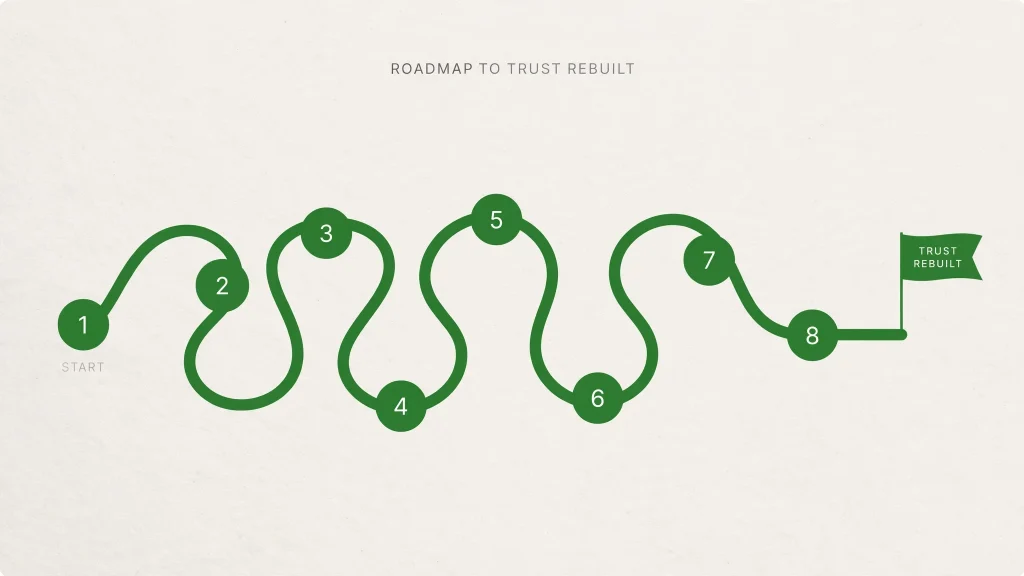
1. Write your own headline first. Before rumors do it for you, publish the plain facts: what happened, what it means, what you’re doing. One honest email or video beats ten days of speculation. Speed is a trust strategy.
2. Name your recovery. Give the turnaround a name and a direction your customers can follow — not a corporate program, just a story: the rebuild, the refocus, the next chapter. People rally around journeys, not cost cuts.
3. Protect the premium. Cut costs everywhere except the things that make your brand special: the flagship product’s quality, the core experience, the pricing that signals value. You can survive being smaller; it’s hard to survive being cheaper in people’s minds.
4. Audit your channels honestly. Map every marketing dollar to where revenue actually lands. Kill the “strategic” channel that’s been losing money for two years. Nike’s DTC-first story stopped matching customer behavior — make sure yours still matches.
5. Segment the message. Different customers are living in different realities. Speak to the loyal ones with reassurance and continuity; speak to the lost ones with evidence that something actually changed. One blast won’t do both jobs.
6. Publish your working gears. Share the real numbers that are still healthy — retention, repeat purchase, the product line that’s thriving. People don’t need perfection; they need proof the machine can be fixed.
7. Tell your team first, tell them fully. Workforce changes are communication events. Your employees are your loudest channel — arm them with the truth before the rumor mill arms them with fiction.
8. Say “it will take time” — and mean the plan, not the hope. Nike’s CEO didn’t promise a quick bounce; he promised discipline over time. Set honest timelines with your audience — a brand turnaround marketing promise kept slowly beats a broken one. A credible slow recovery beats an incredible fast one every time.
Run this playbook the moment trouble appears — not after the stock drops 44%, the quarter misses, and the headlines write themselves. The cheapest brand turnaround marketing is the kind you never need because you communicated early. The second cheapest is the kind you start today.
The Takeaway
The nike stock story of October 2026 will be remembered as a finance headline: an 8.5% drop, a guidance cut, a restructuring called “Pace.” It should be remembered as a brand turnaround marketing strategy document.
In one earnings cycle, the world’s most famous sports brand demonstrated every core principle of brand turnaround marketing: own the bad news before it owns you, name the plan instead of the pain, protect the brand while cutting costs, follow the customer to the right channels, segment the recovery message, lead with the numbers that work, and treat your people as your first audience.
Trends like “nike stock” spike and fade — that is the nature of the news cycle. But the mechanics underneath the spike are permanent, and they are available to businesses of any size.
You don’t need Nike’s scale to steal Nike’s lessons. You just need the discipline to run brand turnaround marketing early — communicate before you’re forced to — plus the courage to protect what makes you special, and the honesty to say “this will take time” — and then prove it, quarter by quarter.
If your brand is going through its own rough patch — or you want a team that spots the trouble before it becomes a headline — talk to KKeyQik. We build brand turnaround marketing systems: crisis communication, trust recovery, channel audits, and messaging that holds up when the numbers don’t. You bring the business; we’ll help protect the brand.
Frequently Asked Questions
Nike reported fiscal Q1 2027 revenue of about $11.2 billion, down roughly 4% and below analyst expectations, then warned full-year revenue would fall by a high-single-digit percentage. The company also unveiled its "Pace" restructuring with more job cuts. Shares fell roughly 8.5% in after-hours trading as investors priced in a longer, costlier turnaround.
"Pace" is Nike's turnaround program announced October 1, 2026. It includes additional job cuts with employee notifications beginning in 2027, collapsing four geographic regions into three, and supply-chain modernization. Nike expects about $2.5 billion in savings through fiscal 2031 at an implementation cost near $1 billion.
Brand turnaround marketing is the discipline of rebuilding customer trust and demand while the business itself is being fixed. It covers crisis messaging, channel rebalancing, proof-point marketing, and honest timelines. Done well, it protects brand equity so the recovery has something to recover into.
Tell your team first and fully, then tell customers briefly: what's happening, why, and what won't change for them. Never let employees or customers learn about workforce cuts from a headline. Customers forgive restructuring far more easily than they forgive feeling blindsided.
Nike believes oversaturation is damaging Jordan's long-term brand health, so it's deliberately cutting launch volume even though it will hurt near-term sales. The move shows discipline: chasing every dollar through promotions can train customers to wait for discounts. Protecting premium positioning is worth more than one quarter of revenue.
Nike Direct revenue fell 8% in the quarter, with digital sales down 13% and owned-store sales down 5%, while North American wholesale grew 9%. The channel Nike reorganized around is shrinking while sidelined wholesale partners are growing. The lesson: rebalance spend toward wherever customers are actually buying.
Greater China revenue fell 22% on a reported basis (26% in constant currency), continuing a long decline. Nike faces stronger local competitors, shifting consumer tastes, and heavy promotional pressure. Recovery there needs localized product and channel work, not the same message used in stabilizing markets like North America.
Start by announcing the bad news yourself, before rumors do it for you, and pair every hard truth with the action you're taking. Publish the real numbers that are still healthy, give the recovery a name customers can follow, and set honest timelines. Speed of communication is itself a trust strategy.
Highlight real, relevant metrics that predict the recovery: gross margin, retention rates, repeat purchase, or the segment that's still growing. Nike pointed to margin gains and wholesale growth, not vanity numbers. If a metric doesn't fund or forecast the comeback, leave it out of the story.
Longer than leadership wants to admit. Nike's CEO told investors reviving the weak parts of the business "will take time," and analysts expect pressure for several more quarters. A credible slow recovery always beats an incredible fast one — set honest timelines and report progress quarter by quarter.