

One word travelled further, faster, than most full advertising campaigns ever will. In the early hours of November 5, 2026, “habibi” sat among the most active searches in the United States on Google Trends, with more than 500,000 searches and a rise of over 1,000 percent. It was not a product launch. It was not a new app, a sale, or a celebrity endorsement deal. It was a short, warm, slightly cheeky word, carried by a clip, a chorus of songs, and a wave of short-form edits that ordinary people could copy in seconds.
That is why this moment matters for small businesses. Viral phrase marketing is not about chasing every joke on the internet. It is about understanding why some language spreads, what makes people repeat it, and how a small brand can join a conversation without looking desperate, careless, or out of touch. The “habibi” surge is a useful case study precisely because it was not created by a marketing department. It grew the way most viral language grows: a memorable moment, a phrase that was easy to say, a feeling that was easy to recognise, and formats that were easy to remake.
For clarity, the word itself is an Arabic term of affection, often understood in English as “my dear” or “beloved”. In everyday speech it can be warm, playful, teasing, or familiar, depending on who says it and how it is said. That flexibility is part of its power — and part of its risk. A phrase that means different things in different contexts cannot simply be lifted and pasted into an advertisement. It has to be understood first.
The most visible spark for the latest surge was a victory speech in Detroit, Michigan, after a closely watched Senate race. The winning candidate addressed the vice president with the words “JD, habibi”, while pointing out the irony that the vice president would be constitutionally required to swear him in as a senator in January.
The clip was short, quotable, and instantly reusable. News outlets picked it up, social accounts clipped it, and searchers who had missed the speech went looking for the phrase, the context, and the joke behind it. At the same time, “habibi” was already circulating in music and short-form video culture, from songs carrying the word in their titles to editing templates built around it. Several streams of attention met at once, and that convergence is exactly what viral phrase marketing looks like in practice.
Small businesses cannot manufacture a moment like that on demand. What they can do is learn its structure, prepare for the next one, and build a repeatable way to respond. Here are seven viral phrase marketing lessons drawn from the “habibi” moment, translated into practical moves that do not require a large budget, a famous founder, or a team working around the clock.
1. Short Language Travels Further Than Long Explanations
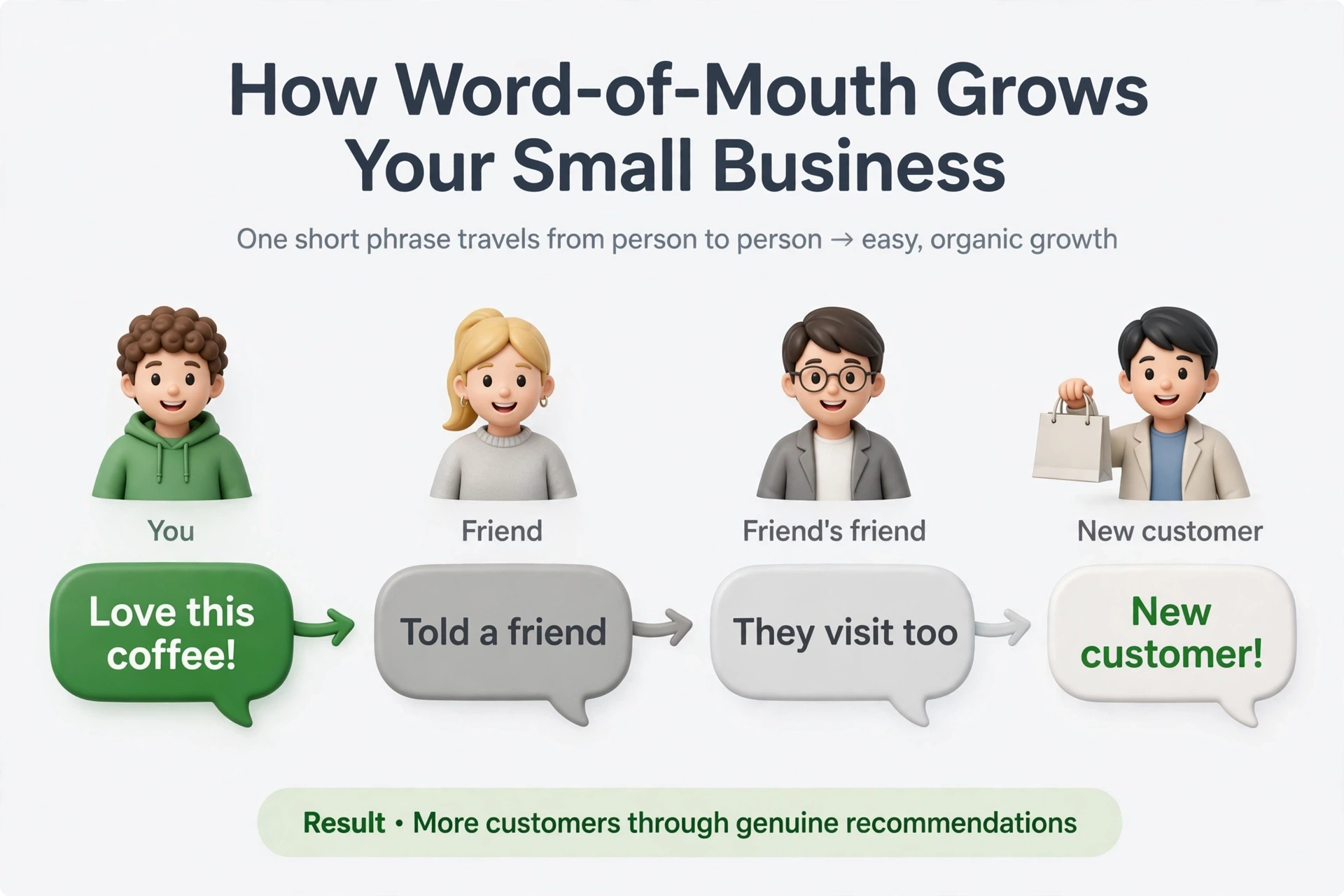
The first lesson of viral phrase marketing is almost embarrassingly simple: people pass on wording they can say again without checking. A two-word phrase fits in a caption, a comment, a voice note, a meme, and a search box. A paragraph does not. A mission statement does not. A carefully worded product description, however accurate, rarely gets repeated by strangers.
That does not mean your business should reduce everything to slogans. It means you should give your audience at least one short, repeatable piece of language for every important idea you want to spread. Think of it as a handle: something people can grip and carry. A bakery might be known for “the Saturday loaf” rather than for a long explanation of its baking process. A fitness studio might be known for “the 6 a.m. club” rather than for a list of class features. A software company might be known for one plain-English promise that customers repeat back in reviews.
The test is practical. If a happy customer tried to recommend you to a friend in a text message, what would they actually type? If you cannot answer that in a few words, your message is probably too long to travel. Viral phrase marketing starts by designing that short version deliberately, rather than hoping customers invent it for you.
It also helps to keep the phrase open enough to be reused. “Habibi” spread partly because people could apply it to their own situations: a friend, a rival, a joke, a song, a caption. Your brand phrase should work the same way. It should describe a feeling, a habit, or a result that customers recognise in their own lives, not just a feature that only makes sense inside your website.
2. Emotion and Surprise Do the Sharing Work
People do not share content because it is informative. They share it because it makes them feel something and because it surprises them just enough to be worth passing on. The “habibi” clip combined warmth, cheek, confidence, and irony in a few seconds. The formality of a swearing-in ceremony collided with an affectionate, informal word. That contrast was the joke, and the joke was the distribution.
Small businesses often try to earn shares by being louder, brighter, or more frequent. The more reliable route is to be more specific about the feeling. Ask yourself what your customer actually feels before, during, and after using your service. Relief after a problem is solved. Pride after a first milestone. Amusement at a familiar struggle. Calm after a chaotic week. Those feelings, named plainly, are far more shareable than generic claims about quality or excellence.
Surprise matters too, but it does not have to mean shock. It can mean an unexpected pairing: a serious topic handled with lightness, a technical subject explained through an everyday comparison, a formal occasion described in friendly language. The surprise in the “habibi” moment was tonal — affection where formality was expected. Your version might be a plumber explaining a repair with unusual honesty, a lawyer explaining a contract in plain language, or a café naming a quiet morning ritual that regulars already love.
One caution belongs here. Emotion that is manufactured feels hollow very quickly. Audiences are skilled at spotting a brand that borrows a feeling it has not earned. If your phrase, joke, or story does not match how you actually treat customers, the shares will turn into scepticism. Viral phrase marketing works best when the language matches the experience behind it.
3. A Phrase Must Be Built for Remixing, Not Just for Reading
A viral phrase is not a headline. It is a template. People do not merely read “habibi” and move on; they say it, caption with it, sing along to it, edit video to it, and apply it to new situations. Short-form platforms reward exactly that behaviour. Editing tools now offer templates built around trending words and sounds, so a phrase can be remade by thousands of people who never saw the original clip.
That is a crucial shift for small business viral phrase marketing. In the past, a campaign was finished when it was published. Today, a campaign is only starting when the audience can remake it. Your job is to make remaking easy. That means short captions that can be copied, audio or video formats that can be reused, and ideas that do not depend on your logo being visible in every version.
Consider a simple viral phrase marketing structure. Publish the original idea in your own voice, then immediately offer a version your audience can adapt: a fill-in-the-blank caption, a before-and-after format, a question that invites a one-word answer, or a short video that others can stitch or respond to. Do not worry if the remakes look less polished than your original. Rough, personal versions often travel further because they feel like participation rather than advertising.

4. Context Is the Difference Between Clever and Careless
A phrase spreads because it is easy to repeat. It can also damage a brand because it is easy to repeat without its original meaning. That is why context is not a footnote in viral phrase marketing; it is the main discipline. Before using a trending phrase, a small business should understand where it came from, who uses it, and what it means to the people who already say it.
One useful test is to imagine the phrase in three places: in your customer’s home, in a news report, and in a complaint from someone who felt misrepresented. If any of those versions make you uncomfortable, the phrase is not ready for your brand, however popular it is. Popularity is not permission, and a search spike is not an endorsement.
The right move is to design your own version rather than copying someone else’s moment. You can learn from the structure of a viral phrase — its length, its tone, its timing — without borrowing the exact words or the identity behind them. In the “habibi” case, the useful lesson is not that every business should start saying the word. It is that short, warm, slightly unexpected language, used in the right context, travels further than formal marketing copy.
That means checking the story behind the words, understanding who uses them, and recognising when your business has no natural connection to the moment. Some trends are best left as something you watch and learn from, not something you join. Choosing not to post can be a stronger brand decision than joining a conversation late, loudly, or in the wrong tone.
5. Respect the Moment, the Culture, and the People Behind It
The strongest protection against a viral marketing mistake is respect. A phrase that comes from another language, culture, or community carries history with it. Using it as a decoration, without understanding that history, can look like borrowing credibility rather than building a relationship. Audiences notice the difference, and they say so publicly.
For small businesses using viral phrase marketing, the work is practical, not abstract. Learn the meaning before you use the words. Credit the source when that is appropriate. Avoid turning a cultural term into a discount code, a slogan, or a punchline that strips away its meaning. If you are unsure, ask someone who understands the context, or simply choose a phrase from your own community and customers instead.
- A phrase rooted in a culture you do not belong to, used without understanding.
- A moment tied to grief, conflict, or a serious event, turned into a sales hook.
- A joke that works only because it mocks the people who originally used the words.
None of those routes is worth a short spike in attention. The businesses that last are the ones that treat viral language as a way to show they are paying attention, not as a way to extract attention. Respect is not the opposite of creativity. It is what makes creativity safe to share.
That respect also applies to timing. A phrase that is funny in one context can be painful in another. Check the news, the conversation, and the mood around a trend before you publish. A few minutes of checking can prevent a post that stays attached to your brand long after the trend has faded.
6. Timing Is a Skill, Not Just a Speed Contest
Speed matters in viral phrase marketing, but it is not the whole story. The businesses that benefit most from a trend are not always the first to post. They are the ones whose response fits the moment, adds something useful, and arrives while people are still paying attention. A rushed post that misunderstands the phrase is worse than a thoughtful post that arrives a few hours later.
Timing in viral phrase marketing, in practice, means having a system ready before the trend appears. That system can be simple: one person who watches trends, a short checklist for checking context, a few approved formats for a quick response, and a clear rule for when not to post. When a relevant phrase appears, you are not starting from zero. You are adapting a format you already trust.
It also helps to think in windows, not minutes. The first window is the immediate reaction, when people are searching for the phrase and its meaning. The second window is the remix phase, when people are making their own versions. The third window is the reflection phase, when people are ready for a useful lesson, a guide, or a behind-the-scenes explanation. A small business can contribute to any of those windows, but it should not try to contribute to all of them at once.
For “habibi”, the first window was dominated by news and explanation. The second window belonged to creators and remixes. The third window — the one this article belongs to — is for businesses that want to learn from the moment and apply it to their own work. Choosing the right window is often more important than being first.
7. Turn a Spike into a System
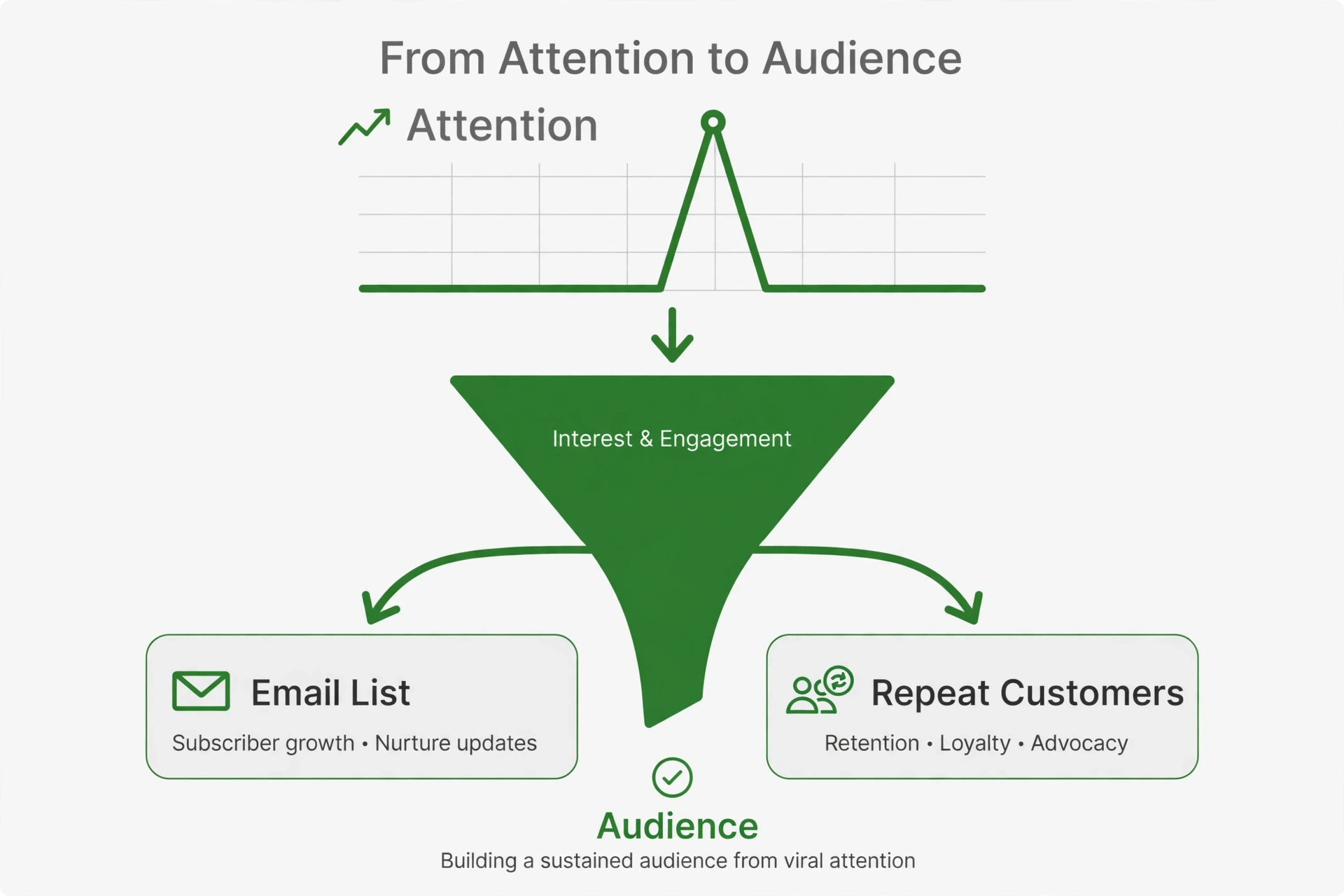
A viral phrase gives you attention. It does not, on its own, give you customers. The difference between a spike and a system is what happens after the first post. Too many small businesses chase a trend, enjoy a day of high views, and then return to silence. The audience that arrived for the trend has nowhere to go, nothing to join, and no reason to return.
The test is simple: does a person who enjoyed your trend-related viral phrase marketing post have a clear next step? That step might be a useful guide, a short video series, an email list, a local event, or a product that solves the problem your post raised. If the only next step is “follow us”, the system is incomplete. People follow accounts that keep giving them something useful, not accounts that had one good day.
That is the real lesson of the “habibi” surge for small businesses. The phrase itself will fade from the top of the trends list, as all phrases do. What remains is the structure behind it: short language, a clear feeling, a format people can remake, respect for context, good timing, and a next step that turns attention into a relationship.
It also means knowing what not to say. A spike tempts businesses to keep posting louder versions of the same joke until the audience tires of it. A system, by contrast, uses the spike as an entry point and then moves on to the business’s own story, its own customers, and its own useful content. The trend opens the door. Your own work keeps people in the room.
- Start with a phrase that is easy to say, easy to type, and easy to repeat without explanation.
- Check your response in seconds, not weeks.
- Decide in advance where your own voice belongs in the story.
Once you have those pieces, a viral phrase stops being a gamble and becomes a repeatable skill. You will still miss some trends, and you will still choose not to join others. That is part of the discipline. The goal is not to be present in every conversation. It is to be credible in the ones that matter to your customers.
The Bottom Line
“Habibi” did not go viral because it was a marketing campaign. It went viral because it was short, warm, surprising, easy to repeat, and easy to remake — and because it arrived at a moment when millions of people were already paying attention. Small businesses cannot copy that moment, but they can copy its structure.
Start with short language for viral phrase marketing. Lead with a feeling people recognise. Build for remixing, not just for reading. Respect the context and the people behind the words. Choose your timing window carefully. Then turn the spike into a system, with a clear next step for anyone who discovers you through the trend.
Do that, and the next viral phrase will not feel like a lottery ticket. It will feel like a test of a system you already have in place — a system that turns a few seconds of attention into a lasting relationship with the people you actually want to serve.
For more trend-based marketing ideas, explore our recent lessons on real-time marketing during a search surge, franchise marketing lessons from a major television launch, and holiday marketing strategy.
Frequently Asked Questions
Viral phrase marketing is the practice of creating short, memorable language that people want to repeat, share, and remake. Instead of relying on a long advertisement, a brand gives its audience a phrase, caption, or promise that fits easily into a message, a video, or a search box, and then supports it with useful content that turns attention into enquiries.
"Habibi" appeared among the most active US searches in early November 2026, with more than 500,000 searches and a rise of over 1,000 percent on Google Trends. Attention converged from several directions at once: a widely clipped victory speech in Detroit, songs carrying the word in their titles, and short-form editing templates built around it.
"Habibi" is an Arabic term of affection, often understood in English as "my dear" or "beloved". Its tone depends on context: it can be warm, playful, teasing, or familiar. That flexibility helps explain why it travels well in conversation, captions, and songs, and why its meaning should be understood before a brand borrows it.
Yes, when the use is genuine and proportionate. A small business should only join a trend it understands, add context or value rather than simply copying a joke, and connect the phrase to something real about its service. A post that helps customers will always read better than a post that only chases reach.
Start with what happy customers already say about you, then shorten it to a few words that describe a feeling, a habit, or a result. Test it by asking whether a customer could type it in a text message without checking your website. If the phrase only makes sense inside your own marketing, it is probably too long or too abstract to travel.
Speed helps, but judgement matters more. Before publishing, check whether the moment involves a tragedy, a conflict, or a sensitive event, whether the phrase carries cultural or political meaning you do not fully understand, and whether joining it genuinely helps your customers. A short approval check by two people — one for facts, one for tone — prevents most rushed mistakes.
Short-form platforms reward content that audiences can remake. When a phrase is paired with a simple video format, a caption template, or a sound, thousands of people can create their own versions without seeing the original. That remixing is what turns a single clip into a trend, and it is why brands should publish formats that are easy to adapt, not just finished advertisements.
Learn its meaning and context first, and consider whether your brand has a genuine connection to it. Explain the word where relevant, avoid stereotypes or mock imitations, and do not use it as decoration for an unrelated sale. Respectful use adds understanding; careless use borrows attention and risks damaging trust.
Treat the spike as a brief opening. Publish a timely piece that captures the search, follow it within a few days with deeper, useful content, and invite the new audience into a channel you control, such as an email list, with a clear reason to stay. Social attention fades quickly, but a helpful article and a subscriber list keep working after the trend has passed.
Look beyond view counts. Saves, shares, and comments that ask real questions show that people found the content worth keeping. Visits to a related page, time spent there, and clicks toward a service or contact page show that attention is turning into interest. Enquiries, bookings, and repeat visits are the measures that show whether the trend actually helped the business.