


Introduction
On 3 November 2026, millions of Americans went to the polls for the midterm elections, and millions more went to Google first. By the night of 3 November, and into the early hours of 4 November, the active rising searches in the United States told a strikingly practical story. People were not only searching for results. They were searching for “voting locations near me”, for “what time does voting close”, for “what do I need to bring to vote”, and for “live election results”. Alongside those questions sat broader surges for “voting results” and “what are we voting for today”. The pattern was urgent, local, and question-led, and it is exactly the pattern that real-time marketing is built to serve.
Real-time marketing lessons from this election search surge matter for small businesses because the surge shows how ordinary people actually use search when something matters to them right now. They do not browse. They ask a direct question, they expect a direct answer, and they act on it within minutes. A voter who searches for a polling place wants directions, hours, and one clear next step, not a long explanation of how elections work. A shopper who searches for a shop that is open now wants the same kind of clarity. The businesses that win those moments are the ones that have already answered the question, in plain language, on a page that loads quickly on a phone, with hours and location information that is up to date.
That is the heart of real-time marketing. It is not about chasing every headline, and it is not about posting jokes about the news. It is about being ready when attention spikes, answering the question behind the spike, and making the next step effortless. The election surge is a useful teacher precisely because it is not a sales event. Nobody was trying to sell a polling place. The surge was driven by need, timing, and place, and those three forces drive almost every valuable search a small business will ever receive. A customer who needs a plumber tonight, a table tonight, or a gift this weekend behaves in much the same way as a voter who needs a polling place tonight: they search, they scan, and they choose the result that removes doubt fastest.
Small businesses often miss surge moments because they plan in months and react in weeks. A surge, by contrast, lasts hours. The election searches rose sharply during the day, peaked as polls closed in different time zones, and then faded as results settled. That compressed timetable is normal. A storm warning, a local event, a product launch, a road closure, or a sudden change in opening hours can all create the same shape: a sharp rise, a short window, and a fast fall. Real-time marketing is the discipline of preparing for that shape in advance, so that when the window opens you are publishing, updating, and helping, rather than drafting, debating, and missing it.
This post turns the election night search surge into seven practical real-time marketing lessons for small businesses. Each lesson ends with a concrete action you can take this week. The examples come from voting searches, but the actions are designed for a shop, a restaurant, a service business, or an online store with a local audience. You do not need a newsroom, a large team, or a large budget. You need one clear page for each important question, one habit of updating hours and availability promptly, and one plan for what to publish when attention spikes.
Lesson 1: Real-Time Marketing Starts With the Question, So Answer It First
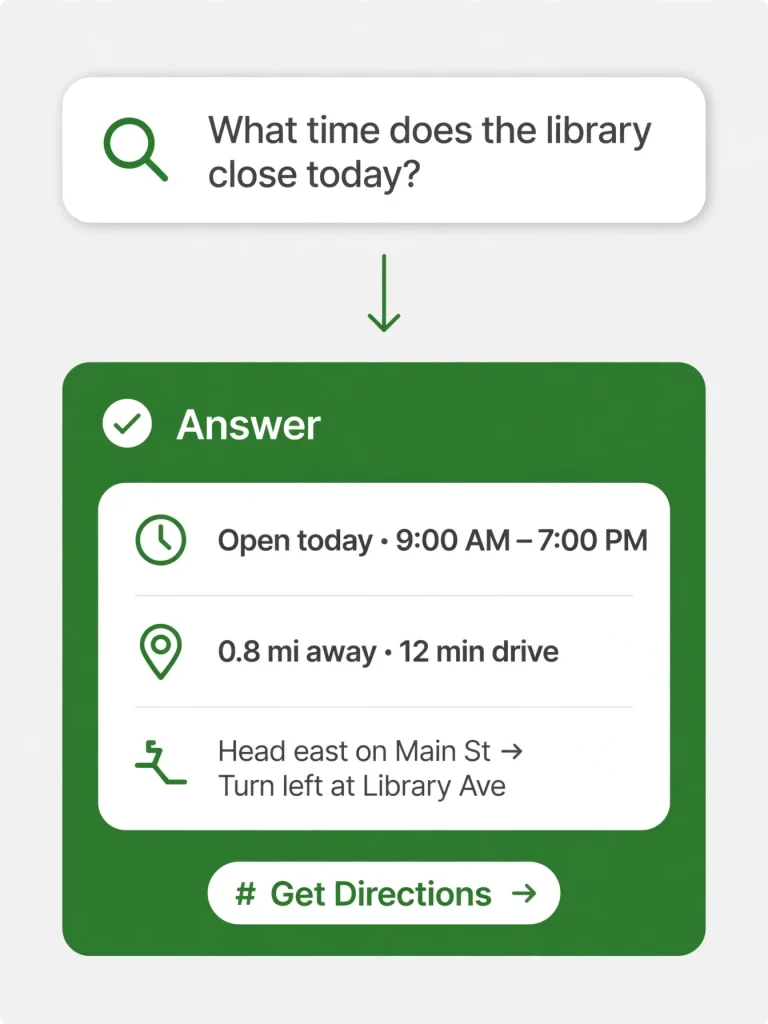
The first of these real-time marketing lessons is about the shape of the search itself. The election surge was not dominated by single brand names or vague topics. It was dominated by questions: where do I vote, what time does voting close, what do I need to bring, can I vote online, and what are we voting for today. Each of those queries carries a person who wants one fact and one action. Real-time marketing starts by respecting that intent, rather than by trying to redirect it towards a sales message.
Many small businesses write the opposite kind of page. They open with their story, their values, and a long description of their range, and they bury the answer to the customer’s question halfway down the page. In a quiet week, a patient visitor may scroll that far. In a surge, they will not. The searcher will bounce back to the results and choose the competitor whose page answers first. That behaviour is not rudeness. It is urgency. When someone is standing on a street, in a car, or in a queue, they are not researching. They are deciding, and the page that decides for them wins.
Answering first does not mean writing less. It means writing in the right order. Put the answer in the first paragraph, in plain language, with the essential detail beside it: the hours, the location, the availability, or the next step. Then explain, then add context, then invite the visitor to explore further. A restaurant that is open late on a busy night should say so at the top of the page, with the closing time and the address, before it describes its menu. A service business that has emergency availability should say so at the top, with the area it covers and how to book, before it explains its process. Real-time marketing rewards that order because search engines reward it too: clear, direct answers are easier to show, easier to quote, and easier to trust.
There is a second part to this lesson, and it concerns honesty about what you do not know. On election night, the responsible pages did not guess polling hours for every state, because hours differ by state and sometimes by county. They pointed people to the official lookup for their own address. Small businesses should do the same when a detail depends on the customer’s situation. If delivery depends on postcode, say so and link to the checker. If availability depends on the day, show the live status rather than a generic promise. Real-time marketing that guesses will be caught quickly in a surge, and a single wrong answer can undo months of trust.
Concrete action: Pick the five questions your customers ask most often when they are in a hurry. Rewrite each answer so the fact comes first, in one short paragraph, followed by the next step. Publish those answers as separate, clearly titled pages or sections, not only inside a long general page.
Lesson 2: Real-Time Marketing Rewards Speed Over Polish in a Short Window
The second lesson from the election search surge is about timing. The surge did not wait for a polished campaign. Searches for voting information rose through the day, spiked around closing times, and moved on to results as the night progressed. A page published the next morning, however beautiful, would have missed the moment it was meant to serve. Real-time marketing therefore treats speed as a feature, not as a compromise. A useful update published in twenty minutes beats a perfect update published in twenty hours.
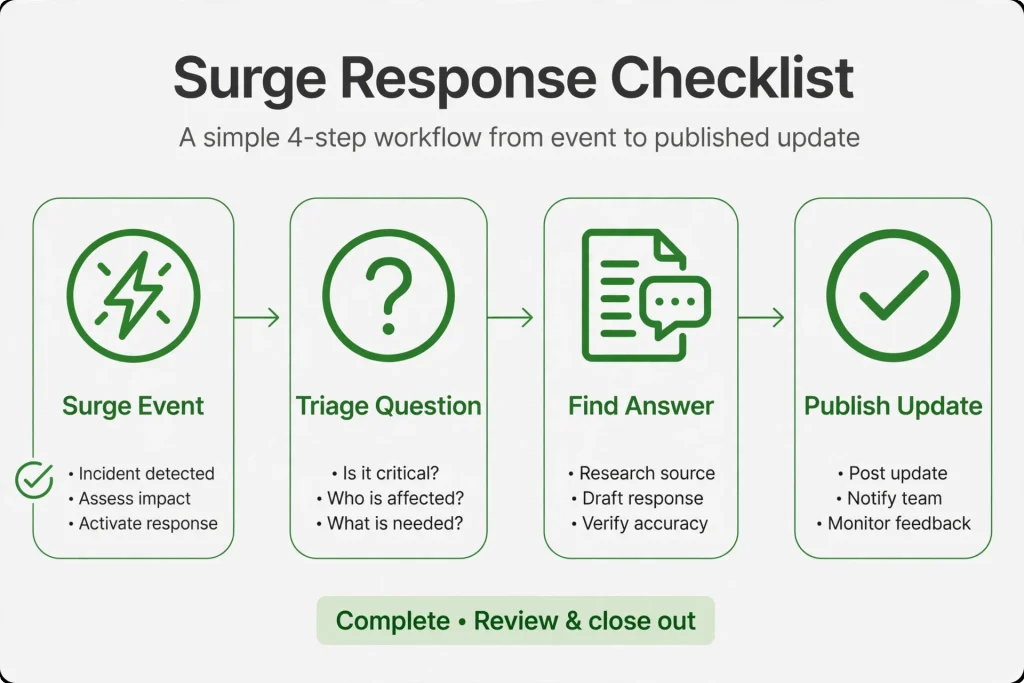
Small businesses often delay for understandable reasons. They want approval, they want a better photograph, they want the wording to be exactly right. In a surge, that caution has a cost. While a business waits, customers choose from the results that are already there. The practical answer is to prepare the unpolished parts in advance. Keep a simple template for a surge update: a headline that states the fact, two or three short paragraphs, the essential details, and one clear next step. When the moment arrives, you fill in the facts and publish. You can improve the photograph later. You cannot recover the lost hours.
Speed also means updating, not only publishing. On election night, the useful answer changed as the day progressed: early in the day, the question was where to vote; later, it was when polls closed; later still, it was what the results showed. A single static post would have gone stale within hours. Real-time marketing works the same way for a business. A post about extended holiday hours needs an update when those hours end. A post about limited stock needs an update when stock runs out. A post about a road closure needs an update when the road reopens. The businesses that keep a page current earn repeat visits, because customers learn that the page can be trusted the second time too.
There is an important boundary here. Speed must never mean publishing unchecked facts. The fastest way to lose trust in a surge is to share a wrong time, a wrong address, or a wrong claim. Real-time marketing pairs speed with a short verification habit: check the fact against its source, state the source when the fact is not your own, and correct the page openly if a detail changes. A correction that is visible and prompt builds more trust than a silent edit, because it shows that the business is watching its own information as carefully as its customers are.
Concrete action: Create one surge template now, before you need it: headline, fact paragraph, details, next step, and source note. Agree who may publish it without waiting for a meeting, and practise by updating one existing page the same day its facts change.
Lesson 3: Real-Time Marketing Wins on Local Intent — Proximity, Hours, and Open Now
The third of these real-time marketing lessons is about place. The election surge was intensely local. “Voting locations near me” is not a national question. It is a question about one street, one building, and one journey, asked by a person who is about to travel. Real-time marketing for a small business lives in that same local space. When a customer searches for something near them, they are not comparing the whole country. They are comparing the few options close enough to use right now, and the winner is usually the option that makes proximity, hours, and availability easiest to confirm.
That is why local search foundations matter more during a surge, not less. A complete and current business profile, with accurate hours, address, contact details, and service area, is the page many searchers will see before they ever reach your website. Reviews, photographs, and recent updates all shape whether that profile looks open, active, and trustworthy. Research on local search behaviour consistently finds that a large share of “near me” searchers visit a business within a day, and that many of those visits happen within hours. The election surge shows the same instinct in a different setting: when the need is immediate, the searcher chooses the result that feels closest and clearest, not the one with the longest description.
Local intent also changes the keywords that matter. A business that only targets broad national terms will be invisible in the moment that matters most. A business that also covers the phrases people actually type in a hurry — the service plus “near me”, the service plus “open now”, the service plus the neighbourhood or town — will be present when the decision is made. Real-time marketing does not require a separate local strategy and a separate surge strategy. The local pages are the surge pages, because the surge is simply local intent arriving all at once.
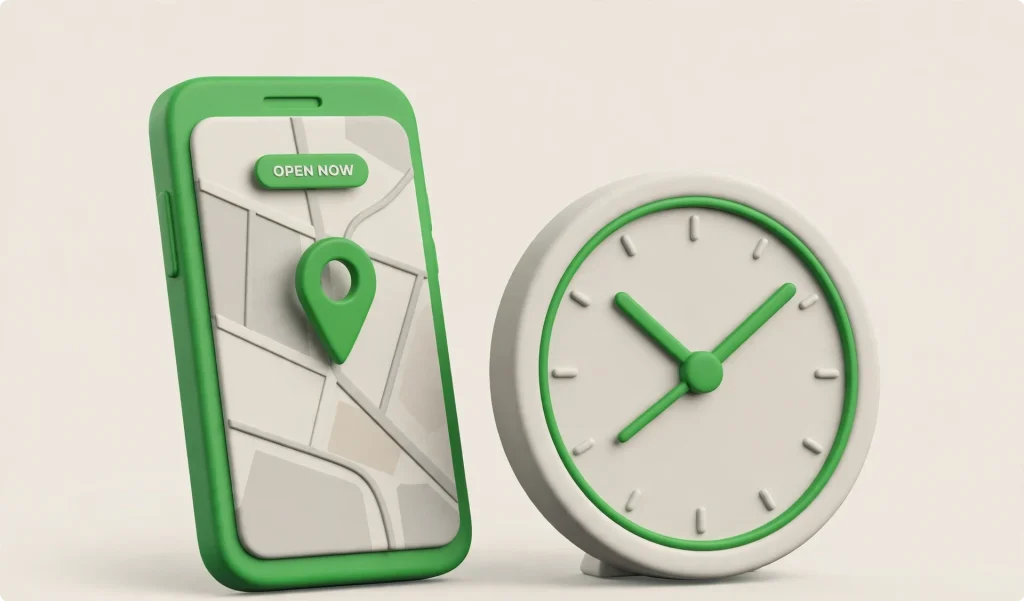
Hours deserve special attention, because they are the most common reason a surge visit fails. A customer who drives to a shop that search results said was open, only to find it closed, will rarely give that business a second chance. Special hours for holidays, events, or busy weekends should be updated wherever customers might see them: the business profile, the website, and any social profile that shows hours. The same applies to temporary closures, changed locations, and changed services. In real-time marketing, an accurate “closed” notice is more valuable than an optimistic “open” notice, because it protects the next visit.
Concrete action: Audit your business profile and your website this week for one thing only: hours, address, and contact details. Correct any mismatch, add special hours for the next busy period, and set a reminder to update them the moment they change.
Lesson 4: Real-Time Marketing Is Mobile First — The Surge Is the Phone
The fourth lesson from the election search surge is about the device in the searcher’s hand. Voting searches on election day are overwhelmingly mobile searches, made on the move, often while travelling, waiting, or standing in a queue. Real-time marketing must assume that same setting for its own customers. A page that works beautifully on a desktop computer but loads slowly, hides the address, or buries the booking button on a phone will fail in exactly the moment it was built for.
Mobile-first thinking starts with load time and layout, but it does not end there. The content itself must be thumb-ready. Short paragraphs, clear headings, large tap targets, and one primary action per screen all help a hurried visitor. A phone number that can be tapped to call, an address that opens in maps, and hours that are visible without scrolling all remove friction. Each small friction point is a reason to go back to the results, and in a surge there is always another result waiting. Real-time marketing treats every tap as a test: if the next step is not obvious within seconds, the visitor is already leaving.
Visual content needs the same discipline. A single clear image that explains the offer, the location, or the change is more useful in a surge than a gallery that takes time to load. Captions should state the fact, not only decorate the image. Alt text should describe the image in words that match the question the visitor asked, because that text also helps search engines understand the page. For a small business, the goal is not to impress a visitor who has time to admire design. It is to help a visitor who has almost no time to decide.
Accessibility is part of mobile readiness, not an extra. Large text, strong contrast, and plain language help every hurried reader, including readers in bright sunlight, readers with tired eyes, and readers using a screen reader. Real-time marketing that is easy to read is also easy to share, and sharing is how a surge spreads. A clear, mobile-friendly update is more likely to be forwarded to a friend, posted in a group, or saved for later, because the person sharing it does not need to explain it first.
Concrete action: Open your three most important pages on a phone, on a mobile connection, and try to complete the main action in under a minute. Fix the first friction point you find on each page — a slow image, a hidden address, or a buried button — before you add any new content.
Lesson 5: Real-Time Marketing Builds Trust as Its Content
The fifth lesson in these real-time marketing lessons is about credibility. Election night is a high-trust moment. People want facts they can rely on, they are alert to misleading claims, and they compare sources quickly. The pages that served voters best were the ones that stated facts plainly, separated fact from opinion, and pointed to official sources for details that varied by place. Real-time marketing for a business faces the same test, at a smaller scale, whenever attention spikes: customers will check your claim against another source, and they will remember whether you were straight with them.
Trust in a surge is built from small, visible habits. State the date and time of an update, so a visitor can tell whether the information is current. Name the source when a fact comes from elsewhere, rather than presenting borrowed information as your own. Avoid superlatives you cannot support, avoid guarantees you cannot keep, and avoid inventing statistics to make a post sound more impressive. A modest post that is accurate will outperform a bold post that is wrong, because the bold post will be corrected by customers in public, and the correction will travel further than the original claim.
Neutrality matters here too, and the election surge is a good reminder of why. A business does not need to take a position on a news event to be useful during it. In fact, taking a position can alienate the very customers the surge brought to the page. The useful role for a business during a public moment is to help: to share practical information, to confirm its own hours and availability, and to stay out of arguments it cannot resolve. Real-time marketing that helps first and sells second earns permission to sell later, because the customer has already experienced the business as helpful rather than opportunistic.
There is also a practical trust habit that many small businesses overlook: answering the same question consistently across channels. If the website says one closing time, the business profile says another, and social media says a third, the customer trusts none of them. A surge amplifies inconsistency, because more people see the mismatch at the same time. Before a busy period, check that the key facts match everywhere they appear. That single check, done quietly in advance, prevents the public corrections that damage a surge most.
Concrete action: Add a visible “last updated” note to any page that carries time-sensitive information, and check that its hours, address, and availability match your business profile and social profiles exactly. Correct any mismatch today, not during the next surge.
Lesson 6: Real-Time Marketing Turns Surge Traffic Into a Lasting Audience
The sixth lesson from the election search surge is about what happens after the peak. Election searches faded as results settled, and the same will happen to any business surge. A storm passes, an event ends, a product sells out, and attention moves on. Real-time marketing that only chases the spike will start from zero the next time. Real-time marketing that captures the spike will still have an audience when the next spike arrives.
Capture does not mean aggressive selling. It means giving the surge visitor a low-pressure reason to stay connected. An email list, a follow for future updates, a guide that answers the next question they will have, or a simple invitation to return for a related offer can all turn a one-time visitor into a repeat visitor. The key is relevance: the follow-up should match the question that brought them in. A visitor who arrived for extended holiday hours is more likely to welcome a short note about holiday availability than a generic newsletter. A visitor who arrived for a seasonal service is more likely to welcome a reminder when that season returns.
Content structure helps here as well. A surge page should link onwards to useful, related pages, so that a visitor who has found one answer can find the next one without searching again. A page about surge hours can link to a booking page, a location page, and a guide to the service itself. Each link is a small act of helpfulness, and together they turn a single visit into a short journey through the business. Real-time marketing works best when the surge page is not a dead end, but a doorway into the rest of the business.
Measurement matters too, but it should be simple. After a surge, look at three things: which search phrases brought visitors, which page they landed on, and what they did next. That short review tells you what to prepare for next time: which questions to answer better, which page to update first, and which follow-up to offer. A business that reviews one surge properly will be noticeably better prepared for the next one, even without new tools or a larger budget. Over a year, those small reviews compound into a genuine advantage.
Concrete action: Add one relevant next step to your most time-sensitive page: a related guide, a booking link, or a short sign-up for future updates on that topic. After the next busy period, spend thirty minutes reviewing which phrases brought visitors and what they did next, and write down one improvement for next time.
Lesson 7: Real-Time Marketing Needs a Playbook Built Before the Surge
The final lesson in these real-time marketing lessons is about preparation. The election surge was predictable in its shape, even if its details were not. An election date is known in advance, polling hours are published, and the questions voters ask are similar every cycle. The organisations that served voters best were not improvising on the day. They had pages, lookups, and updates ready, and they activated them when the surge began. Real-time marketing for a small business should work the same way: the playbook is written in a quiet week, so that a busy week only requires activation.
A useful surge playbook is short. It lists the events that could create a surge for your business: local events, seasonal peaks, weather, roadworks, product launches, and public holidays. For each one, it notes the questions customers are likely to ask, the page that answers each question, and the person who may update it. It also lists the templates, the image sizes, and the channels where updates will appear, so that no one has to invent those details under pressure. The playbook does not need to be elaborate. A single page, kept where the team can find it, is enough, provided it is actually used.
The playbook should also include a decision rule for when not to join a surge. Not every trending topic deserves a business post. A trend that has nothing to do with your customers, or that would require you to take a position on a sensitive issue, is better left alone. Real-time marketing earns trust by being relevant, not by being present everywhere. A simple test helps: if the trend does not help your customer decide, visit, book, or understand something useful, skip it. Silence on an irrelevant trend is not a missed opportunity. It is good judgement, and customers notice it.
Finally, practise the playbook. A surge plan that has never been used will fail in small, predictable ways: a login that does not work, a template that is out of date, a page that no one remembers how to edit. A short practice run — updating a page, publishing a test update, and checking it on a phone — reveals those problems while they are still cheap to fix. Real-time marketing is a habit, not a document, and habits are built by repetition in quiet weeks, not by inspiration in busy ones.
Concrete action: Write a one-page surge playbook this week: five likely surge events for your business, the question each one creates, the page that answers it, and who may publish the update. Practise once by updating one page and checking it on a phone, then file the playbook where the whole team can find it.
Real-Time Marketing in Practice: One Busy Day, Done Well
It helps to see real-time marketing as a single day rather than as a theory. Imagine a neighbourhood bakery on the morning of a large local event. Foot traffic rises, parking changes, and visitors search for a coffee shop that is open now, near the event, with space to sit. Real-time marketing in that setting is not a campaign. It is a sequence of small, correct decisions: the business profile shows today’s hours, the website answers the open-now question at the top of the page, and a short update confirms that the bakery is open, where to park, and what is available.
By midday, the real-time marketing work changes, because the question changes. Visitors now ask whether there is seating, whether a popular item is still available, and how long the wait is. A short update that answers those questions, honestly, will do more good than a new promotion. If an item sells out, real-time marketing means saying so promptly and pointing visitors to a good alternative, rather than leaving them to discover the disappointment at the counter. That honesty is what turns a busy day into a good review.
By evening, real-time marketing becomes follow-up. A thank-you update, a note about tomorrow’s hours, and a link to the regular menu give the day’s visitors a reason to return when the event has gone. None of those steps required a large budget or a specialist team. Each one required preparation, a clear owner, and a habit of updating facts when they changed. That is the practical meaning of real-time marketing for a small business: readiness, clarity, and follow-through, repeated on every busy day until they feel ordinary.
Five Mistakes to Avoid in Real-Time Marketing
First, do not chase a trend that has nothing to do with your customers. A post about a distant headline may earn a few views, but it teaches your audience that your channel is noisy rather than helpful, and it wastes the attention you need for the moments that do matter.
Second, do not publish a surge update and then leave it to go stale. An outdated hours notice, a sold-out offer still shown as available, or a closed location still shown as open will cost you more trust than publishing nothing at all. Update the page when the facts change, and mark the update clearly.
Third, do not bury the answer. A surge visitor will not scroll through a long introduction to find a closing time, an address, or a booking link. Put the fact first, the explanation second, and the story last, and check the order on a phone before you publish.
Fourth, do not guess at facts that vary by place, time, or customer situation. State what you know, link to the official source for what depends on the visitor, and correct the page promptly if a detail changes. Guessing in a surge is visible, and it is remembered.
Fifth, do not treat a surge as a sales pitch in disguise. Help first, with a clear answer and a clear next step, and let the sale follow from the helpfulness. Customers who feel helped during a busy moment are far more likely to return, recommend, and buy than customers who feel targeted during that same moment.
Your Election Search Surge Real-Time Marketing Checklist
Use this checklist to turn these real-time marketing lessons into a plan you can run this month. One, rewrite your five most urgent customer questions so the answer comes first, in plain language, with the next step beside it. Two, create a surge template and agree who may publish it without waiting for a meeting. Three, audit your business profile and website for matching hours, address, and contact details, and add special hours for the next busy period. Four, test your three most important pages on a phone and fix the first friction point on each one. Five, add a visible last-updated note to time-sensitive pages and check that key facts match across every channel. Six, add one relevant next step to your most time-sensitive page, so surge visitors have a reason to stay connected. Seven, write a one-page surge playbook listing likely surge events, the questions they create, the pages that answer them, and who may publish. If you complete those seven steps, you will be ready for the next surge, whatever causes it, without needing a larger team or a larger budget.
Conclusion
The election night search surge in 2026 is not really a story about politics. It is a story about how people search when something matters right now: they ask a direct question, they want a local answer, they decide on a phone, and they trust the result that removes doubt fastest. Real-time marketing, at its best, is simply the discipline of meeting that behaviour with preparation: a clear answer first, a fast update when facts change, accurate local details, a mobile-friendly page, honest sourcing, a useful next step, and a playbook written before it is needed.
You do not need to predict the next surge to benefit from this lesson. You need one set of answered questions, one updated profile, one tested page, and one plan for what to publish when attention spikes. That is a realistic November for a small business, and it is enough to turn a fleeting moment of attention into a visit, a booking, and a customer who remembers that your business was helpful when it mattered.
If you want help turning surge moments into a planned presence — search visibility for the questions customers are actually asking, local pages that stay accurate under pressure, and content that keeps working after the spike fades — KKeyQik can help you build that plan. Our team works with small businesses to turn seasonal and local attention into lasting growth, from search and social campaigns to the content that answers the next question before it is asked. Explore our SEO services for small business, our social media marketing services, and our video marketing services for small business to see how a planned, measured approach can carry your business through busy periods and beyond. For a closer look at how election-season attention affects small-business results, see our recent post on election week advertising costs.
Ready to be ready for the next surge? Contact KKeyQik today and let us help you turn moments of attention into customers who keep coming back.
Frequently Asked Questions
Real-time marketing is the practice of being ready when attention spikes, answering the question behind the spike quickly, and making the next step effortless. For a small business, it usually means a clear answer first, accurate hours and location details, and a prompt update when facts change. It is not about chasing every headline. It is about preparation, so a busy moment becomes a visit or a booking rather than a missed opportunity.
On election day, people needed practical, local facts at the moment they were about to travel: where to vote, what time polls closed, and what to bring. Those questions rose sharply through the day, peaked around closing times in different time zones, and then moved towards results. The pattern shows how search behaves when need, timing, and place combine, which is the same pattern behind many valuable small-business searches.
Put the fact you know first, in plain language, with the next step beside it. When a detail depends on the customer's location or situation, link to the official checker or lookup instead of guessing. State when the page was last updated, and correct it promptly if a detail changes. Accurate, clearly dated information builds more trust in a surge than a bold claim that turns out to be wrong.
Start with the facts a hurried visitor needs most: hours, address, availability, and how to book or visit. Check that those facts match across your website, your business profile, and your social profiles. A single mismatch can send a customer to a closed shop or a wrong address, and in a surge that mistake is seen by many people at once.
Surge searches are often made on a phone, on the move, with very little time to decide. A page that loads slowly, hides the address, or buries the booking button will lose that visitor to the next result. Short paragraphs, clear headings, a tappable phone number, and an address that opens in maps all remove friction. Test your key pages on a phone before a busy period, not during it.
As fast as accuracy allows. A useful update in twenty minutes is usually better than a perfect update the next day, because the surge window may only last hours. Keep a simple template ready in advance, with space for the headline, the fact, the details, and the next step. Speed should never mean publishing unchecked facts, so check each fact against its source before you publish.
Real-time marketing helps a customer decide, visit, book, or understand something useful in a moment that matters to them. Newsjacking, in its weaker form, attaches a business message to a trending topic whether or not it helps anyone. If a trend does not help your customer in a practical way, it is better to stay silent. Relevance, not presence everywhere, is what earns trust.
Give surge visitors one relevant next step: a related guide, a booking link, or a short sign-up for updates on that topic. Follow up with information that matches the question that brought them in, rather than a generic message. After the surge, review which search phrases brought visitors and what they did next, so the next surge starts from a stronger position.
Not usually, and not to gain attention. During a public moment, the most useful role for a business is to help: share practical information, confirm its own hours and availability, and avoid arguments it cannot resolve. Taking a position can alienate the very customers the surge brought to the page. Help first, and let any sale follow from that helpfulness.
A surge playbook lists the events that could create a surge for your business, the questions each event is likely to raise, the page that answers each question, and the person who may publish the update. It also includes your update template and a rule for when not to join a trend. Practise it once in a quiet week, by updating a page and checking it on a phone, so the first real surge is an activation, not an invention.