
Introduction
On September 25, 2026, PepsiCo quietly began recalling more than 122,000 cases of Gatorade. A week later, on October 2, the U.S. Food and Drug Administration posted the recall notice and assigned it a Class II risk designation. Within hours of that posting, “gatorade recall 2026” was one of the fastest-rising searches in the United States — up 300% on Google Trends with more than 100,000 searches, all of them landing in a 19-hour window.
Here is what should keep every marketing leader awake: between the day the company started the recall and the day the news broke nationally, there was a full week of silence. In that week, no official brand page existed for frightened shoppers to find. When the search wave finally hit, the results were dominated by news outlets, recall-tracking sites, and social media speculation — not by the brand itself.
That gap is the whole lesson — and the reason recall SEO exists as a discipline. A product recall is not just a supply-chain event or a legal event. It is a search event. The moment a recall goes public, branded search demand explodes, and whoever controls the first page of Google for “[brand] recall” controls the narrative. Done right, recall SEO turns a frightening moment into a trust-building one: customers find clear answers fast, panic never starts, and the brand comes out looking competent. Done wrong — or not at all — the brand hands its own name to tabloids, class-action advertisers, and rumor mills for a week.
This post is the recall SEO playbook: seven practical strategies brands can deploy the moment a product is recalled — or better, before it ever happens. If you would rather have a team that prepares your search presence for the worst day instead of scrambling on it, KKeyQik builds SEO and reputation strategies engineered for exactly these moments.
What Happened: The Gatorade Recall, in Facts
Before the strategies, the verified facts — because recall SEO only works on real details:
The products. PepsiCo recalled 122,021 cases of 28-ounce bottles across four varieties: Gatorade Lemon Lime, Gatorade Lemon Lime Zero, Gatorade Orange, and Gatorade Orange Zero.
The reason. The bottles contained undeclared Yellow No. 6 and/or Yellow No. 5 — food color additives that were not listed on the label. For people with sensitivities to these dyes, the omission can matter, which is why the recall was issued.
The timeline. PepsiCo initiated the recall on September 25, 2026. The FDA posted the notice on October 2, 2026 — a full week later — and classified it as a Class II recall, meaning exposure “may cause temporary or medically reversible adverse health consequences,” with serious harm considered unlikely. The recall carries the number H-0009-2027.
The scale. The affected products were distributed across 37 states, from Alaska and California to New York, Texas, and Wisconsin. Consumers were advised to return affected bottles to the place of purchase.
The search wave. On October 6, “gatorade recall 2026” surged to 100K+ searches with a +300% lift on Google Trends US, riding a wave of local news coverage (the story broke on local TV affiliates starting October 5). Every one of those searches was a customer asking, in real time, “is the bottle in my fridge affected?” — and nearly all of them landed on someone else’s page.
That last point is the entry point for recall SEO. Let us break down why recall searches behave the way they do.
Why Recall Searches Explode Before the Press Release Lands
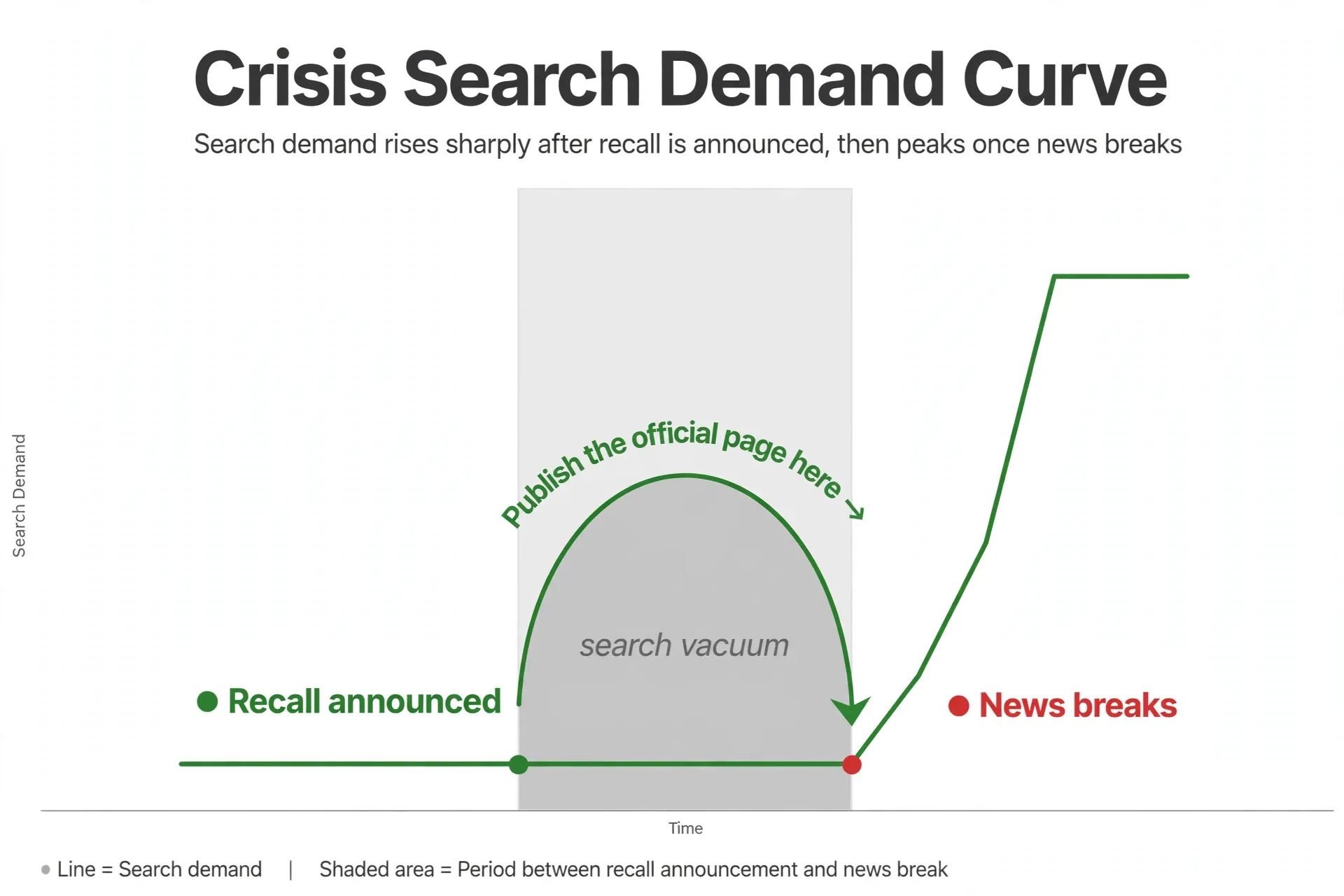
Recall SEO starts with understanding the search-demand curve of a crisis, because it does not behave like normal demand:
1. The spike is instant and branded. Nobody searches “sports drink recall” — they search the brand name plus “recall.” Crisis demand concentrates on a handful of branded queries (“gatorade recall,” “gatorade recall 2026,” “is gatorade safe”), which makes them winnable: the brand has an inherent authority advantage for its own name if it actually publishes something.
2. The spike precedes the information. In the Gatorade case, the recall existed for a week before the FDA posting turned it into national news. During that window, anyone who heard a rumor had almost nothing official to find. This is the pattern in nearly every consumer recall: search volume detonates before the brand’s communications team has a page live. The winner of the first 24 hours is whoever published first — and “whoever” is usually a news outlet, not the brand.
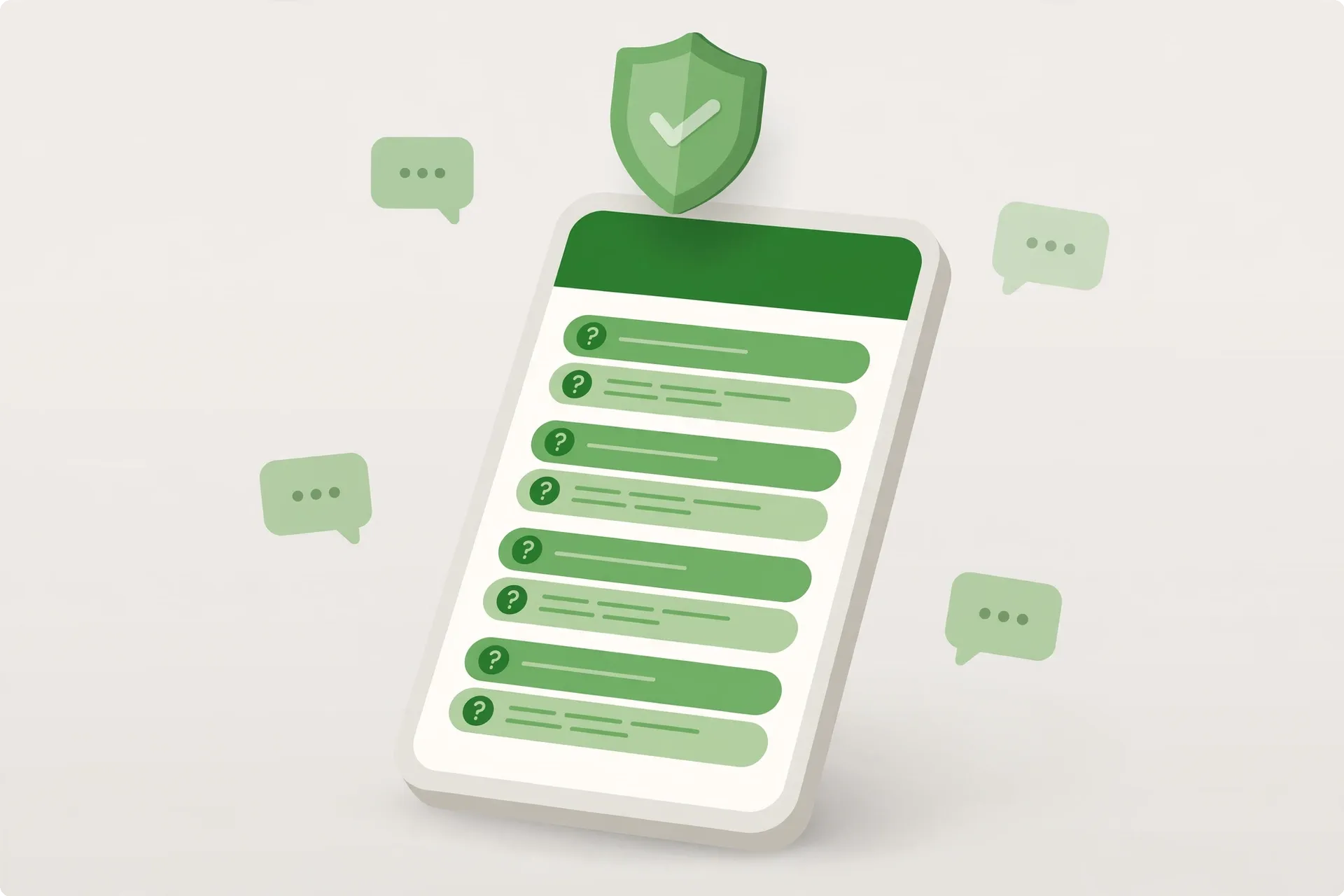
3. The queries are question-shaped. Crisis searchers ask things like “which gatorade is recalled,” “gatorade recall lot numbers,” “is my gatorade safe,” and “gatorade recall refund.” These are informational, long-tail, and beautifully served by a single well-structured page with a real FAQ section. This is the demand curve that recall SEO is built to intercept — and recall SEO lives and dies on answering these literal questions in the literal words people type.
4. The demand has a long tail. The initial spike fades, but “brand + recall” queries rank for years. Class-action law firms and sensationalist content farms bid on and optimize for these terms indefinitely. A brand that wins the crisis SERP early keeps winning it; a brand that cedes it spends years buying its own name back.
Understanding this curve is what makes recall SEO different from ordinary SEO. Now the seven strategies.
Strategy 1: Publish a Dedicated Recall Information Page Within Hours
The single highest-leverage move in recall SEO is also the simplest: get one official, search-optimized page live as fast as humanly possible.
That page needs a predictable, search-friendly URL — something like yourdomain.com/recall or yourdomain.com/product-recall-october-2026. It should contain, in plain language: which products are affected (with photos and lot numbers), which are NOT affected, what customers should do (return, refund, contact), a phone number and email for questions, and the date the page was last updated. Add FAQ schema markup so Google can show the key questions and answers directly in the results — when someone searches “which gatorade is recalled,” the brand’s own answer should appear above the fold. That is textbook recall SEO.
Why does speed matter so much for recall SEO? Because Google rewards freshness during news events, and because every hour without an official page is an hour where a third-party page accumulates the clicks, backlinks, and engagement signals that cement its ranking. The brand’s page, published on day one, inherits the brand’s domain authority — a domain that already ranks for its own name will outrank a news site for branded crisis queries almost every time, if the page exists. In the Gatorade timeline, that page could have gone live on September 25. Instead, the search vacuum of October 2–6 belonged to everyone else.
Keep the page live after the crisis ends. Update the top with “This recall is complete; here is what we changed” — that page becomes a long-term trust asset and a permanent shield for the branded crisis query.
Strategy 2: Own the Branded Crisis SERP, Query by Query
This query-by-query ownership is the operational core of recall SEO. Map every crisis query variant and make sure an official asset owns each one:
- “[brand] recall” — the dedicated recall page (Strategy 1).
- “[brand] recall 2026” / “[brand] recall lot numbers” — same page, with clear H2s matching those exact phrases, plus a downloadable lot-code list.
- “is [product] safe” — a short, factual statement page or blog post from the brand’s leadership, in human language, optimized for the “safe” phrasing. These queries carry purchase intent in reverse: a good answer keeps the rest of the product line selling.
- “[brand] refund” / “return [product]” — instructions with store-locator or retailer links; this query often spikes hardest among actual owners.
Monitor the SERP daily during the crisis with a rank tracker set to the exact crisis queries, not your usual keywords. New crisis coverage lands on page one within hours, and Google News boxes rotate constantly. Recall SEO is active management, not set-and-forget: if a misinformation article cracks the top three, respond with a factual update on your own page the same day (and consider the paid lever in Strategy 4).
One more lever: your Google Business Profiles and knowledge panel. During a crisis, the knowledge panel’s “official site” link and any posted updates get enormous visibility. A short, pinned social post linking to the recall page also funnels branded social searches toward the official source instead of the rumor thread.
Strategy 3: Let the Brand’s Own Voice Answer “Is It Safe?”
The most dangerous moment in a recall is not the announcement — it is the 48 hours of questions that follow. “Is my kid’s sports drink okay?” “What if I already drank it?” These are emotional queries, and the answers that rank determine whether the brand looks responsible or evasive.
Recall SEO treats these as content opportunities, not PR problems. Publish a plain-language Q&A — written by or attributed to a real executive or food-safety lead — that answers the uncomfortable questions directly: what happened, who is affected, what the actual risk level is (the FDA’s own Class II language is useful here: temporary or reversible effects, serious harm unlikely), and exactly what to do. Attribution matters: a signed statement from a named leader outranks and out-trusts an anonymous corporate notice, and it gives journalists something quotable that is not a newsroom’s paraphrase — in recall SEO terms, it converts earned media into owned authority.
The Gatorade case shows the cost of skipping this step. Because no official voice was answering “is my gatorade safe” in the first week of October, the answers ranking were written by local newsrooms working from the FDA notice — accurate, but not the brand’s voice, and surrounded on the page by ads for everything else. Every “is it safe” query the brand does not answer is answered by someone else, in the brand’s name, without the brand’s permission.
For the longer game, this content also feeds your SEO services strategy — crisis Q&A pages earn links from news coverage and Wikipedia-style reference sites, which is exactly the authority that protects branded rankings for years.
Strategy 4: Use Paid Brand Search as a Crisis Shield
Organic recall SEO takes hours to days to fully take hold. Paid search takes minutes. The moment a recall goes public, the brand should be bidding on its own crisis queries — “[brand] recall,” “is [product] safe,” “recall lot numbers” — with ads pointing straight to the official recall page.
This is not normal brand bidding; it is the paid half of recall SEO. The goal is not conversion; it is narrative control. A paid result at the top of the crisis SERP guarantees that the first thing a frightened customer sees is the brand’s own answer, even before organic rankings settle. It also blocks a particularly ugly outcome: competitors, class-action firms, and sensationalist publishers all bid on crisis queries, and the auction does not care whose name is in the keyword. If the brand does not buy its own crisis terms, someone else will — and their ad will sit above the brand’s organic result.
Budget for this in advance. A crisis paid-search playbook — pre-approved ad copy, pre-built campaigns in draft, a standing authorization to spend — turns a 6-hour scramble into a 20-minute deployment. The same discipline applies to PPC management in calmer times: brand-term coverage is cheapest when you set it up before you need it, and most expensive when a crisis forces you to build it overnight. Note that none of this requires naming or attacking anyone — the ads simply say “Official recall information from [brand]” and link to the facts. Clean, fast, and honest.
Strategy 5: Engineer the Page for Speed, Mobile, and Instant Indexing
During a crisis, technical SEO stops being a background discipline and becomes the whole game. Consider the searcher’s situation: they are standing in a kitchen holding a bottle, or in a grocery aisle, on a phone, with shaky cell signal. If the official recall page loads slowly, renders badly on mobile, or has not been indexed yet, they will get their answer from the news article that loaded instantly. In other words, recall SEO is technical SEO under a deadline.
The recall SEO technical checklist:
- Index it immediately. Submit the new page through Google Search Console’s URL Inspection and through IndexNow/Bing the moment it publishes. Do not wait for the crawler to find it — during a news spike, hours matter.
- Make it brutally fast. One page, minimal scripts, compressed images, no video autoplay. Crisis pages should load in under two seconds on a mid-range phone over LTE. Every extra second of load time is a percentage of panicked visitors bouncing to a news site.
- Mobile-first layout. Lot numbers in a readable table or a tap-friendly list, not a PDF. (PDFs are where recall information goes to die: they are slow, unsearchable on mobile, and nearly impossible to update.)
- Structured data. FAQPage schema for the Q&A, and make sure the page is eligible for Top Stories/Google News inclusion. During a news event, Google’s news surfaces can outrank classic organic results — the brand’s page should be in that rotation.
- Server capacity. A recall page can take 100x normal traffic in a day. Make sure the site does not buckle; a 500 error on the recall page during a crisis is a second crisis.
This is also where an SEO reporting discipline pays off: if you already track Core Web Vitals and indexation health as routine, the crisis page inherits a healthy foundation instead of being built on a shaky one.
Strategy 6: Run Social Listening Like a Newsroom, Not a Brand
Search is only half the crisis. The other half is social, where the recall story mutates: lot-number screenshots with wrong dates, AI-generated “recall lists” that include unaffected products, and the inevitable fake “the CEO said” quotes. Recall SEO and social listening are the same job viewed from two angles — both are about making sure the factual answer is easier to find than the rumor.
Set up real-time monitoring for the brand name plus “recall,” “safe,” “lawsuit,” and the product names across X, TikTok, Reddit, and Facebook. The playbook:
- Correct with facts, not with lawyers. When a viral post gets the lot numbers wrong, reply from the official account with the correct list and a link to the recall page. Short, calm, factual. Brands that argue lose; brands that inform win.
- Pin the truth. Pin the recall-page link to the top of every brand profile for the duration of the crisis. Most social visitors never scroll; the pinned post is the whole communications strategy for the drive-by audience.
- Watch the comment sections of your own ads. Crisis-era paid social attracts angry comments; hiding them looks evasive, answering them looks competent. Have pre-approved factual responses ready.
- Track sentiment, not just mentions. A recall where sentiment stabilizes within 72 hours is a recall that was managed. A recall where negative sentiment keeps climbing after a week is a recall where the information strategy failed — and that failure will show up in branded search behavior for months. That feedback loop — search data informing the social response and vice versa — is what separates mature recall SEO from a one-page scramble.
Social content during a crisis should be handled with the same care as social media marketing in normal times — one team, one voice, one source of truth — because inconsistency between the social reply and the recall page destroys trust faster than silence.
Strategy 7: Convert the Crisis Into Long-Term Trust Content
The final recall SEO strategy plays the long game. When the immediate crisis passes — lots identified, refunds processed, news cycle moved on — most brands delete the recall page and try to forget the whole thing. That is a mistake. The brands that win the long tail do the opposite: they turn the recall into a permanent trust asset — because recall SEO rewards the brands with the longest memory.
Publish a retrospective: what happened, what the investigation found, what changed in manufacturing or labeling, and what the new safeguards are. Make it specific and technical — vague “we take quality seriously” copy convinces no one, but “we added a second label-verification scan at all six bottling plants” convinces everyone. This page then ranks for “[brand] recall” forever, sitting above the class-action ads and the sensationalist retrospectives, telling the brand’s version of the story in the brand’s words.
Then fold the lessons into evergreen content: a quality-commitment page, a “how we label our products” explainer, supplier standards content. Each of these earns links and builds the topical authority that makes the next crisis easier to manage — because the next crisis always comes. Recall SEO compounds: the brand that handled 2026’s recall transparently starts 2028’s crisis with a domain full of trust signals instead of a blank slate.
What the Gatorade Timeline Really Teaches
Zoom out on the dates, because the timeline is the strategy lesson in miniature — a case study in why recall SEO preparation beats recall SEO improvisation:
- September 25: PepsiCo initiates the recall. No public search wave yet — the story is not widely known.
- October 2: The FDA posts the notice and assigns Class II status. News coverage begins.
- October 5–6: Local TV affiliates pick it up; “gatorade recall 2026” surges 300% to 100K+ searches.
The critical gap is September 25 to October 2. That was the week when an official recall SEO presence could have been built quietly — page live, schema in place, paid campaigns drafted, social listening armed. Instead, the brand entered the search spike with no owned asset, and the entire first wave of “is my gatorade safe” searches flowed to third parties.
To be clear: there is no evidence PepsiCo did anything wrong in its recall execution — the firm-initiated recall, the FDA coordination, and the lot-level detail are all textbook. The lesson is narrower and more useful: the communications layer of a recall now moves at search speed, and the search layer has to be ready before the news layer ignites. A one-week head start was available here. Most brands get less.
There is also a subtler point for marketers watching this from the outside. Crisis search demand is intent-rich and time-compressed — it is the purest test of whether your SEO fundamentals (indexation speed, page speed, structured data, branded-query coverage) actually work under load. If your normal SEO reporting cannot tell you, on any given Tuesday, how fast a new page gets indexed and how your branded SERP looks, you will discover the answer during a crisis, when it is too late to fix.
5 Mistakes That Lose the Crisis SERP
Even brands that attempt recall SEO often sabotage themselves. The five most common failures:
1. Burying the recall in a PDF. A PDF linked from a press-release page is nearly invisible to mobile searchers and impossible to update cleanly. The recall information must be HTML, on the brand’s domain, at a memorable URL.
2. Legalese instead of answers. “The firm has initiated a voluntary market withdrawal of certain SKUs” tells a worried parent nothing. Write the page for the person holding the bottle: “If your bottle’s lot code matches one below, return it to the store for a refund.”
3. No paid coverage. Organic takes time; the auction is instant. Brands that refuse to bid on their own crisis queries on principle misunderstand recall SEO: if the brand does not buy its own crisis terms, someone else will — and their ad will sit above the brand’s organic result.
4. Deleting everything when it ends. Taking the recall page down after the crisis creates a 404 where the brand’s answer used to be — and hands the query permanently to third parties. Keep it live, updated, and honest.
5. Treating it as PR, not search. The press release goes to journalists; the recall SEO page goes to customers. They are different artifacts with different jobs. Brands that publish only the press release discover that journalists quote it — but customers never find it.
Your 48-Hour Recall SEO Checklist
If a recall lands on your desk tomorrow morning, here is the recall SEO sequence:
Hour 0–4: Draft the recall page (affected products, lot numbers, what to do, contact info). Publish at a clean URL. Submit to Search Console and IndexNow. Launch pre-built paid brand-crisis campaigns.
Hour 4–12: Add FAQ schema and the “is it safe” Q&A. Pin the page link on all social profiles. Brief customer service with the exact same facts (nothing kills trust like the phone team contradicting the website). Begin social listening.
Hour 12–24: Publish the leadership statement. Pitch the recall page — not just the press release — to journalists covering the story so their articles link to the official source. Monitor the crisis SERP hourly.
Hour 24–48: Review search query data; add any emerging question phrasing to the FAQ. Publish the lot-code lookup in the most usable format possible. Start drafting the retrospective framework for later.
Then keep the page alive, keep it updated, and when the dust settles, write the honest retrospective. That is recall SEO: speed first, facts always, and a long memory.
The Bottom Line
The Gatorade recall of 2026 will fade from the headlines within days — that is the nature of a Class II recall with no serious injuries. But the search footprint will linger for years: “gatorade recall” will keep getting typed, the news articles will keep ranking, and the brands watching this unfold have a choice to make before their own worst day arrives.
Recall SEO is not a dark art. It is the disciplined application of ordinary SEO — fast indexation, clear content, structured data, paid brand coverage, social listening — to an extraordinary moment. The brands that treat a recall as a search event from hour zero keep their customers’ trust — that is recall SEO working as designed. The brands that treat it as a legal event and hope search sorts itself out spend years buying back their own name.
Do not wait for the FDA notice to discover whether your search fundamentals hold up under crisis load. If you want a team that builds your SEO, paid search, and reputation defenses before you need them, talk to KKeyQik — we would rather engineer your crisis playbook on a calm Tuesday than on the worst Friday of your year.
Want to put this to work for your business? KKeyQik plans and delivers SEO for small businesses, with an in-house team available 24/7. See our SEO service or get a quote within 24 hours.
Frequently Asked Questions
Recall SEO is the practice of optimizing a brand's search presence for product-recall scenarios. It covers publishing a fast, search-optimized recall information page, winning branded crisis queries like "[brand] recall," bidding on crisis terms in paid search, and managing the SERP so customers find official answers instead of rumors. It is ordinary SEO — indexation, content, structured data, paid coverage — applied at crisis speed.
PepsiCo recalled 122,021 cases of 28-ounce Gatorade bottles (Lemon Lime, Lemon Lime Zero, Orange, and Orange Zero) because they contained undeclared Yellow No. 6 and/or Yellow No. 5 food colorings. The company initiated the recall on September 25, 2026; the FDA posted the notice on October 2 and classified it as Class II. The products were distributed across 37 states, and "gatorade recall 2026" surged 300% on Google Trends within hours of the news breaking.
Recall searches are almost entirely branded — people search the product name plus "recall" — so demand concentrates on a handful of queries and detonates the moment news coverage begins. In the Gatorade case, the recall existed for a full week before the FDA posting turned it into national news, and the search wave hit before most shoppers had any official source to consult. That compression is why recall SEO has to be prepared in advance, not built after the story breaks.
The page needs a clean, memorable URL and should answer every literal question in plain language: which products and lot numbers are affected, which are not, what customers should do (return, refund, contact), and when the page was last updated. FAQ schema markup lets Google surface those answers directly in results. The page should be fast, mobile-friendly HTML — never a PDF — and it should stay live after the crisis ends as a permanent trust asset.
Yes. Organic rankings take hours to days to settle during a news spike, while paid search goes live in minutes. Bidding on crisis queries like "[brand] recall" and "is [product] safe" guarantees that frightened customers see the brand's own answer first, and it blocks competitors, class-action advertisers, and sensationalist publishers from buying those terms. Pre-build the campaigns and pre-approve the ad copy so deployment takes minutes, not hours.
Reputation management is the broad, ongoing discipline of shaping what people find when they search your brand. Recall SEO is its crisis-time application: narrower, faster, and query-specific. It targets the exact crisis queries ("[brand] recall," "is [product] safe," "[brand] refund"), pairs organic content with paid coverage, and operates on an hourly monitoring cadence. The two connect after the crisis, when the recall page and retrospective content become permanent reputation assets.
Burying the recall information in a PDF attached to a press release. PDFs are slow on mobile, hard to update, and nearly invisible in mobile search — exactly where panicked customers look first. The second biggest is publishing nothing at all and letting news outlets, recall aggregators, and rumor threads own the entire first page. An official HTML page on the brand's domain, published within hours, outranks third-party coverage for branded crisis queries almost every time.
Permanently. Taking the page down after the crisis creates a broken link where the brand's answer used to be and hands the query to third parties for years — crisis queries keep getting searched long after the news cycle ends. Update the top of the page when the recall is complete ("This recall is complete; here is what we changed") and later add a retrospective on what the investigation found. That page becomes the brand's permanent, owned answer to the query.
Small businesses can and should. The playbook scales down cleanly: one clear recall page, FAQ schema, a Google Business Profile update, pinned social posts linking to the page, and a modest paid brand-search campaign. Smaller brands actually have an advantage — fewer approval layers means the page can go live faster, and speed is the single biggest ranking factor in the first 24 hours of a crisis.
Build the infrastructure on a calm day: a recall page template with pre-approved copy blocks, pre-built paid search campaigns in draft, a standing budget authorization, a social-listening setup for brand-plus-"recall" mentions, and a named owner with publishing access. Audit the basics quarterly — indexation speed, page speed, branded SERP health — because a crisis exposes every weakness in your SEO fundamentals. Preparation is what turns a six-hour scramble into a twenty-minute deployment.