
What Happened: The Gemini Spike That Sent Everyone to Downdetector
The facts, briefly, because accuracy is the first marketing asset in a fast-moving story. On October 8, 2026, Google Gemini users began reporting widespread failures: prompts returned generic error messages, some conversations disappeared from history, and both web and app access faltered for a significant share of users. Downdetector, the crowdsourced outage tracker, registered a sudden explosion of reports — 4,412 at the 16:07 UTC peak cited in early coverage — with complaints arriving from the United States, the United Kingdom, India, Turkey, Australia, Indonesia, and elsewhere. By the following evening in India, tallies cited in follow-up reporting approached 10,000 reports. A second wave of errors arrived on October 9, with app users seeing a polite but useless “I seem to be encountering an error” message in place of answers. Two details make this episode especially instructive for marketers. First, Google’s public status surfaces lagged the crowd. While reports piled up, the Gemini status page continued to show normal operation, and no confirmed technical explanation had been published at the time of early reporting. Users therefore trusted the graph they could see — Downdetector’s — over the green checkmark they could not reconcile with their own experience. Second, Gemini had already experienced a conversation-history problem in February 2026 that Google acknowledged and attributed to a background metadata process. That history meant returning users interpreted the new failure through an old frustration, and their posts read less like bug reports and more like verdicts. None of this makes Gemini uniquely fragile; every large platform has a Downdetector graph with its name on it, and older incidents — from Amazon Web Services regional failures that rippled across banking, streaming, and gaming, to content-delivery outages that briefly took major news sites offline — follow the same public pattern. What changes each time is which brand is at the center, and whether that brand’s marketing team treats the next few hours as a communications deadline or as someone else’s problem. The seven moves below assume you will be at the center eventually, because if your business sells online, books online, or supports customers online, eventually you will.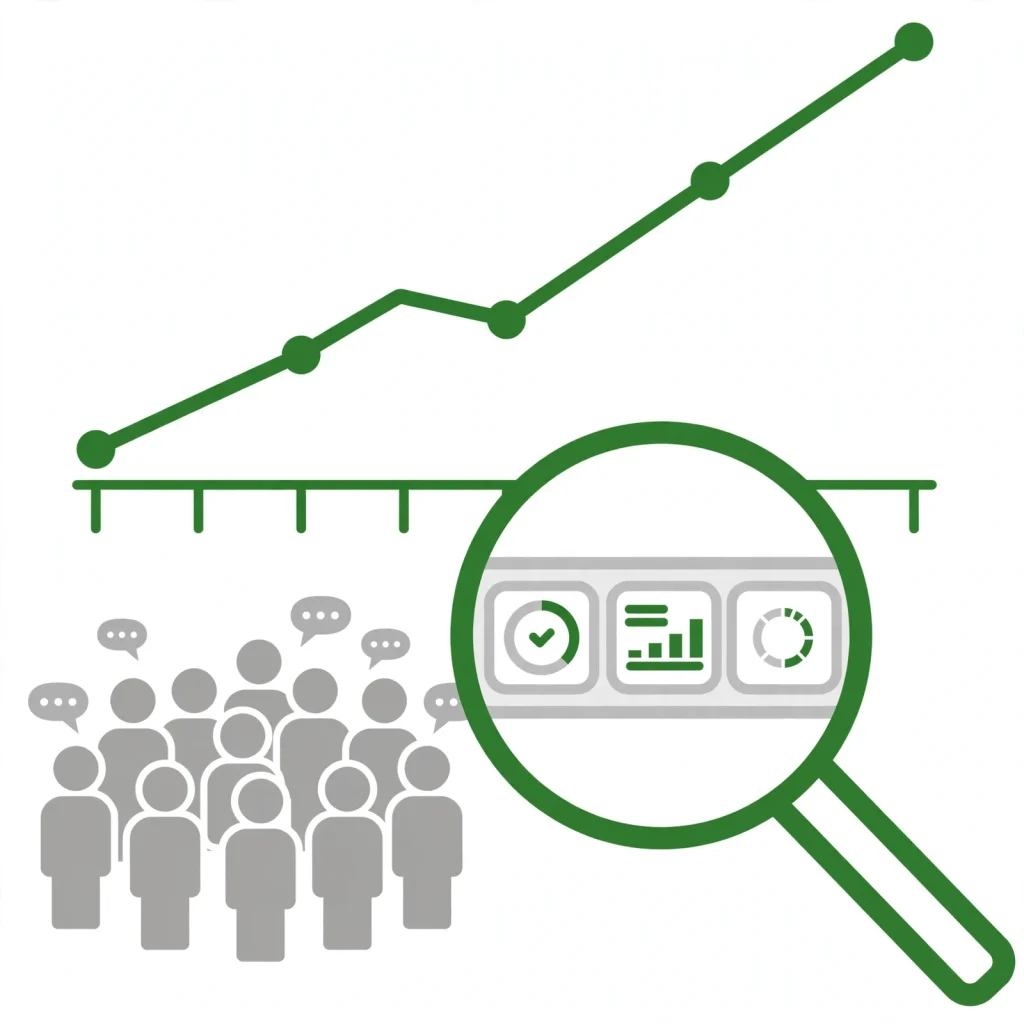
Why Downdetector Is Now Your Unofficial Homepage During an Outage
Understanding the Downdetector effect starts with a simple behavioral truth: when a service fails, people do not visit your homepage. They search. The query is almost always some version of “[brand] down,” “[brand] outage,” or the Downdetector brand itself. Google, obligingly, surfaces the page that best matches that intent — and for most businesses, that page is not yours. It is a crowdsourced complaints chart surrounded by frustrated comments, competitor advertisements, and links to alternatives. That has three consequences marketers underestimate. First, your highest-intent audience — people actively trying to use your product right now — meets you at your worst moment on a page you do not control. Second, the outage narrative gets written by whoever posts first and clearest, and if that is not you, it will be a screenshots thread, a news aggregator, or a rival’s cheerful comparison page. Third, the search interest does not vanish when service returns. “Is it down” queries leave behind autocomplete suggestions, forum threads, and news stories that resurface at the next hiccup, which is why brands with repeated incidents find each new Downdetector spike larger than the last. The fix is not to outrank Downdetector at its own game; you will not, and you do not need to. The fix is to own the second click: the status page, social post, and search result that answer the question completely, honestly, and in your brand’s voice. That is exactly what the following playbook builds.
Move 1: Pause the Bleed — Ads, Emails, and Launches in the First 15 Minutes
The move. The moment an outage is confirmed, pause or throttle every campaign that sends traffic to the broken experience: paid search, paid social, scheduled email sends, SMS pushes, and any launch announcement queued for that window. Assign this decision to a named person with pre-granted authority, because the cost of waiting for an approval chain is measured in wasted clicks. Why it works. Advertising platforms are diligent, not clairvoyant. They will keep delivering engaged, expensive traffic to an error page for exactly as long as you keep paying them to. Every one of those clicks teaches the platform that your landing page disappoints users, which drags quality scores and raises future costs long after the outage ends. Email is worse: a promotional send that lands during downtime does not just underperform, it trains subscribers to associate your brand with frustration, and the unsubscribes arrive within the hour. The Gemini episode showed the scale version of this dynamic — thousands of users retrying a failing product in minutes — but a small business with a broken checkout experiences the same physics at its own scale. Steal it. Build a one-page “pause list” today, while nothing is broken. It should name every active channel, the exact clicks required to pause it, and the person authorized to act. Store it where on-call staff can reach it at 2 a.m. without asking anyone. If you run paid advertising through an agency or freelancer, agree the pause trigger in writing now: confirmed downtime plus a single message from your side equals immediate pause, no meeting required. Speed here is not panic; it is the cheapest media decision you will make all year.Move 2: Publish the Page You Wish Existed — A Status Page That Search Can Find
The move. Maintain a permanent, indexable status page on your own domain — not a third-party subdomain nobody can find — and update it relentlessly during an incident: what is affected, when you noticed, what you are doing, and when the next update will arrive, even if that update is “still investigating.” Why it works. During the Gemini disruption, the gap between the crowd’s experience and the official “operational” signal became its own story, and that gap is where trust leaks. A status page you update every 30–60 minutes, in plain language, closes that gap. It also captures the exact searches your customers are typing. A page titled with your brand plus “status” and “outage” language, linked from your homepage banner and social profiles, gives Google a relevant, authoritative result to show beneath the Downdetector graph — and gives journalists, partners, and support staff one canonical link to share instead of forty improvised replies. Steal it. Keep the page live and indexed year-round, even when it simply says all systems normal; a page created mid-crisis arrives too late to rank for anything. Write updates like a person, not a legal department: acknowledge impact, avoid blaming vendors by name in the first message, and timestamp everything in the reader’s terms. After recovery, leave the incident summary on the page. That archive quietly becomes proof, for every future prospect who searches your reliability, that you communicate like a grown-up. It is unglamorous search engine optimization — and it converts.Move 3: Say It Where They Already Are — Social and Support as One Voice
The move. Post the first public acknowledgment within minutes on the channels your customers actually watch, pin it, and then run every subsequent update from that same thread. Support replies, social posts, and the status page must tell one identical story, updated in lockstep. Why it works. In every major Downdetector event, the public conversation happens with or without the brand. During the Gemini spike, users compared error codes, shared workarounds, and narrated the outage to each other while official channels stayed quiet — a vacuum that speculation filled within the hour. A brand that posts early earns a disproportionate reward: its message becomes the screenshot everyone shares, the link news roundups embed, and the thread frustrated customers vent in, where at least they can be answered. Tone matters enormously. Short, human, specific beats polished and vague. “Our checkout is down, we found it at 2:10 p.m. ET, next update by 3:00” outperforms any paragraph containing the phrase “valued customers” and the word “inconvenience.” Steal it. Pre-write three fill-in-the-blank templates now: acknowledgment, update, and all-clear. Each should be under 60 words, free of jargon, and honest about what you do not yet know. Designate one poster and one approver — two people maximum — so the first message ships in minutes. A disciplined social media marketing setup, with listening alerts on your brand name plus “down” and “not working,” turns this from improvisation into routine. And never delete the thread afterward; the all-clear post that thanks people for their patience is the one future customers will find, and it reads as character.Move 4: Give Stranded Visitors a Job — The Outage Landing Experience
The move. Replace the dead end with a helpful one. If your site or app is partially up, route affected visitors to a lightweight page that explains the situation, offers the best alternative path — phone, email, a waitlist, a status signup — and captures contact details from people who arrived ready to buy. Why it works. An error page wastes the most motivated traffic you will ever receive. These are not casual browsers; they are customers mid-task, often mid-purchase. Research on downtime costs returns to the same finding in different words: the direct revenue lost during the outage is usually smaller than the follow-on loss from people who quietly never come back. A graceful outage page interrupts that quiet exit. Even a simple offer — “leave your email and we will personally complete this order when we are back, in the order received” — converts a failure into a service moment, and the list it builds is a precise record of demand you can follow up within a day of recovery. Steal it. Build this page before you need it, keep it technically independent of the systems most likely to fail, and test that it loads fast on a phone. Keep the form to two fields. If you sell through appointments or demos, embed a scheduling link hosted elsewhere so booking continues while your main site recovers. Businesses that treat this page as part of their web design foundation — designed, written, and tested in calm weather — are the ones whose Downdetector hour produces a waitlist instead of a churn spike. Our recent breakdown of the Netflix buys Warner Bros confusion makes the companion point: in any fast-moving story, the brand that publishes the clearest helpful page owns the demand everyone else is scrambling for.Move 5: Protect the Rankings You Spent Years Earning
The move. Keep search engines informed and your technical signals clean throughout the incident: serve proper temporary status codes where appropriate, avoid mass page removals, monitor crawl errors, and resist the urge to “fix” anything structural mid-outage. Why it works. Short outages rarely harm rankings; long, messy ones can. When servers return errors for extended periods, search engines reduce crawl frequency and can temporarily drop pages they repeatedly fail to fetch — and the recovery of those rankings lags the recovery of the site itself. The marketing cost is therefore asymmetric: an afternoon of downtime can tax your organic pipeline for weeks. The Gemini story carried a quieter version of this lesson. Because official information was scarce, third-party explainers, forums, and news posts captured the search demand around the event, and those URLs will keep ranking for “Gemini down” queries long after the incident is forgotten. Brands that publish and maintain their own incident pages reclaim at least their branded slice of that demand. Steal it. Ask your developer or host, in writing and in advance, three questions: what status code does our site return when the application fails, how quickly can we post a static status page independent of the main stack, and who receives uptime alerts at night? Add uptime monitoring that checks from multiple regions, including mobile, so you learn about failures from a robot rather than from a customer’s angry post. After any incident longer than a few hours, check Search Console for crawl anomalies before assuming the episode is over. This is the unsexy core of resilient SEO: not growth hacks, but refusing to hand back hard-won visibility in a single bad afternoon. The Cash App settlement playbook tells the parallel story in fintech — the “is this real” search was the most valuable query in its category, and only brands with a prepared, trustworthy page were positioned to answer it.Move 6: Turn Recovery Into Retention — The 48 Hours After “We’re Back”
The move. Treat the all-clear as the start of a campaign, not the end of an incident. Within 48 hours: email affected customers with a concise summary and a genuine make-good where warranted, publish a short post-incident note, personally follow up every lead captured on the outage page, and brief support on the three questions customers will still be asking next week. Why it works. Customers rarely punish a failure they watched you handle well; they punish silence, vagueness, and the feeling that their wasted time did not register. A recovery message that names what happened, what changed to prevent a repeat, and what you are doing for the people affected converts an outage from evidence of unreliability into evidence of character. It also recovers revenue directly: the waitlist from Move 4, the paused campaigns from Move 1, and the subscribers who held off purchasing all represent demand that is warm for days, not weeks. Wait a month to restart everything and you will pay full price to re-acquire attention you already owned. Steal it. Sequence the restart deliberately. Status page and social all-clear first, direct customer email second, paid campaigns last — and relaunch ads with a soft budget step-up while you confirm conversion tracking is clean. Produce one short piece of video or a simple visual timeline if the incident was significant; a human face summarizing “what happened and what we fixed” travels further and reassures faster than any press statement. Finally, log everything while it is fresh — times, decisions, screenshots of the Downdetector curve — because that internal record is what turns a painful day into a rehearsed capability before the next one.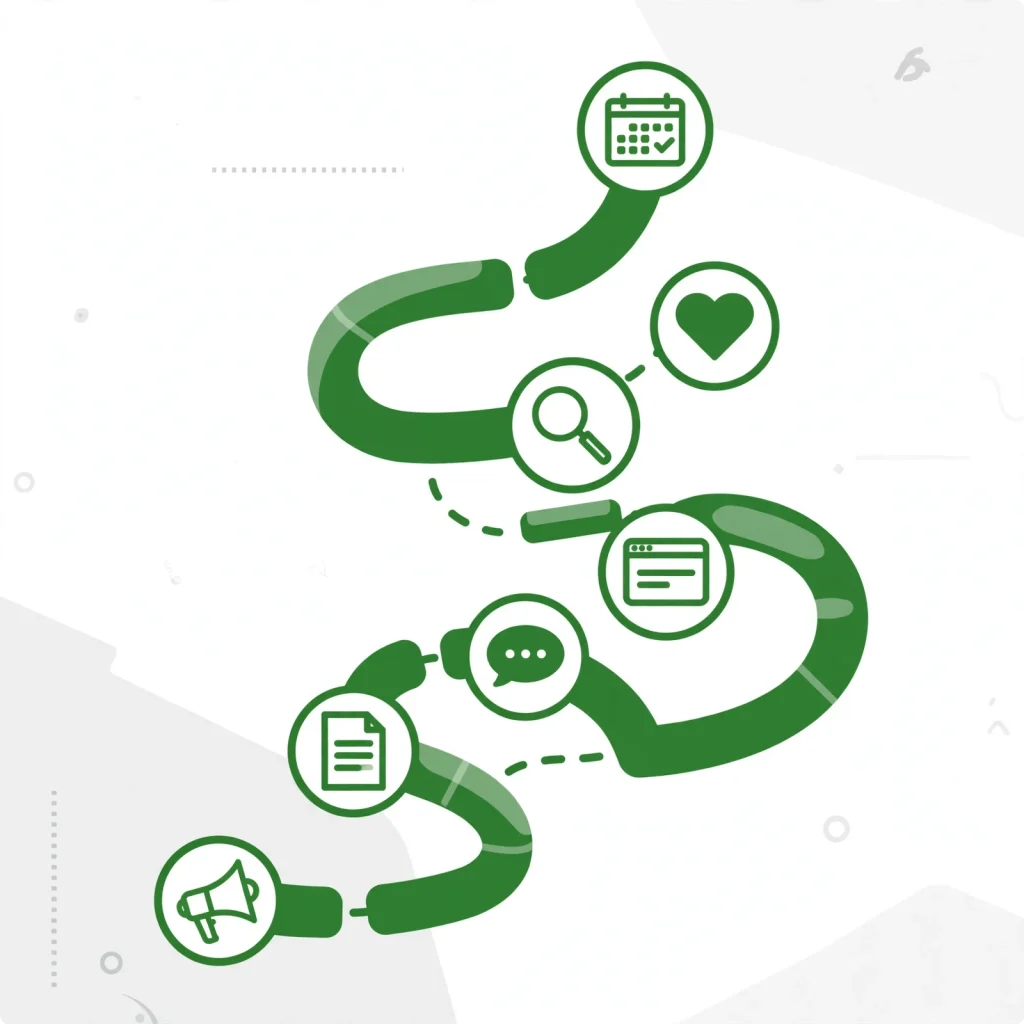
Move 7: Rehearse the Next Spike Before It Has Your Name on It
The move. Convert this week’s Downdetector headline into a 90-minute tabletop exercise. Walk your team through a fictional outage using the six moves above, time each step, and fix every gap you find — missing logins, unclear authority, an approver who is on vacation with no backup. Why it works. Every element of outage marketing fails in predictable places: the one person who can pause ads is unreachable, the status page requires a developer who is asleep in another time zone, the social account’s password lives in a former employee’s notes. None of these are technology problems, and none of them can be solved during the incident itself. The platforms at the center of Downdetector spikes — Gemini this week, a cloud region or a payment network the next — all had engineering runbooks. What separated composed responses from chaotic ones was whether the communication runbook existed too, and whether ordinary staff were empowered to use it without waiting for a meeting. Steal it. Keep the rehearsal small and specific. One scenario, one hour, one page of findings, one owner per fix, and a calendar date to re-run it. Add a standing “Downdetector drill” to your quarterly marketing maintenance alongside credential reviews and backup tests. If you work with an agency partner, include them in the exercise and agree response-time expectations in calm weather; the middle of your worst traffic hour is the wrong moment to discover how your partners handle pressure. Preparedness of exactly this kind is what lets a small team respond like a large one.The Downdetector Reality Check: What This Week Actually Proved
Step back from the playbook and the October 2026 Gemini episode offers a compact summary of modern brand risk. A product millions rely on stumbled, the official signal lagged the public’s experience, and within hours the internet’s referee — a crowdsourced chart at Downdetector — held more public trust than the status page of one of the largest technology companies on earth. Search behavior did the rest: “Downdetector” itself trended at 50,000+ US searches because it has become the verb for “is this broken, or is it just me?” Your business will never trend at that scale, and it does not need to. The same mechanics operate at every size. A restaurant’s online ordering fails on a Friday night; a clinic’s booking portal stalls on a Monday morning; a retailer’s checkout breaks during the promotion the whole quarter was built around. In each case, customers search before they call, judge speed before they judge explanations, and remember handling longer than they remember the fault itself. The seven moves above are deliberately unglamorous — pause, publish, post, reroute, protect, recover, rehearse — because reliability marketing is a discipline of preparation, not inspiration. If you do only three things after reading this, do these. First, write the one-page pause list and name its owner. Second, publish a permanent status page on your own domain and link it from your site footer. Third, draft the three social templates and store them where any on-call teammate can find them at 2 a.m. Those three artifacts, which together take less than a day to create, cover the first hour of any outage — the hour that decides whether a Downdetector spike becomes a story about your competence or a thread about your absence.Ready to Make Your Marketing Outage-Proof?
Downtime is not a question of if, but of how prepared your brand looks when the graph spikes. KKeyQik helps US businesses build marketing systems that hold up under pressure — resilient websites, search visibility that survives bad afternoons, paid campaigns with disciplined controls, and social communication that sounds human when it matters most. If this week’s Downdetector spike made you wonder how your business would fare at the center of that chart, that is exactly the conversation to have before the next one. Visit KKeyQik to start the conversation. Tell us where an outage would hurt you most, and we will help you build the playbook — and the platform — that makes sure it never defines you.Want to put this to work for your business? KKeyQik plans and delivers website copy, blog posts and other content for small businesses, with an in-house team available 24/7. See our content writing service or get a quote within 24 hours.
Frequently Asked Questions
Downdetector is a crowdsourced outage tracker where users report when websites and apps stop working. It trends during major disruptions because thousands of people search it at once to check whether a problem affects only them or everyone, making its charts a real-time public signal of an outage.
First, confirm the outage and pause every campaign driving traffic to the broken experience, including paid ads and scheduled emails. Then publish a short acknowledgment on your status page and main social channel. Speed on those two steps protects ad spend and customer trust while engineers fix the cause.
Yes, pause or throttle them as soon as downtime is confirmed. Ads will keep sending paid clicks to pages that cannot convert, which wastes budget and can hurt quality scores. Resume with a gradual budget step-up after you verify the site and conversion tracking are fully healthy.
A brief outage of a few hours rarely causes lasting ranking harm if the site returns cleanly. Longer or repeated failures can reduce crawl frequency and temporarily drop pages from results. Keeping a permanent status page, serving correct temporary status signals, and checking Search Console after recovery all reduce that risk.
It should state what is affected, when the issue was noticed, what is being done, and when the next update will arrive. Updates should be timestamped and written in plain language. Leaving a short incident summary on the page after recovery also shows future customers that you communicate transparently.
Within minutes of confirmation, using a short and specific first post that is then pinned. Name what is broken and when the next update will come, even if the cause is still unknown. One consistent thread updated in lockstep with your status page prevents speculation from filling the gap.
Give stranded visitors a useful alternative instead of an error page: a phone number, an email contact, a waitlist, or a booking link hosted elsewhere. Capturing contact details from people who arrived ready to buy lets you follow up personally within a day of recovery and recover demand that would otherwise vanish.
It should briefly explain what happened, what you changed to reduce the chance of a repeat, and what you are doing for affected customers. Send it within 48 hours, starting with your status page and direct customer email before restarting paid campaigns. Handled well, a clear recovery message can strengthen trust rather than damage it.
Create a one-page pause list naming every channel, its owner, and who can pause it without a meeting. Pre-write three short templates for acknowledgment, update, and all-clear, and keep a permanent status page live on your own domain. A brief rehearsal each quarter exposes missing logins and unclear authority before a real incident does.
In October 2026, widespread Google Gemini errors sent users to Downdetector in large numbers, with thousands of reports in a single spike while official status signals lagged behind user experience. The episode showed how quickly the public turns to crowdsourced trackers, and why brands need their own fast, findable outage communication ready in advance.