

On Saturday, October 10, 2026, Grammy-winning singer Kelly Clarkson drove across Brooklyn to visit a shop she had been excited about for weeks. Art of Play, a curiosity shop on Atlantic Avenue in Brooklyn Heights known for its magical home goods, puzzles, games, toys, and books — plus a 26-seat theatre hosting close-up magicians — had been described as one of the most beautiful shops in New York City. Clarkson arrived with several items in mind and every intention of spending.
She left without buying a thing.
Within hours, Clarkson told her 8.8 million followers on X that the staff had looked at her as though she could not afford anything in the store and steered her toward cheaper items. She compared the experience to the famous scene in the 1990 film Pretty Woman, where Julia Roberts’ character is turned away from a Beverly Hills boutique. She named the store, sarcastically encouraged her followers to visit it, and capped the post by telling the salesperson they had just lost a huge sale. The search term “art of play brooklyn” surged past 100,000 searches in a single day at over 1,000% growth, and the story was picked up by entertainment outlets within hours. At the time of publication, Art of Play had not issued a public response, with outlets reporting they had reached out for comment.
Here is the uncomfortable truth for every small business owner reading this: the specifics of who was right do not matter for your reputation management strategy. What matters is the mechanics of what happened — a single negative customer experience, broadcast to millions in minutes, now permanently attached to a small business’s name in Google search results. The store’s defenders may say the encounter was a misunderstanding; its critics may say it was exactly what it looked like. Either way, the brand damage is already priced in.
That is the whole point. Reputation management is not about winning arguments. It is about building systems that keep one bad afternoon from becoming your brand’s defining story. Here are ten reputation management lessons from the Art of Play moment that every small business should internalize in 2026.
Lesson 1: Every Customer Is a Potential Broadcaster
For most of business history, a bad in-store experience traveled slowly — the unhappy customer told a few friends, and the story died within a week. Clarkson’s 8.8 million followers on X vaporized that model. Her post did not need a PR department, a newsroom, or a single dollar of ad spend. It needed thumbs and an audience, and the search engines did the rest: within hours, her version of the story was ranking for the store’s own name.
Small businesses consistently underestimate this asymmetry in their reputation management. You do not need to fear every customer — most people are reasonable and forgiving. But reputation management means planning for the exception, not the rule: any customer, on any day, can reach thousands or millions of people with a phone and a grievance. The employee who shrugs off a rude interaction is not risking one lost sale. They are risking the version of your business that shows up when someone Googles your name for the next year.
The operational takeaway is simple and non-negotiable: treat every interaction as if it could end up online, because it can. That is not paranoia — it is the baseline assumption behind every serious reputation management plan in 2026.
Lesson 2: Your Reviews Page Is Your Real Storefront
Long before any celebrity weighed in, Art of Play’s most important marketing surface was not its beautiful storefront or its 26-seat magic theatre. It was the collection of star ratings and review snippets attached to its name across Google, Yelp, and social platforms. That is where strangers form their first impression, and the data on how ruthless that impression can be should make every owner sit up straight — reputation management starts with the review page, not the homepage.
BrightLocal’s 2026 Local Consumer Review Survey of 1,002 US adults found that 97% of consumers read reviews for local businesses — and 41% now read them every single time they browse, up sharply from 29% the year before. The bar keeps rising: 68% of consumers require at least four stars before they will use a business, and nearly a third now demand 4.5 stars or better. Most damning of all, 74% of consumers only care about reviews written in the last three months.
Read those numbers as a reputation management mandate. Your Google Business Profile reviews are not a vanity metric; they are the first page of your website for most local customers. A celebrity call-out does not create this dynamic — it merely exploits it. Every week, thousands of small businesses lose invisible sales to three-star averages they never check. Audit yours this week: make reputation management a weekly habit — Google your business name the way a stranger would, and look at what the review snippets say before they ever see your homepage.
Lesson 3: Respond to Reviews — Especially the Bad Ones
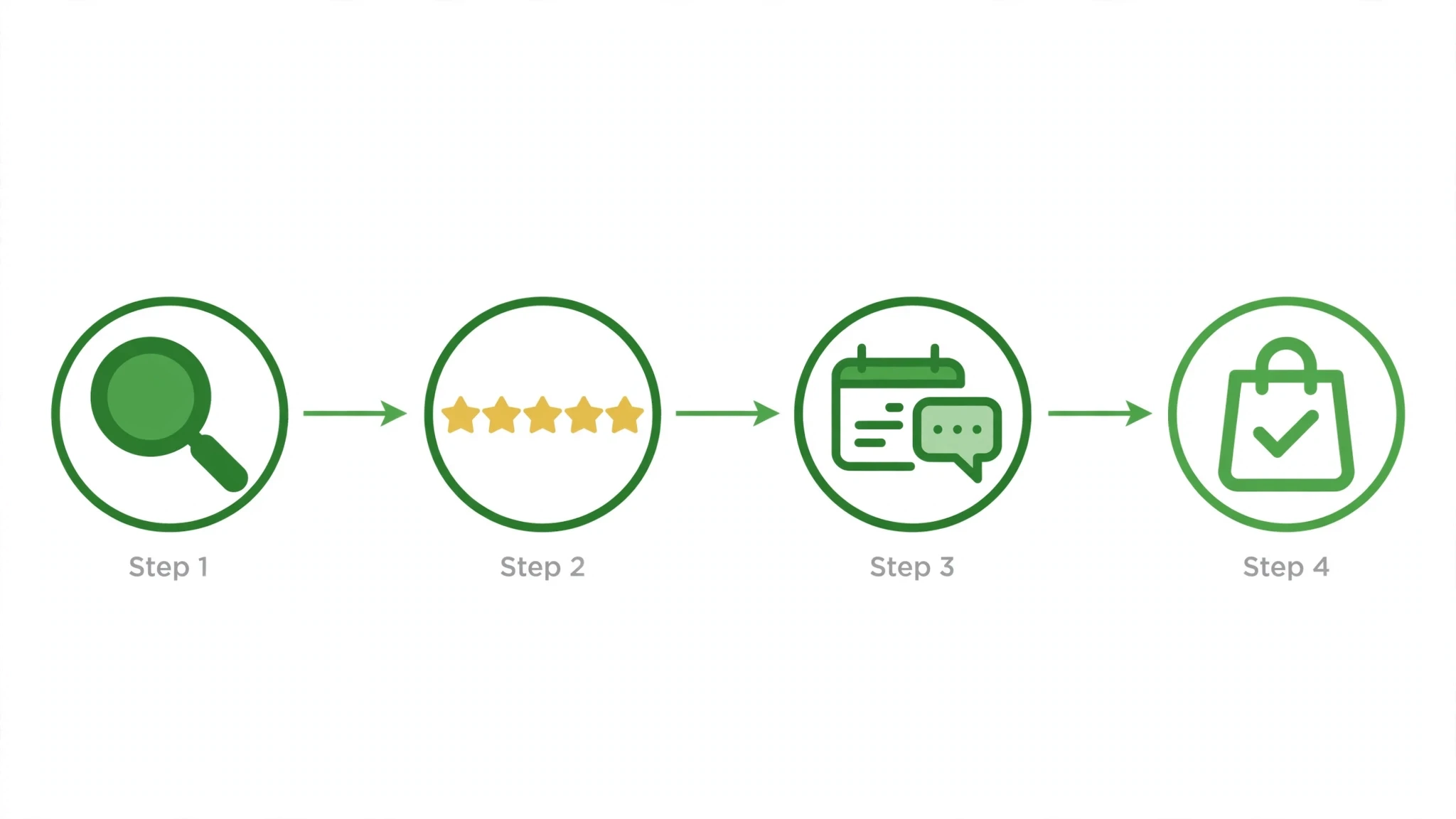
Here is where most small businesses quietly fail at reputation management: they collect reviews and never respond to them. A negative review sitting unanswered is a billboard that says nobody is home. A thoughtful, professional reply is proof that the business is actively managed — and potential customers read the replies almost as closely as the reviews themselves.
Industry data on this is consistent: responding to reviews, both glowing and critical, signals to prospective customers that the business is engaged and accountable, and it gives search engines a reason to treat the listing as current and reliable. Review readers overwhelmingly reward businesses whose owners reply with specifics rather than copy-pasted platitudes.
The Art of Play episode adds a darker corollary: the first response that the internet sees to a crisis often comes from someone else. Clarkson’s post became the narrative because no counter-narrative existed. When the story broke, outlets reported reaching out to the store for comment — but a business that has been visibly, consistently responding to its customers’ feedback for months has a reservoir of goodwill and a record of engagement to draw on. Reputation management is largely won before the crisis: a pattern of genuine, specific review responses is one of the strongest shields a small business can build.
Lesson 4: Train Every Frontline Employee on the Brand Experience
Strip away the celebrity and the headlines, and the Art of Play story is, at its core, a frontline employee training story. Per Clarkson’s account, a salesperson looked at her, made an assumption about her wallet, and offered cheaper alternatives instead of what she had come to buy. Whether it was bias, a bad read, or a clumsy attempt to be helpful, the mechanism is the same: a customer felt judged in the store, and the store lost both the sale and the narrative.
Your frontline staff are your brand. Not your logo, not your ad campaigns — the humans customers actually meet. For most small businesses, the person behind the counter, on the phone, or answering the chat window has more influence on reputation management than any marketing initiative. One employee’s bad afternoon can undo a year of careful brand building, and Clarkson’s “just lost a huge sale” line is the sound of it happening in real time.
This is a training and systems problem — and at its heart a reputation management problem — not a personality problem. Set explicit service standards: greet every customer the same way, never make assumptions about spending power, and give staff clear language for offering alternatives without implying the customer cannot afford the main item. Mystery-shop your own business quarterly. And remember that the Pretty Woman scene resonated for a reason — it dramatizes a universal customer fear: being treated as less than. Build your in-store experience so that no customer ever walks out wondering whether they were.
Lesson 5: Have a Crisis Response Plan Before the Crisis
When Clarkson’s post detonated on a Saturday, Art of Play faced a classic reputation management nightmare: a viral accusation, a celebrity-sized audience, and no public response as the news cycle took over. Outlets published the story with a “reached out for comment” line and moved on. Silence is sometimes the right legal advice — but in reputation terms, a vacuum gets filled by other people’s interpretations.
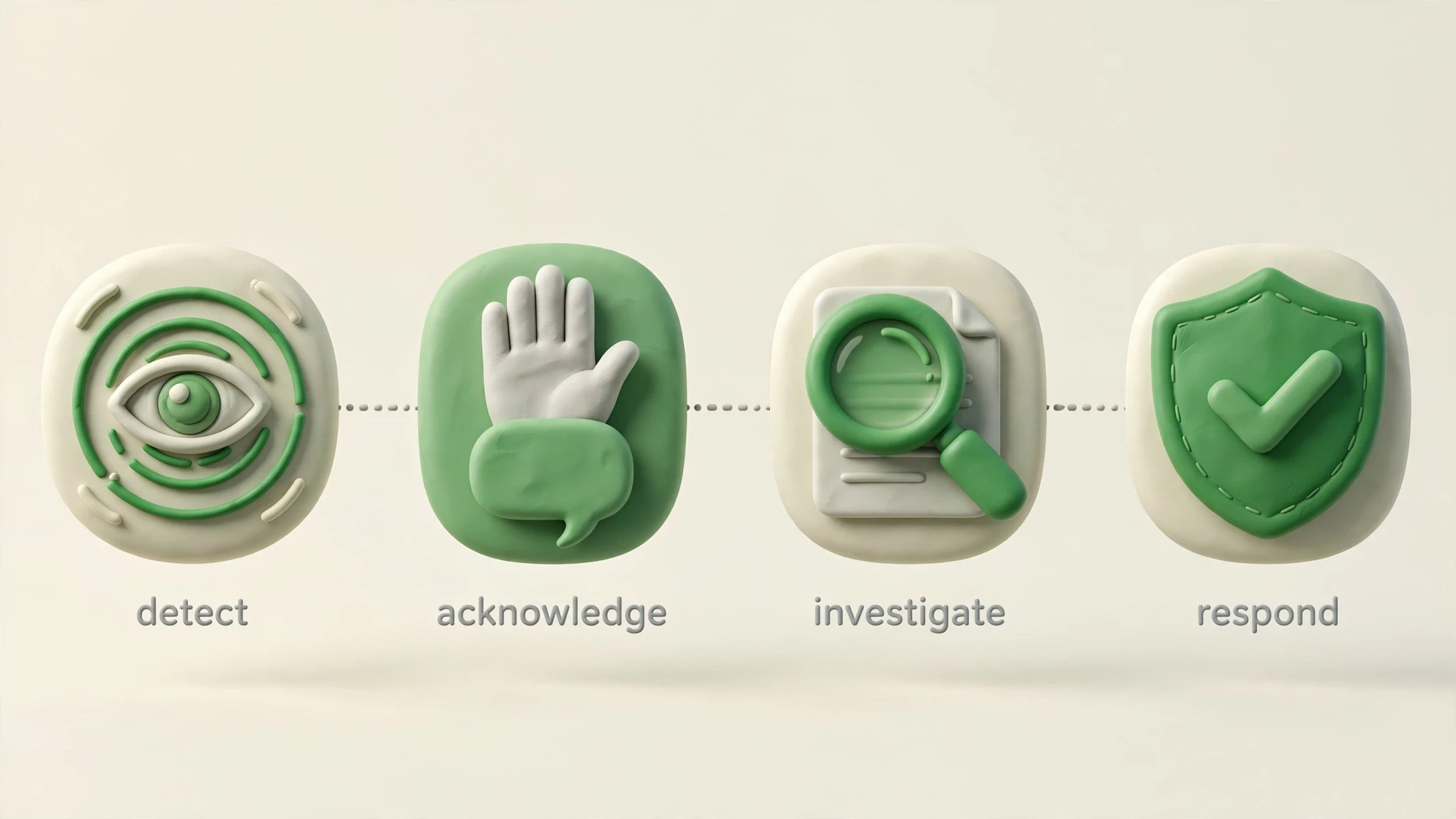
Small businesses routinely skip crisis planning because they assume crises happen to big companies. The Art of Play moment is proof that a Saturday afternoon and one unhappy visitor is all it takes. A usable crisis-response plan — the core of small-business reputation management — does not require a PR firm. It requires three things decided in advance: who speaks for the business (name one person), what the first response looks like (a brief acknowledgment that you are looking into it — never an instant admission or an instant denial), and where it gets posted (your own channels, in your own words, before reporters write the ending for you).
Speed matters more than polish. The goal of the first response is not to win the argument; it is to signal that a real, accountable human is paying attention. Most small businesses can draft a one-page holding-statement template in an afternoon. Do it on a quiet Tuesday, because you will not have the luxury of a quiet Tuesday when you actually need it.
Lesson 6: Never Judge the Customer — Make Everyone Feel Like a VIP
The reason Clarkson’s Pretty Woman comparison landed so hard is that it named a fear nearly everyone has felt: walking into a shop and sensing the staff has already decided you do not belong there. The 1990 film scene — a salesperson refusing to show Vivian the expensive items, then the famous “big mistake” reckoning — works as shorthand precisely because the dynamic is universal.
Turn that insight into a reputation management rule: design your customer experience so that every visitor is treated like the highest-value customer you have ever had, from the first hello. This is not about being servile; it is about removing every trace of judgment from the interaction. The person in workout clothes might be a founder about to place your biggest order of the quarter. The quiet browser might be shopping for a wedding. You simply cannot tell, and the moment your staff acts as though they can, you are one screenshot away from a very bad week.
There is a conversion angle here too, and it is the one your CFO will like: customers who feel genuinely welcomed spend more, return more often, and leave better reviews. Judgmental service is not just a reputation management problem; it is a revenue leak. The businesses with the strongest review profiles in any market are almost always the ones where strangers consistently report being treated like regulars.
Lesson 7: Monitor Brand Mentions in Real Time
Clarkson’s post went up on a Saturday and was a national entertainment story within hours. The speed is the point. By the time a small business hears about a viral moment through a friend’s text message, the narrative has already hardened, screenshots have circulated, and the search results have begun to change.
Real-time mention monitoring is one of the cheapest, highest-value reputation management habits a small business can adopt. Set up alerts for your business name across the major platforms and search engines. Check them daily — it takes minutes. For businesses with any meaningful social presence, social listening tools that flag spikes in mention volume can turn a weekend ambush into a same-day response instead of a Monday-morning scramble.
The Art of Play timeline makes the cost of delay concrete. Every hour that a viral complaint sits unanswered is an hour in which the only version of the story belongs to the person who posted it. Monitoring does not prevent the bad moment — nothing does — but it shrinks the window between the spark and your response from days to hours, and in a crisis, that window is everything.
Lesson 8: Handle the Moment Well and It Becomes Marketing Fuel
There is a less-discussed flip side to every viral complaint, and it belongs in any serious reputation management playbook: a well-handled crisis can become one of the strongest trust signals a business ever earns. Consumers are sophisticated enough to know that no business is perfect. What they judge is the response.
Think about what an ideal Art of Play response could have looked like: a quick, human acknowledgment from the owner, a genuine statement that every customer deserves to feel welcome, a description of the training changes being made, and an invitation — private, not performative — to make it right. Handled that way, the story shifts from “store shames celebrity” to “small business owns its mistake and fixes it,” and that second story is the kind customers remember fondly.
The critical word is authentic. Scripted corporate apologies, blame-shifting, or attacking the complainant all backfire — usually worse than the original incident. But sincere accountability, specific corrective action, and follow-through are so rare in crisis moments that they stand out. Build your response playbook around those three, and the worst week of your year can end up as the review people cite when explaining why they trust you.
Lesson 9: Your Google Business Profile Absorbs the Impact
One practical reputation management reality that rarely makes the headlines: when a story like this breaks, the battlefield is the business’s Google Business Profile. Angry strangers who have never visited the store flood the listing with one-star reviews; supporters counter with five-star reviews they did not earn; the rating swings wildly, and Google’s algorithms try to sort genuine feedback from the pile-on.
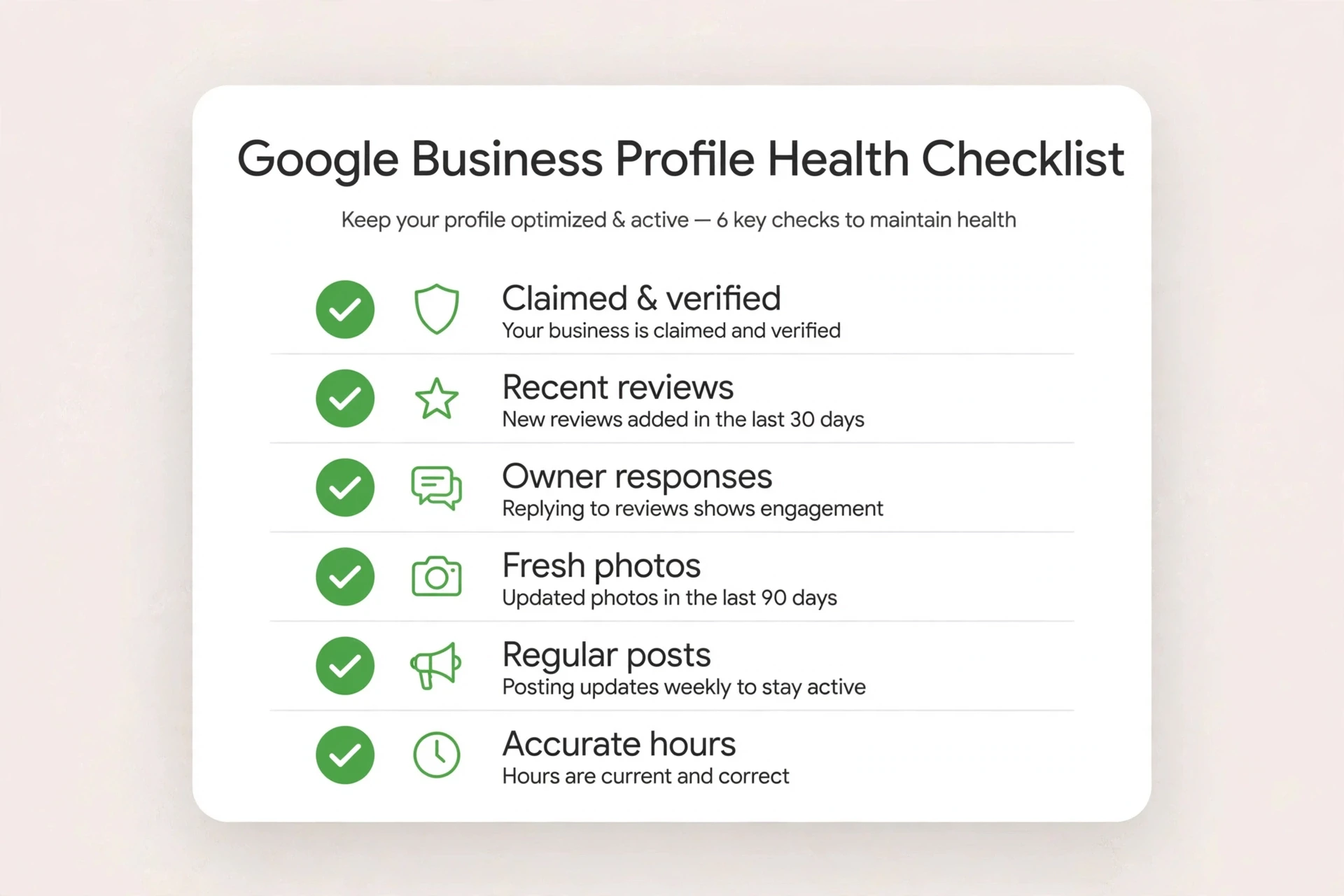
This is why claiming, verifying, and actively managing your Google Business Profile is non-negotiable local reputation management. A complete, current profile — accurate hours, real photos, regular posts, and a steady stream of legitimate reviews — is far more resilient to a review-bomb than a neglected listing with a dozen ancient reviews. Google also has mechanisms for flagging review attacks, but they work best for businesses with an established, healthy review history that makes the anomaly obvious.
There is a quieter lesson too. Most of the review volume that decides a small business’s fate never involves a celebrity. The same dynamics — strangers judging you by star ratings and recent reviews — play out every day at a much smaller scale. The businesses that survive viral moments and the ones that win ordinary Tuesdays are the same businesses: the ones that treat their Google listing as a living asset instead of a set-and-forget directory entry.
Lesson 10: Build Reputation Before You Need It — It Is a Compound Asset
The deepest lesson of the Art of Play episode has nothing to do with Clarkson at all. It is that reputation management is really about stewarding a compound asset: built slowly through hundreds of small deposits — every review answered, every customer welcomed, every problem fixed gracefully — and spent suddenly in a single withdrawal. Businesses with a deep balance survive bad moments; businesses running on empty do not.
The practical version of this is a reputation management system, not a reputation management scramble. Generate reviews consistently by asking happy customers at the right moment. Respond to every review with specifics. Train staff on the experience standards from Lesson 4. Monitor mentions from Lesson 7. Keep the Google profile from Lesson 9 healthy. Do this for a year and you will have something no single viral moment can easily destroy: a track record.
Notice that none of this requires a big budget. It requires discipline and a calendar. The businesses with the most resilient reputations in 2026 — the ones whose reputation management never sleeps — are not the ones with the most five-star reviews; they are the ones with the most consistent proof, over the longest time, that the business cares. Start the compounding this week. The crisis you are building the buffer for has not happened yet — and that is exactly the point.
Your Small-Business Reputation Management Playbook
Ten lessons, one checklist — the condensed reputation management system for any small business:
- Assume every customer can broadcast. Train staff to treat every interaction as potentially public, because it is.
- Audit your review surfaces. Google your business like a stranger; your star ratings and recent reviews are your real storefront.
- Reply to every review. Specific, human responses to praise and complaints alike — never copy-pasted boilerplate.
- Set frontline standards. Same greeting for everyone, no assumptions about wallets, clear language for offering alternatives.
- Write the crisis plan now. One spokesperson, one holding statement, one posting channel — decided on a quiet Tuesday.
- Banish customer judgment. Design the experience so every visitor feels like your best customer from the first hello.
- Monitor mentions daily. Alerts for your business name; same-day awareness of any spike.
- Respond with authentic accountability. Acknowledge, fix specifically, follow through — never deflect or attack.
- Keep your Google Business Profile healthy. Claimed, verified, current, and fed with legitimate reviews year-round.
- Compound the asset. A steady system of review generation and engagement beats any scramble — start this week.
Work through this list and your reputation management stops being a hope and becomes a habit. The Art of Play story will fade from the trending charts within days — but the businesses that treat reputation management as a daily discipline will still be collecting the dividends years from now.
Reputation Management Does Not Build Itself — We Will Help You Build It
Art of Play had a beautiful shop, a beloved concept, and a 26-seat magic theatre. What it appears to have lacked was a reputation management system — the review responses, the staff standards, the mention monitoring, and the crisis plan that turn a bad afternoon into a footnote instead of a headline. No small business is immune to a viral moment, but every small business can be prepared for one.
That is the kind of preparation we build for US small businesses at KKeyQik. From social media marketing that turns customers into advocates to video content that shows the human side of your brand and local SEO that keeps your Google presence working as hard as you do, we help brands earn trust systematically — reviews, content, and visibility working together. If your reputation management deserves the same discipline you put into your product, talk to our team and let’s start compounding.
Want to put this to work for your business? KKeyQik plans and delivers social media campaigns for small businesses, with an in-house team available 24/7. See our social media marketing service or get a quote within 24 hours.
Frequently Asked Questions
On October 10, 2026, Kelly Clarkson posted on X that staff at Art of Play, a curiosity shop in Brooklyn Heights, treated her as though she could not afford the store's merchandise and steered her toward cheaper items. She compared the experience to the famous boutique scene in Pretty Woman, named the store, and told her 8.8 million followers she had left without buying anything. Entertainment outlets picked up the story within hours, and the store had not issued a public response at the time of publication.
Because it shows the mechanics of modern reputation damage in pure form: one unhappy customer, one viral post, and suddenly the store's own name in search results leads with the complaint. No ad budget can undo that. The story matters less for who was right and more as a reminder that reputation management systems — review monitoring, staff standards, a crisis plan — determine whether a bad afternoon becomes a footnote or a headline.
Within hours. Clarkson's post went from a Saturday social post to a national entertainment story the same day, with search interest in the store surging past 100,000 searches at over 1,000% growth. Social platforms and search engines amplify high-engagement content fast. The lesson: you cannot control when a crisis starts, but real-time mention monitoring and a pre-written first response shrink your reaction window from days to hours.
Activate a simple, pre-decided crisis plan: one spokesperson acknowledges the situation publicly within hours, states that the business is looking into it, and commits to a follow-up. Do not argue with the complainant, do not issue instant denials, and do not go silent while the news cycle fills the vacuum. Speed and visible accountability matter far more than polished wording in the first response.
Critically important. BrightLocal's 2026 Local Consumer Review Survey of 1,002 US adults found that 97% of consumers read reviews for local businesses, 41% read them every single time they browse, 68% require at least four stars, and 74% only trust reviews written in the last three months. Your review profile is effectively your storefront for first-time customers — it deserves the same care as your physical location.
Yes — and especially the negative ones. Specific, human responses to both praise and criticism signal to prospective customers that the business is actively managed and accountable. Avoid copy-pasted boilerplate, which readers see through immediately. A pattern of thoughtful replies builds a reservoir of goodwill that protects you when a crisis hits, because the public can already see how you handle feedback.
Set explicit, written service standards: greet every customer the same way, never make assumptions about spending power, and teach staff neutral language for suggesting alternatives. The Art of Play episode was, at its core, a frontline training failure — a customer felt judged and left. Mystery-shop your own business regularly, and drill into your team that the person in front of them might be your biggest customer of the quarter.
Review bombing is when people who were never customers flood your Google Business Profile or review pages with one-star (or retaliatory five-star) reviews during a controversy. Keep your listing claimed, verified, and current, and flag clearly fake reviews through the platform's reporting tools — they work best when your listing already has a healthy history of legitimate reviews that makes the anomaly obvious. Continue responding professionally to genuine reviews throughout.
Treat reputation as a compound asset. Generate reviews consistently by asking happy customers at the right moment, respond to every review with specifics, train staff on experience standards, monitor brand mentions daily, and keep your Google Business Profile healthy year-round. None of this requires a large budget — it requires discipline. Businesses with a long track record of visible care survive viral moments; businesses running on empty do not.
Yes — if the response is handled well. Consumers know no business is perfect, so what they judge is the response. A quick, human acknowledgment, a genuine statement of values, specific corrective action, and real follow-through can turn "business shames customer" into "business owns its mistake and fixes it" — a story customers remember fondly. The key word is authentic: scripted apologies, blame-shifting, or attacking the complainant always backfire.