

On Monday, October 12, 2026, Arby’s did something it has trained its customers to watch for: it launched a new limited-time menu lineup. This time it is three chicken cheesesteaks — a classic, a deluxe, and a spicy version — rolling out at participating restaurants nationwide for a limited time only. Food media covered it within hours. Reviewers had tasting notes up the same day. And search interest spiked immediately, landing the launch on Google’s active trends list in the United States.
If you run a small business, you might be tempted to file this under “fast food news, not my problem.” That would be a mistake. A national product launch from a major chain is an open masterclass in product launch marketing — the sequencing, the scarcity, the segmentation, and the storytelling are all on public display, and every one of them scales down to a business with a fraction of the budget.
This guide breaks down seven product launch marketing lessons from the Arby’s chicken cheesesteak rollout that any small business can apply to its next launch, whether you sell sandwiches, software, or services. Watch enough of these rollouts and the patterns start repeating — and those patterns are the real curriculum of product launch marketing.
What Arby’s Actually Launched
Before the lessons, the facts. According to coverage from Tasting Table, Sporked, Parade, and The Takeout, the new lineup includes three sandwiches built on the same chicken base: marinated in a spice blend of garlic, onion, and paprika, then seared and cooked sous vide for extra juiciness.
The classic Chicken Cheesesteak pairs that chicken with Cooper Sharp white American cheese and caramelized onions on a toasted sesame seed roll. The Chicken Deluxe Cheesesteak adds shredded lettuce and sliced tomatoes. The Spicy Chicken Cheesesteak adds a spicy glaze with cayenne-driven heat. All three are available for a limited time at participating locations, and can be ordered in-restaurant, at the drive-thru, online, or through the Arby’s app, with customization options for ingredients and sauces.
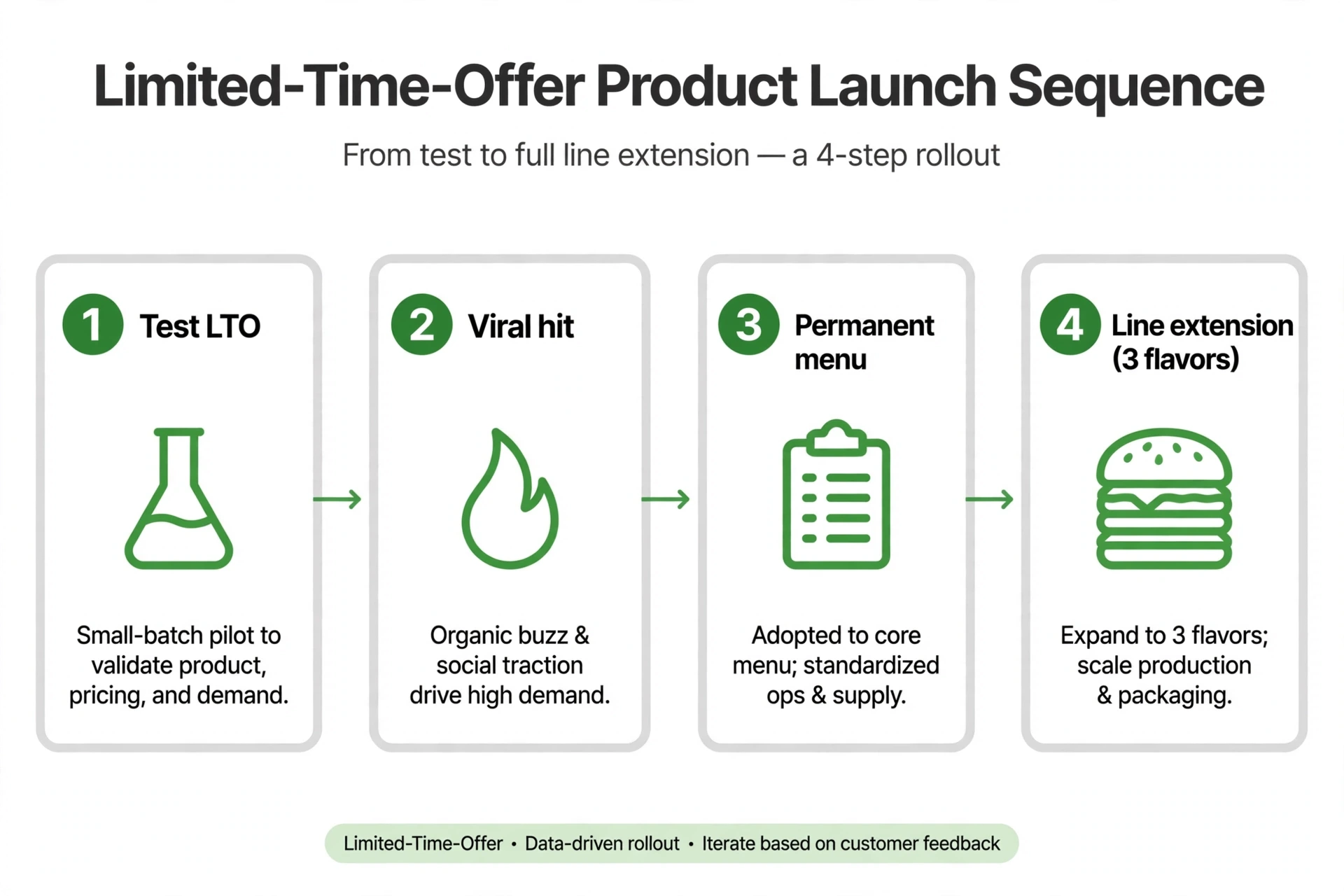
The strategic context matters more than the menu details — it is product launch marketing sequencing at its cleanest: prove the concept with a limited run, earn the permanent slot, then extend the line. Earlier this year, Arby’s added an Angus Cheesesteak to its permanent menu after the beef version went viral as a limited-time offer — Parade reported the chain revived it in June with a new and improved recipe, and Tasting Table called it one of the best new fast food items of the summer.
The chicken lineup is the direct sequel to that success: same cheesesteak concept, same cheese, new protein, three flavor lanes. That single decision — launching a sequel instead of a stranger — is the first product launch marketing lesson, and it is the thread that ties the whole rollout together. Keep that context in mind; it is what turns a news story into a product launch marketing case study.
Lesson 1: Launch a Sequel, Not a Stranger
The smartest product launch marketing move Arby’s made happened before a single sandwich was cooked: it built the chicken cheesesteak line on top of a proven winner. The Angus Cheesesteak had already done the hard work — it introduced customers to the idea of “Arby’s does cheesesteaks,” survived the skepticism, went viral, and earned a permanent menu spot. The chicken versions inherit all of that awareness. Customers do not need to learn a new concept; they only need to learn a new variation.
This is the sequel strategy, and it is one of the most reliable plays in the product launch marketing playbook. Movie studios do it. Phone makers do it. Restaurants do it with flavor extensions of hit products. The psychology is straightforward: a sequel carries forward the trust and curiosity the original earned, while still giving people something new to talk about. A completely novel launch has to sell both the concept and the product. A sequel only has to sell the twist. That is why sequel launches so often outperform original ones on the product launch marketing metrics that matter most: awareness cost, conversion rate, and speed to traction.
For a small business, the application is direct. Before you dream up a brand-new offering from scratch, look at your existing winners. What is the thing customers already love, ask about, or reorder? Your next launch could be a variation of it: a new flavor, a new format, a new tier, a seasonal edition. If you run paid advertising campaigns, you already know that lookalike audiences outperform cold ones — the sequel strategy is the product equivalent of a lookalike audience. You are launching to people who have already raised their hands. Product launch marketing gets dramatically cheaper and more predictable when the audience does not have to learn who you are first.
Lesson 2: Make Scarcity the Marketing
The three chicken cheesesteaks are available for a limited time only. That single phrase does more product launch marketing work than most ad budgets. Limited-time offers convert curiosity into action by attaching a deadline to desire — and the data behind that mechanism is striking. A 2026 FOMO report from market research firm Gitnux, cited in industry coverage of limited-time menu strategy, found that 56% of people experience fear of missing out regularly, 73% of young adults feel FOMO from social media, and FOMO increases spending by 20%.
Technomic menu data tells the industry side of the story: limited-time launches were up 19% year over year, with nearly 4,000 rolling out in a single month, and 91% of consumers say they are more likely to visit a chain that offers limited-time items.
Separate 2026 reporting put the longer arc in perspective: limited-time launches are up 157% since 2019, with tens of thousands projected for the year, and Datassential research found that 51% of consumers described their most recent limited-time purchase as an impulse buy.
Read that last number twice. Half of limited-time purchases are impulse buys. That means the deadline is not just decorating the offer — for a large share of buyers, the deadline IS the offer. That is the quiet superpower of product launch marketing built on genuine scarcity. A permanent menu item can be postponed indefinitely. A sandwich that disappears in a few weeks forces a decision this week. In product launch marketing terms, scarcity compresses the consideration cycle: discovery and purchase collapse into the same trip.
Small businesses can borrow this without manufacturing fake urgency. Real scarcity works: a seasonal service package, a founding-member rate for a new program, a holiday-edition product run, an enrollment window for a course or cohort. The key word is real — customers can smell an endlessly extended “last chance” from a mile away, and nothing burns trust faster.
Set a genuine window, communicate the reason for it (seasonality, capacity, ingredient availability, a pilot cohort), make the window itself part of your product launch marketing creative — countdowns, “days left” reminders, last-chance emails — and honor the deadline when it passes. Products that return by popular demand, like Arby’s Angus Cheesesteak graduating from limited-time to permanent, earn a second launch moment. Scarcity done honestly is a renewable marketing asset; scarcity done cynically is a one-time trick.
Lesson 3: Give Every Segment a Door In
Three sandwiches, one chicken base, three personalities: classic for the traditionalist, deluxe for the “give me the works” customer, spicy for the heat-seeker. Arby’s did not launch one cheesesteak and hope it pleased everyone. It launched a small lineup that segments the audience at the point of decision — and each variant becomes its own conversation starter, its own review angle, its own social post.
This is segmentation applied to product launch marketing, and it solves a problem every small business recognizes: the broader your audience, the harder it is for one offer to feel made for any of them. A single flagship product forces every customer through the same door. The highest-converting product launch marketing rarely bets on one perfect product; it gives every buyer a version that feels made for them.
A tight lineup — two to four variants, not twenty — lets different buyer motivations self-select. The classic buyer wants the familiar done well. The deluxe buyer wants abundance and customization. The spicy buyer wants novelty and a story to tell. Same kitchen, same supply chain, three times the relevance.
The discipline here is restraint. Three variants is a lineup; thirty is a confusing menu. Research on menu complexity has shown that bloated offerings slow decisions and strain operations — the launch wins when each variant has a clear job. When you plan your next product launch marketing push, define the segments first: who are the two or three buyer types you most want to convert? Then shape one variant for each. A service business can do the same with tiered packages. A content creator can do it with format options. The principle holds anywhere: give every segment its own door, and more of them walk in.
Lesson 4: Let Reviewers Do Your Launch Marketing
Within hours of the October 12 launch, independent reviewers had published full tasting notes. The Takeout ran a detailed review of all three sandwiches — including the memorable verdict that two were winners and one to avoid — noting that the chain’s team had offered samples for tasting. Tasting Table published both a launch announcement and a full review on day one. Sporked, Parade, and regional outlets followed. Arby’s did not have to buy this coverage with ad dollars; it earned it by giving professional tasters something worth an opinion.
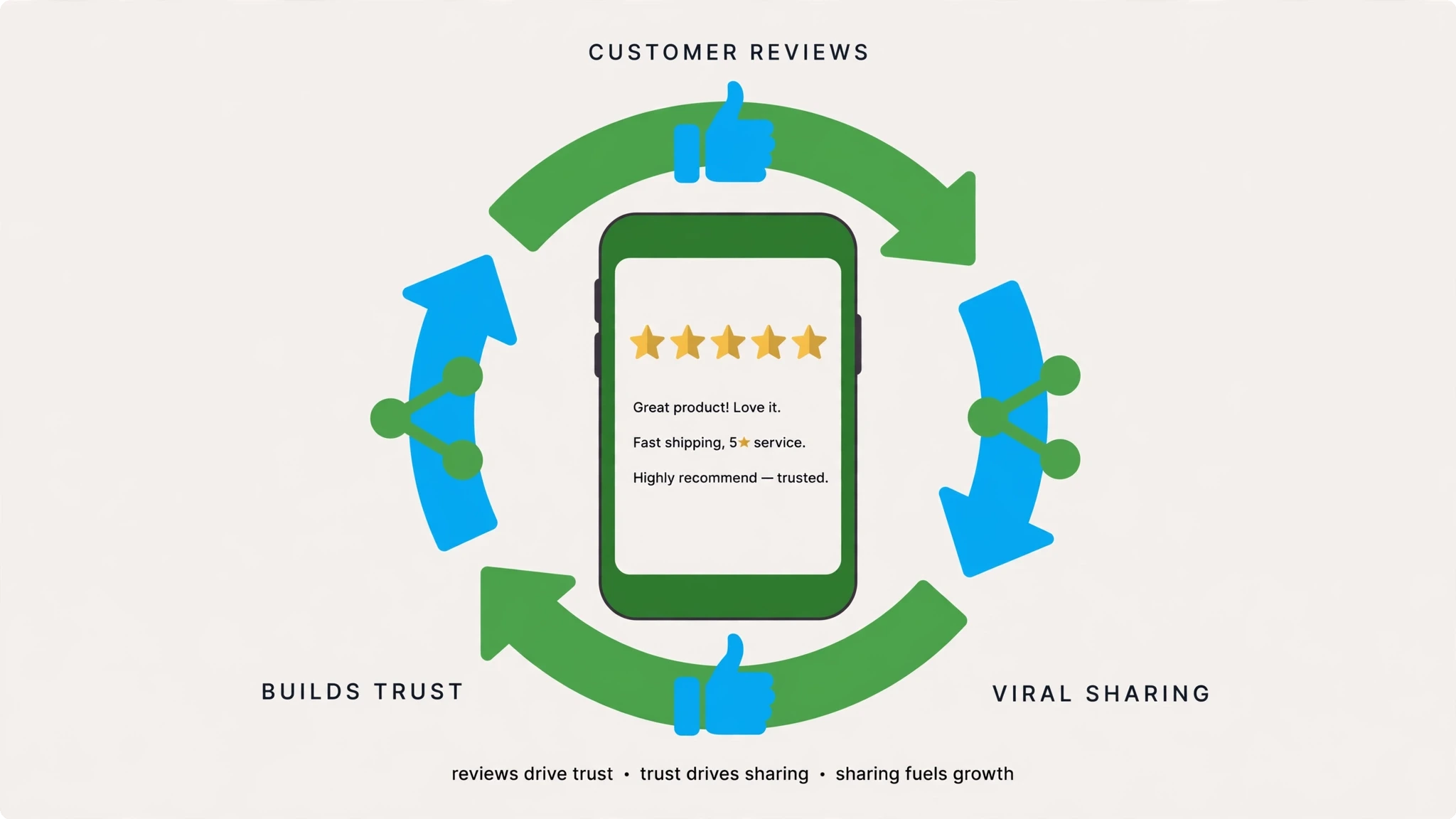
This is the earned-media engine of product launch marketing, and it runs on a simple insight: reviewers need content as badly as brands need coverage. A launch is news. A launch with three variants is three headlines. A launch with a “which one wins” angle is a ready-made ranking, taste test, or tier list — the exact formats that perform best on food media and social video.
By structuring the launch as a comparison (classic vs. deluxe vs. spicy), Arby’s handed creators a built-in content format — a product launch marketing gift to everyone covering it. Every “I tried all three” video is earned distribution. That is product launch marketing working exactly as designed: the format does the distributing.
Small businesses dramatically underuse this lever in their product launch marketing. You do not need a national press list; you need ten people with audiences that trust them. Before your next launch, identify the reviewers, creators, and community voices in your niche — the local food blogger, the industry YouTuber, the newsletter writer your customers read. Give them early access for review with no strings attached, and make the product reviewable: distinct variants to compare, a clear story to react to, something they can rank or score. One honest review that says “two winners and one to avoid” is worth more than ten sponsored posts that say “everything is amazing,” because credibility is the whole currency.
If you are investing in social media marketing services, brief your team to seed reviewable moments into every product launch marketing plan: the unboxing, the side-by-side, the first impression. Then amplify the best independent coverage across your own channels. Earned trust compounds.
Lesson 5: Make the Product Story Tellable
Read the launch coverage closely and you will notice something: every outlet repeated the same production details. Marinated in garlic, onion, and paprika. Seared, then cooked sous vide. Cooper Sharp white American cheese. Caramelized onions on a toasted sesame roll. These specifics were clearly part of the launch communications, and they worked exactly as intended — they gave every article, review, and social post the same vivid, quotable texture. Nobody writes a memorable story about “a chicken sandwich.” People write memorable stories about chicken marinated in three specific spices and finished with a restaurant technique.
This is content-ready product development, and it is a product launch marketing superpower hiding in plain sight. Most businesses launch with a features list; the smart ones launch with a story journalists and customers can retell in one breath. The details do not have to be exotic — they have to be specific. The best product launch marketing teams write the retelling into the brief before they write the press release. “Sous vide” is a technique borrowed from fine dining showing up in a drive-thru sandwich; that contrast is inherently interesting. “Marinated in garlic, onion, and paprika” is concrete where “seasoned chicken” is wallpaper. Specificity is what survives the retelling.
Audit your own offering for tellable details. What is the ingredient, process, or decision behind your product or service that would make someone lean in? The unusual sourcing, the painstaking step nobody sees, the counterintuitive choice that turned out right. Then build those details into your launch materials — your landing page, your press notes, your search engine optimization content — so that every person who covers or shares the launch repeats the same vivid facts. Product launch marketing is, at its core, a game of telephone: you want the tenth retelling to be as compelling as the first. Give people specifics worth repeating, and they will do your distribution for you.
Lesson 6: Launch Everywhere at Once
The chicken cheesesteaks are orderable in-restaurant, at the drive-thru, online, and through the Arby’s app from day one — with full customization available across channels. That sounds obvious until you consider how many small-business launches are channel-lopsided: the new service is on the website but not in the sales deck, the new product is in-store but not online, the announcement is on Instagram but the email list hears about it a week later. Every gap between channels is a gap where launch momentum leaks out.
Omnichannel launch execution is unglamorous product launch marketing, but it is where launches are won or lost. The principle is simple: on launch day, every place a customer can encounter your business should tell the same story. Your homepage hero, your social profiles, your email announcement, your in-store signage, your sales team’s talking points, your Google Business Profile — all of it, all at once.
Customers do not experience your business in one channel; they zigzag. Someone sees the social post, checks the website, then calls or walks in. If any stop on that journey is still showing last month’s message, the launch feels smaller than it is — and the customer feels the friction. Unsexy? Absolutely. But this is the product launch marketing work that decides how much of an attention spike becomes revenue.
The practical version for a small business is a launch-day checklist, executed in a single morning: update the website hero and the relevant service page, publish the announcement post on every active social channel, send the email, update the Google Business Profile with a post or offer, brief anyone customer-facing on the two-sentence version of the story, and make sure the thing being launched is actually purchasable or bookable everywhere it is advertised.
If your website cannot carry the launch — slow pages, a confusing layout, no clear call to action — fix that before launch day, not after; a website redesign timed ahead of a major launch routinely pays for itself in conversion rate. Product launch marketing creates a spike of attention. Omnichannel readiness decides how much of that spike becomes revenue.
Lesson 7: Know Where Innovation Ends and Drag Begins
Here is the lesson Arby’s learned the careful way — and the one most worth stealing. Limited-time launches are powerful, but they have a shadow side: operational drag. Industry analysis of the 2025 menu-innovation cycle found that while limited-time offers reliably create new demand — one study found 64% of consumers buy LTOs on occasions when they otherwise would not have bought anything — the launches also strained kitchens and finances. The cautionary tale was Sweetgreen’s Ripple Fries: launched with high hopes, the item reportedly drove over $26 million in operational losses and a decline in same-store sales, with the chain’s CEO describing the fries as a “complexifier” that distracted from core operations.
Benchmarking research added the structural warning: some brands now list 45% more items than the median, and that complexity confuses customers, slows throughput, and eats margin.
Arby’s launch design shows awareness of this trap. Three sandwiches, one shared chicken base, one shared cheese, one shared roll. The variety customers see is built on operational simplicity behind the counter — new combinations of familiar components, not a new supply chain.
That is the product launch marketing lesson for small businesses: design your launch so the novelty is in the packaging, not the plumbing. A new service tier built on your existing delivery process. A seasonal product using your current suppliers. A limited offer that reuses your core infrastructure. The launches that hurt are the ones that require you to become a different business for six weeks — a product launch marketing failure disguised as ambition.
There is a second half to this lesson: use limited launches as tests, not commitments. Arby’s ran the Angus Cheesesteak as a limited-time offer, watched it go viral, and only then made it permanent. The LTO was market research that paid for itself.
Your small business can run the same playbook: pilot the new service with a founding cohort, test the new product as a seasonal run, trial the new package as a limited enrollment. If it flops, you learned cheaply. If it flies, you have proof — and a “back by popular demand” encore waiting. The best product launch marketing does not bet the business on launch day. It structures launch day so the market places the bet for you.
Your Next Launch, in Seven Moves
The Arby’s chicken cheesesteak rollout is worth studying precisely because none of its moves require Arby’s budget. Sequence your launch as a sequel to something customers already trust. Attach a genuine deadline and let scarcity compress the decision cycle. Segment the offer so every buyer type finds its door. Build the launch to be reviewed, ranked, and argued about. Engineer tellable details into the product story. Show up everywhere on day one with the same message. And design the novelty so it rides your existing operations instead of breaking them.
Product launch marketing is not really about launches. It is about reducing the distance between “I heard about it” and “I bought it” — and every lesson above is a way to shorten that distance. Treat your next announcement as a product launch marketing campaign from day one — with a sequel hook, a real deadline, segments, reviewers, a tellable story, every channel ready, and operations that can carry the weight — and that distance shrinks on its own. The chains will keep launching; the trends will keep spiking. The small businesses that win are the ones that watch those launches the way a strategist would: not as news to consume, but as playbooks to borrow.
If you are planning a launch and want every one of these seven moves executed as a coordinated product launch marketing campaign — positioning, creative, paid distribution, and the landing experience that converts the spike — talk to the team at KKeyQik. We build product launch marketing campaigns for small businesses that punch above their weight, and we would love to make your next launch the one people talk about.
For a very different launch playbook — a tech giant manufacturing launch-day demand — see our breakdown of the Apple HomeView launch marketing lessons.
For the flip side — how a brand announces bad news instead of a launch, without surrendering its search results — see our American Airlines route cuts brand marketing lessons.
Related reading: Tesla’s Flying Roadster Stunt: 7 Spectacular Marketing Lessons From 2026’s Boldest Product Demo
Want to put this to work for your business? KKeyQik plans and delivers social media campaigns for small businesses, with an in-house team available 24/7. See our social media marketing service or get a quote within 24 hours.
Frequently Asked Questions
Product launch marketing is the coordinated set of activities a business uses to introduce a new product or service to the market — positioning, messaging, creative, channel distribution, and timing. It covers everything from pre-launch teasers to launch-day execution to the post-launch push that sustains momentum. Done well, it shortens the distance between a customer hearing about something and deciding to buy it.
Arby's launched the three chicken cheesesteaks on Monday, October 12, 2026, at participating restaurants nationwide. The lineup includes a classic Chicken Cheesesteak, a Chicken Deluxe Cheesesteak, and a Spicy Chicken Cheesesteak. All three are limited-time offers, available in-restaurant, at the drive-thru, online, and through the Arby's app.
The classic Chicken Cheesesteak pairs marinated chicken with Cooper Sharp white American cheese and caramelized onions on a toasted sesame seed roll. The Chicken Deluxe Cheesesteak adds shredded lettuce and sliced tomatoes. The Spicy Chicken Cheesesteak adds a spicy glaze with cayenne-driven heat. All three share the same chicken base: marinated in garlic, onion, and paprika, then seared and cooked sous vide.
Limited-time offers work because they attach a deadline to desire, triggering fear of missing out. A 2026 Gitnux FOMO report found 56% of people experience FOMO regularly and FOMO increases spending by 20%. Technomic data shows 91% of consumers are more likely to visit a chain that offers limited-time items, and Datassential research found 51% of consumers described their most recent limited-time purchase as an impulse buy.
The sequel strategy means building a new launch on top of a proven winner instead of introducing a completely unfamiliar concept. Arby's chicken cheesesteaks are a sequel to its viral Angus Cheesesteak — customers already understood the concept, so the launch only had to sell the twist. Sequels inherit trust and awareness from the original, which typically lowers acquisition cost and speeds up traction.
Use genuine, explainable windows: a seasonal product run, a capacity-limited enrollment, a pilot cohort, or a founding-member rate for a new program. Communicate the real reason for the deadline, build the countdown into your creative, and honor the deadline when it passes. Honest scarcity becomes a renewable asset — products that return by popular demand earn a second launch moment.
Identify the reviewers, creators, and community voices your customers already trust, and give them early access for review with no strings attached. Make the product reviewable: distinct variants to compare, a clear story to react to, something they can rank or score. Then amplify the strongest independent coverage across your own channels — one credible review outweighs a stack of sponsored posts.
Tellable details are specific, concrete, and slightly surprising — the kind of facts people repeat to friends. Arby's launch communications emphasized chicken marinated in three specific spices and finished with sous vide cooking, and every outlet repeated those details. Audit your offering for the ingredient, process, or decision that would make someone lean in, then build those specifics into your launch materials so every retelling stays vivid.
Yes. Customers zigzag between channels — they see a social post, check the website, then call or walk in — so every touchpoint should tell the same story on launch day. Update the website hero, publish on every active social channel, send the email, update the Google Business Profile, and brief anyone customer-facing. Every gap between channels is a gap where launch momentum leaks out.
Run the new offering as a limited release first and treat it as paid market research. Arby's tested the Angus Cheesesteak as a limited-time offer, watched it go viral, and only then made it permanent. A pilot cohort, seasonal run, or limited enrollment works the same way: if it underperforms, you learned cheaply; if it takes off, you have proof of demand and a "back by popular demand" encore ready.