

On Saturday night, October 10, 2026, the Smoothie King Center in New Orleans hosts WWE Money in the Bank 2026 — a premium live event built around one of wrestling’s most electrifying concepts: ladder matches where the winners earn a contract for a future championship shot. Roman Reigns defends the World Heavyweight Championship against LA Knight in the opening bout. Two multi-person ladder matches, a heavyweight collision between Oba Femi and Bronson Reed, and a triple-threat Women’s World Championship clash between Stephanie Vaquer, Becky Lynch, and Liv Morgan round out the card. In the United States the show streams on the ESPN app, while international fans watch on Netflix.
If you run a small business, you might wonder what any of that has to do with your event marketing. The answer: almost everything. Strip away the pyro and the body slams, and WWE is running one of the most disciplined event marketing operations on the planet. This is a company whose YouTube channel has passed 111 million subscribers and 100 billion lifetime views, whose social clips routinely outperform the biggest sports leagues, and whose executives openly plan television storylines around which moments will travel on the internet. Every premium live event is a masterclass in how to build anticipation, distribute content across platforms, and turn a single night into months of marketing fuel.
This guide breaks down 10 event marketing lessons from WWE Money in the Bank 2026 that any small business can adapt — whether you are promoting a product launch, a webinar, an open house, or your industry’s big annual conference. No wrestling knowledge required.
What Happened: Money in the Bank Lands in New Orleans
The short version, because getting the facts straight is the first job of good event marketing. WWE Money in the Bank 2026 takes place on Saturday, October 10, at the Smoothie King Center in New Orleans, Louisiana, with the main show beginning at 6 p.m. ET. ESPN airs a two-hour Countdown pre-show starting at 4 p.m. ET. In the US, the event streams exclusively on the ESPN app for ESPN Unlimited subscribers; everywhere else, it streams live on Netflix.
The road here was anything but smooth — which is itself a marketing lesson we will get to. The event was first announced for late August, then moved to September 6, and finally landed on October 10. Reporting on the moves pointed to broadcast-partner scheduling, production logistics, and a deliberate decision to avoid Labor Day weekend, when travel and entertainment costs would have made the trip more expensive for fans. New Orleans, notably, had originally been lined up to host WrestleMania 2026 before WWE redirected that show elsewhere and gave the city Money in the Bank instead.
The card is stacked with the kind of names that move merchandise and social metrics. Reigning World Heavyweight Champion Roman Reigns — “The OTC” — puts his title on the line against LA Knight, the self-styled Megastar whose feud with Reigns and The Bloodline has been building for months. The men’s Money in the Bank ladder match features Bron Breakker, Trick Williams, Je’Von Evans, Penta, Kevin Owens, and CM Punk. The women’s ladder match brings together Sol Ruca, Lola Vice, Jacy Jayne, Roxanne Perez, Lash Legend, and Tiffany Stratton. During the October 9 “go-home” episode of SmackDown, WWE announced that Reigns vs. Knight would open the show — a deliberate piece of match-order marketing designed to get fans in seats and on streams from minute one.
Now, the lessons.
Lesson 1: Sell the Story, Not Just the Event
Nobody buys a ticket to “a wrestling show.” Fans buy into months of story: LA Knight’s long climb back into the title picture, his history with The Bloodline, the question of whether his third attempt at Reigns finally ends differently. WWE’s event marketing never starts with the date and venue. It starts with narrative arcs that play out week after week on Raw and SmackDown, so that by the time the premium live event arrives, the audience is emotionally invested in outcomes.
This is serialized content marketing at its most effective, and small businesses can run the same play on a smaller stage. Do not announce your product launch, workshop, or open house as a single cold invitation. Build a short story arc instead: the problem you kept hearing from customers, the behind-the-scenes work to solve it, the people involved, the stakes. Share it in three or four installments across your blog, email list, and social channels in the weeks before the event. By the time invitations go out, your audience should feel like they already know the characters and want to see how the story ends. Event marketing that leads with story converts curiosity into commitment.
Lesson 2: Design Every Moment to Travel on Social
WWE’s Vice President of Digital Content, Steve Barband, has described how the company plans its programming: storylines are written with the internet in mind, and the team deliberately engineers moments in every match and segment that it believes will succeed on social media while still driving viewers back to the main broadcast. The internal framework is three R’s — ratings, relevancy, and revenue — and digital content is expected to serve all three.
The results speak for themselves. At this year’s Royal Rumble, an in-ring encounter between Bron Breakker and popular streamer IShowSpeed became the most-viewed Royal Rumble social post of all time, drawing more than 300 million social views in under 24 hours. That did not happen by accident. It happened because the moment was designed to be clipped, shared, and talked about.
For your event marketing, the takeaway is to plan “clip-worthy” moments before the event, not after. If you are hosting a webinar, script one quotable insight per section. If you are running an in-person event, stage one visual moment — a reveal, a demo, a surprising guest — that attendees will want to photograph. Brief your team on which moments to capture live. Most small businesses treat social coverage as an afterthought in their event marketing and then wonder why nobody shared anything. WWE treats shareability as part of the show’s script, and your events deserve the same discipline.
Lesson 3: Build a Content Engine That Never Sleeps
Consider the scale of WWE’s always-on machine: roughly 90,000 videos uploaded to its main YouTube channel, 111 million subscribers, and more than 100 billion lifetime views — making it one of only a dozen channels in YouTube history to cross that threshold. The channel publishes daily clips from Raw, SmackDown, and NXT, hosts premium live event pre-shows, and keeps decades of archive footage working through companion channels like WWE Vault and WCW Vault.
The event marketing insight is that the event itself is only the peak of a much longer content curve. WWE’s weekly shows are the engine; the premium live event is the payoff. Small businesses usually invert this: they go quiet for months, then blast one announcement — the classic event marketing mistake — and wonder why the room is half empty.
Flip the model. Treat your event as the season finale of an ongoing content series. Publish useful, on-topic content every week in the two months before the event — short videos, tips, customer stories, behind-the-scenes posts. Each piece should stand alone as valuable content while quietly building toward the event. When the big day arrives, you are not starting from zero attention; you are cashing in weeks of accumulated interest. And after the event, the engine keeps running: highlights, recaps, attendee quotes, and full replays become the archive that markets your next event before you even announce it.
Lesson 4: Distribute Where the Audience Already Lives
Money in the Bank 2026 is a case study in meeting audiences on their home turf. US viewers stream it on the ESPN app. International audiences watch on Netflix. The two-hour Countdown pre-show airs on ESPN. Announcements break on social platforms and YouTube. WWE does not ask fans to come to one place; it places the product everywhere fans already spend time.
Too many small businesses do the opposite with their event marketing: they pick one channel — usually the one they are most comfortable with — and hope the audience follows. If your customers live on Instagram and LinkedIn, a brilliant email-only promotion will underperform no matter how good the copy is.
Map your audience’s actual attention before you spend a dollar on event marketing. Where do your ideal attendees scroll, watch, and listen? A B2B workshop might need LinkedIn posts, a YouTube explainer, and calendar-friendly email reminders. A local retail event might need Instagram Reels, community Facebook groups, and Google Business Profile posts. The lesson from WWE’s split distribution is not about having the biggest platform deals — it is about refusing to make the audience do the work of finding you. That is event marketing 101: put the invitation where they already are, in the format each platform rewards.
Lesson 5: Market the Location Like a Co-Star
WWE could hold Money in the Bank anywhere, but it treats the host city as part of the show. New Orleans gets named in every announcement. The Smoothie King Center is part of the branding. Local media covers the arrival, fans plan trips around it, and the city itself becomes a character in the event’s story. When WrestleMania was redirected away from New Orleans, WWE still made sure the city got a major event — because the relationship with a host market is itself a marketing asset.
Small businesses, especially local ones, chronically underuse this lever in their event marketing. If you are hosting something in your city, make the city part of the pitch: partner with neighboring businesses, get listed on local event calendars, pitch the local press, and create location-specific social content. Tag the venue, the neighborhood, and the city in every post. Even online events benefit — a “live from Austin” framing with local flavor beats a generic “join our webinar” every time. Geography gives people a reason to care beyond the agenda, and it gives local algorithms and local journalists a reason to amplify you. WWE markets New Orleans because New Orleans markets WWE right back. Your town can do the same for your event marketing.
Lesson 6: Countdowns Turn Interest Into Urgency
By the time the opening bell rings, WWE has spent the entire day manufacturing anticipation. A two-hour Countdown pre-show airs before the main card. The night before, the “go-home” SmackDown delivers final announcements — like the news that Reigns vs. Knight will open the show — giving fans one more reason to tune in early. Nothing about the event starts cold; the audience is warmed up in stages.
This is anticipation marketing, and it is one of the highest-ROI moves in event marketing. The mechanics are simple: a visible countdown timer on your registration page, a “doors open in 48 hours” email, a final-speaker announcement the day before, a behind-the-scenes photo from setup. Each touchpoint converts vague interest (“maybe I’ll go”) into a concrete plan (“I’m going, and I’m going early”). Small businesses often announce once and then go silent until the day of the event — which is like WWE skipping the pre-show and hoping fans remember the start time. Build a short runway: three to five anticipation touchpoints in the final week, each revealing something small and new, and watch your show-up rate climb.
Lesson 7: Schedule Around Your Audience, Not Your Calendar
Here is a detail most fans missed: Money in the Bank was originally set for September 6, then pushed to October 10. Among the reported reasons was a refreshingly fan-first one — holding the event on Labor Day weekend would have made travel and entertainment more expensive for the audience. Combined with broadcast-partner scheduling and production logistics, WWE chose the date that worked best for viewers rather than the date that was most convenient internally.
How many small businesses plan event marketing around their own convenience and then blame low turnout on the audience? The Tuesday-at-noon webinar during everyone’s busiest hour. The workshop the same weekend as the industry’s biggest conference. The launch timed for a holiday week when inboxes go dark.
Good event marketing starts with the audience’s calendar. Survey your list about preferred times. Check for competing events and holidays. Consider time zones if your audience is national. And if you discover a conflict, move the date — visibly and confidently, the way WWE did. Announcing “we moved this so more of you can make it” is itself a trust-building marketing message. It tells your audience that their attendance matters more than your planning spreadsheet.
Lesson 8: Turn Your People Into Media Channels
WWE’s marketing does not rely solely on the corporate account. Its performers are media properties in their own right. Xavier Woods runs a popular gaming YouTube channel. Sheamus hosts a workout channel. WWE maintains a dedicated Spanish-language channel for Latin American fans. The company’s stars promote storylines on their personal accounts, reaching audiences the main brand account never could.
This is the talent-as-media model, and it is wildly underused in small-business event marketing. Your event marketing should not come only from the company page. The founder should post about why the event matters personally. Team members should share what they are preparing. Speakers and partners should promote to their own audiences. People trust people more than logos — a founder’s genuine post about an upcoming workshop will outperform a polished corporate graphic almost every time.
You do not need celebrity-level followings for this to work. Even a team of five, each sharing authentically with a few hundred connections, creates a distribution network no ad budget can easily replicate. Brief your people early, give them ready-to-share assets (graphics, talking points, a simple link), and let them speak in their own voices. WWE’s wrestlers do not read corporate scripts on their personal channels; they bring their personalities. Your team should do the same.
Lesson 9: Run a Second-Screen Strategy While the Event Is Live
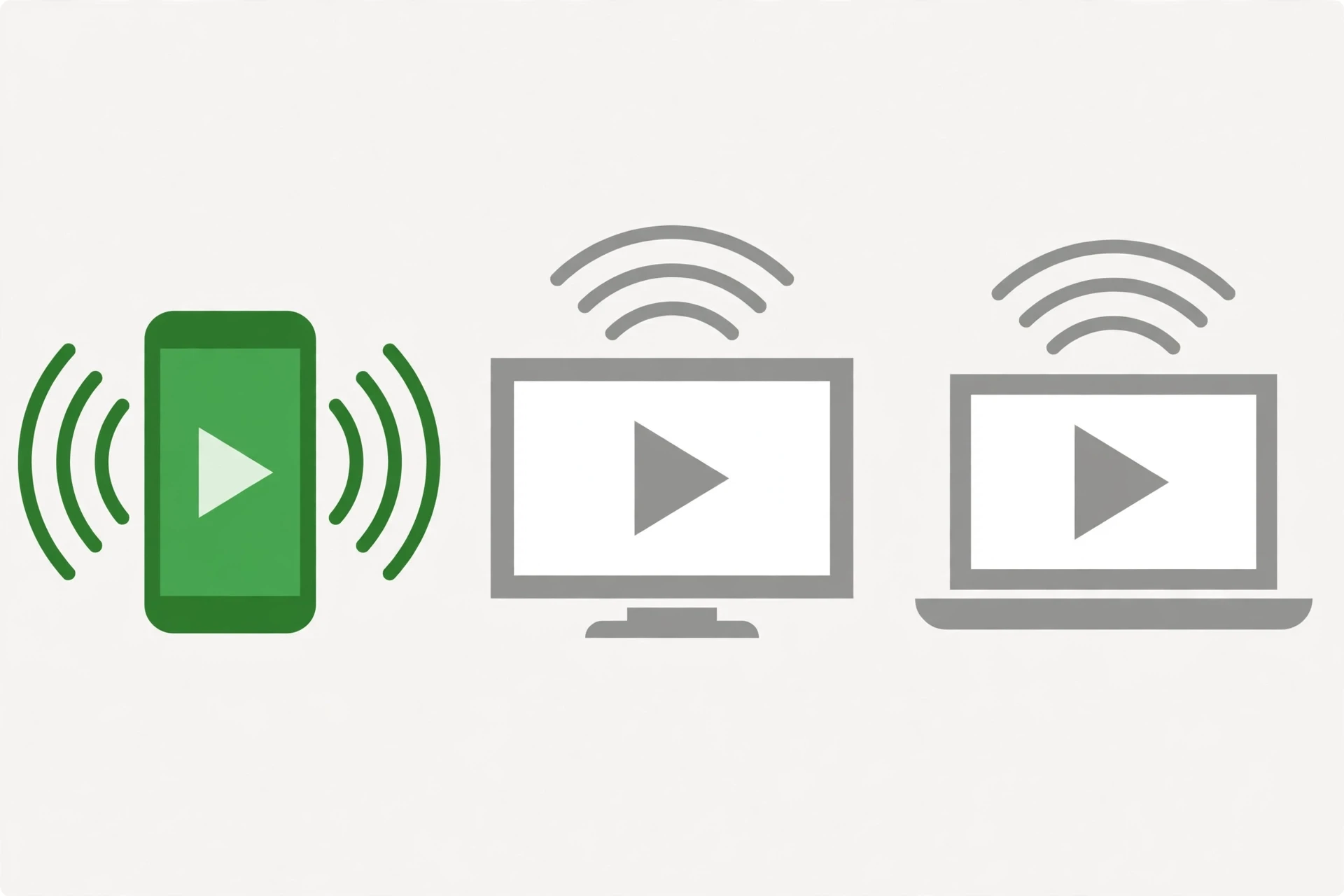
WWE does not go quiet when the show starts — that is when its digital team works hardest. Matches are clipped in near real time. Announcements that happen after broadcasts go off the air — like LA Knight’s confrontation with Roman Reigns following a September episode of Raw — get posted to social media and YouTube within hours, keeping the conversation hot between weekly shows. The live event and the online conversation feed each other in a loop.
Most small businesses treat the event itself as an event marketing blackout: everyone is too busy running things to post anything, and the content drought lasts until someone finds time to write a recap a week later. That is exactly backwards. The live window is when attention peaks — it is the worst possible time to go silent.
Assign one person (or a small rotation) to be your live-content team. Their only job during the event: capture and post. Short video clips, quote graphics, crowd photos, quick polls, behind-the-scenes moments. Post natively to each platform rather than cross-posting identical content. If you are running an online event, have someone live-posting key takeaways as they happen — it pulls in late joiners and gives no-shows a reason to watch the replay. WWE’s second-screen operation turns viewers into amplifiers; your live coverage can do the same for attendees.
Lesson 10: Repurpose Everything — Your Archive Is a Marketing Asset
Long after the ladders are put away, Money in the Bank 2026 will keep working for WWE. Full matches will live on streaming platforms. Highlights will circulate on YouTube and social. Classic moments will resurface through archive channels like WWE Vault. A single night of content becomes years of searchable, shareable marketing material that promotes the brand — and future events — on autopilot.
Small businesses leave staggering event marketing value on the table here. That webinar you ran? It should become five short clips, a blog recap, a quote carousel, an FAQ page, and an on-demand replay behind a simple signup form. That in-person workshop? Photos become social proof, attendee testimonials become website copy, the best Q&A exchanges become blog posts. Every event you run should produce a content library that keeps generating leads for months.
Build repurposing into your event marketing plan from day one, not as an afterthought. Before the event, list the five content pieces you will extract from it. Assign owners. Put deadlines on the calendar for the week after. WWE’s archive is a competitive moat built one event at a time — and your growing library of event content can become yours.
Your Small-Business Event Marketing Playbook
Here is the condensed version — ten moves, one checklist, ready to apply to your next event marketing campaign:
- Open with story. Build a 3–4 part narrative arc in the weeks before the event; never lead with a cold invitation.
- Script shareable moments. Plan at least three “clip-worthy” beats and brief your team to capture them.
- Publish weekly. Run useful content every week for 6–8 weeks pre-event; let the event be the season finale, not a cold start.
- Go multi-platform. Promote where your audience already spends time, in each platform’s native format.
- Co-star your location. Tag the venue and city, partner locally, and pitch local press — even for online events.
- Build a countdown runway. Schedule 3–5 anticipation touchpoints in the final week, each revealing something new.
- Check the audience’s calendar. Avoid holidays and competing events; move the date confidently if you find a conflict.
- Activate your people. Give founders, staff, speakers, and partners ready-to-share assets and let them post in their own voices.
- Cover it live. Dedicate someone to real-time posting during the event — clips, quotes, photos, polls.
- Repurpose on schedule. Pre-plan five content pieces from every event and ship them the week after.
Run through this list before your next launch, webinar, or open house, and you will be marketing your event the way the best in the business do — with story, distribution, and follow-through.
Steal the Playbook — We’ll Help You Run It
WWE has an entire media division running its event marketing. You probably do not — and you do not need one. What you need is the same discipline applied at your scale: a story worth following, content that travels, distribution where your audience lives, and a repurposing plan that keeps working after the lights go up.
That is exactly the kind of event marketing we build for small businesses at KKeyQik. From video marketing that turns one event into months of content to social creative designed to be shared, we help US brands plan, promote, and multiply their events — launches, webinars, and live experiences alike. If your next event deserves a bigger audience, talk to our team and let’s build your playbook together.
—
Sources:
- WrestlingHeadlines — “Big Match Confirmed To Kick Off WWE Money In The Bank 2026” — https://wrestlingheadlines.com/big-opening-match-confirmed-to-kick-off-wwe-money-in-the-bank-2026-ple/
- Cultaholic — “Why WWE Pushed Money In The Bank 2026 Back To October” — https://cultaholic.com/posts/why-wwe-pushed-money-in-the-bank-2026-back-to-october
- Cultaholic — “WWE Money In The Bank 2026 Main Event Revealed After Raw Goes Off The Air” — https://cultaholic.com/posts/wwe-money-in-the-bank-2026-main-event-revealed-after-raw-goes-off-the-air
- eWrestlingNews — “LA Knight Vs. Roman Reigns To Open WWE Money In The Bank 2026” — https://www.ewrestlingnews.com/news/wwe/la-knight-vs-roman-reigns-to-open-wwe-money-in-the-bank-2026
- Athlon Sports — “WWE Money in the Bank 2026: Card, Start Time & How to Watch” — https://athlonsports.com/wrestling/wwe-money-in-the-bank-2026-final-card-start-time-how-to-watch
- F4WOnline — “World title match to open WWE Money in the Bank 2026” — https://www.f4wonline.com/news/wwe/world-title-match-to-open-wwe-money-in-the-bank-2026/?utm_source=thumbnail&utm_medium=internal&utm_campaign=related-stories
- WrestlingNews.co — “WWE YouTube Channel Surpasses 100 Billion Lifetime Views” — https://wrestlingnews.co/wwe-news/wwe-youtube-channel-surpasses-100-billion-lifetime-views/
- Sports Illustrated — “WWE YouTube Channel Hits Historic Milestone That Few Channels Have Reached” — https://www.si.com/fannation/wrestling/wwe/wwe-youtube-channel-hits-historic-milestone-that-few-channels-have-reached
- Ringside News — “WWE’s Digital Strategy Revealed As They Near 100 Million Subscribers On YouTube” — https://www.ringsidenews.com/wwes-digital-strategy-revealed-they-near-100-million-subscribers-youtube/
- TVNewsCheck — “WWE, A Social Media Powerhouse, Tops 100M Subscribers On YouTube” — https://tvnewscheck.com/digital/article/wwe-a-social-media-powerhouse-tops-100m-subscribers-on-youtube/
- Associated Press (via WSLA) — “WWE continues to expand its social media reach with Royal Rumble” — https://gmg-wsls-prod.cdn.arcpublishing.com/business/2025/02/03/wwe-continues-to-expand-its-social-media-reach-with-royal-rumble/
Related reading on KKeyQik:
- Tom Brady’s Fox Audio Failure: Live Video Lessons for Brands
- McDonald’s Monopoly 2026: The Gamified Marketing Playbook
- Ted Lasso Season 5: Brand Marketing Lessons
Related reading: College Football Rankings 2026: 9 Marketing Lessons
Want to put this to work for your business? KKeyQik plans and delivers video production and editing for small businesses, with an in-house team available 24/7. See our video production service or get a quote within 24 hours.
Frequently Asked Questions
WWE Money in the Bank 2026 was a premium live event held on October 10, 2026, at the Smoothie King Center in New Orleans. The card featured Roman Reigns defending the World Heavyweight Championship against LA Knight in the opening bout, plus men's and women's Money in the Bank ladder matches. In the US it streamed on the ESPN app, while international audiences watched on Netflix.
Because WWE runs one of the most disciplined event marketing operations in entertainment, with a YouTube channel topping 111 million subscribers and individual social clips drawing hundreds of millions of views. Its playbook — story-driven promotion, social-first moments, multi-platform distribution, and relentless repurposing — works at any budget. The tactics scale down cleanly to product launches, webinars, and local events.
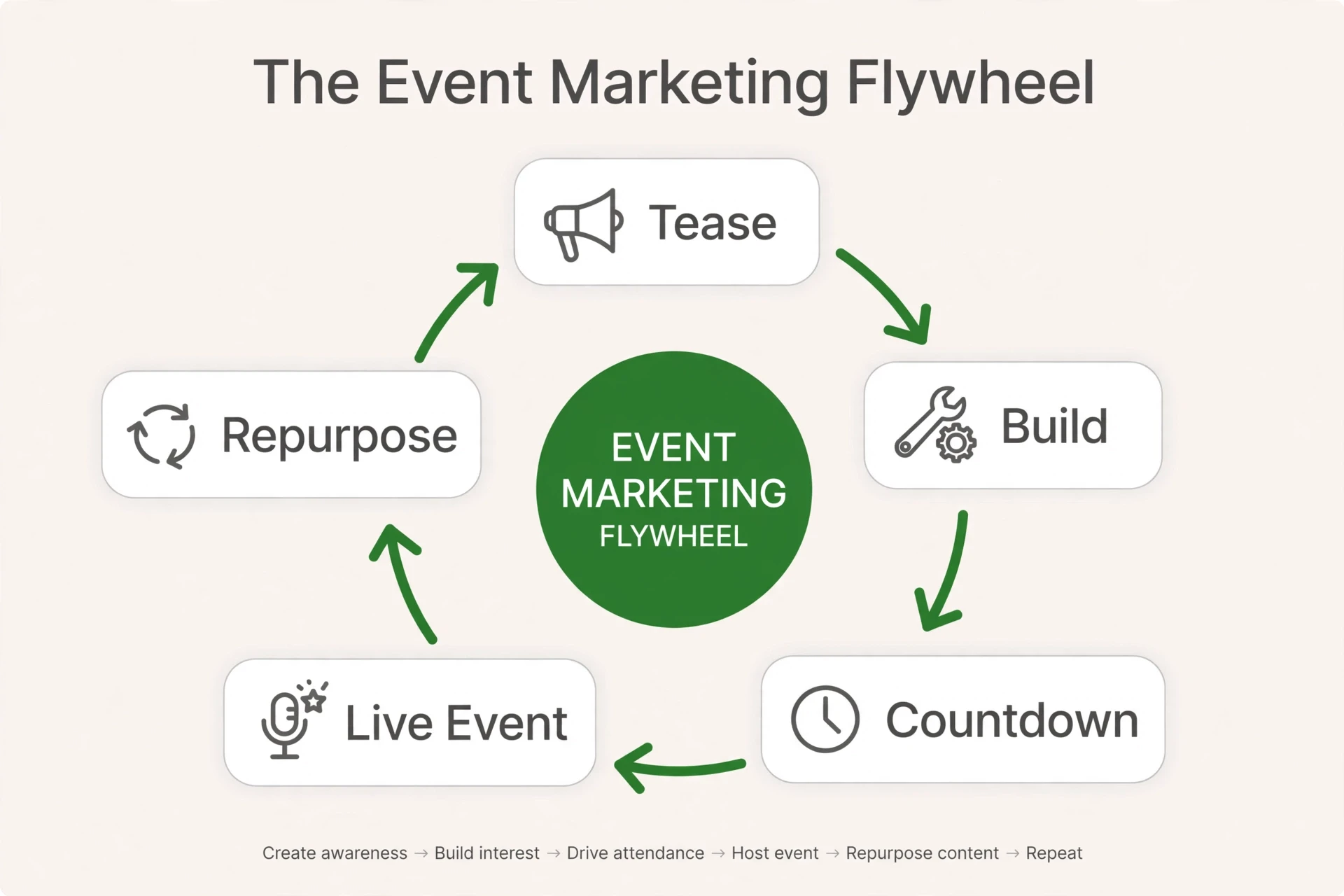
The event marketing flywheel is a five-stage loop: tease the event, build interest with ongoing content, run a countdown to create urgency, host the live event with real-time coverage, then repurpose everything into evergreen content that promotes the next event. Each cycle feeds the next, so your audience and content library grow with every event you run instead of resetting to zero.
Plan them before the event, not after. Script one quotable insight per webinar section, stage one visual moment attendees will photograph, and brief your team on which beats to capture live. WWE writes its programming with clip-worthy moments built into the script — your events deserve the same discipline, scaled to a reveal, a demo, or a surprising guest.
Start building attention six to eight weeks out with useful weekly content tied to the event's theme, then intensify in the final week with three to five anticipation touchpoints — a countdown timer, a final speaker announcement, behind-the-scenes setup photos. WWE spends the entire event day warming up its audience with pre-shows; a short, deliberate runway converts vague interest into actual attendance.
The ones your audience already uses. WWE puts Money in the Bank on the ESPN app for US viewers, Netflix internationally, and clips everywhere fans scroll — it never asks the audience to come to one place. Map where your ideal attendees spend time, then promote natively on each platform instead of blasting one identical message everywhere.
Yes — countdowns turn passive interest into committed plans. A visible timer, a "doors open in 48 hours" email, or a day-before announcement gives people a concrete reason to decide now rather than later. Each touchpoint should reveal something small and new, building anticipation in stages the way WWE's pre-show and go-home broadcasts do.
Absolutely. People trust people more than logos, and a founder's genuine post about an upcoming event typically outperforms a polished corporate graphic. Give your team ready-to-share assets — graphics, talking points, a simple link — and let them speak in their own voices. Even a small team sharing authentically creates a distribution network no ad budget easily replicates.
Assign one person to live coverage and post natively as it unfolds: short video clips, quote graphics, crowd photos, quick polls, and behind-the-scenes moments. Live posting pulls in late joiners and gives no-shows a reason to watch the replay. The live window is when attention peaks — going silent during your own event wastes its highest-leverage marketing hours.
Plan five extractions before the event: short clips, a recap article, a quote carousel, an FAQ page, and an on-demand replay. Ship them the week after while interest is warm. WWE's archive channels keep decades-old events generating views — your growing library of event content becomes a compounding asset that markets each future event before you even announce it.