

Introduction
On Saturday night, October 3, 2026, Dakota Johnson walked onto the Saturday Night Live stage for her third turn as host — and within minutes, the internet split in two. One half was electrified: Taylor Swift had crashed the opening monologue in a surprise cameo, turning a standard host segment into the most replayed television moment of the weekend.
The other half was unimpressed: fan forums lit up calling the Dakota Johnson SNL monologue one of the weakest in recent memory, arguing the whole thing leaned too hard on Swift’s star power to carry it. Both reactions generated the same currency — attention — and Google Trends US noticed, flagging “dakota johnson” as an active trend with 100,000+ searches and a 600% spike.
Here is why marketers should care about a late-night comedy monologue. The Dakota Johnson SNL monologue is a near-perfect laboratory for how modern attention works: a surprise moment, a borrowed audience, a stacked promotional calendar, and a divided public reaction — all unfolding inside 90 minutes of live television and then living forever as clips. Every brand, from a national retailer to a local service business, is trying to manufacture some version of the same thing: a moment people talk about, share, and remember. The difference is that Johnson’s team got to run the experiment with one of the most famous people on earth as the surprise ingredient — and the results contain warnings as well as wins.
This post breaks down the seven most important celebrity marketing lessons from the Dakota Johnson SNL monologue — what the surprise cameo got right, where the borrowed-audience strategy wobbled, and how to translate each move into something a business without a pop-star contact list can actually use. If you’d rather have a team that engineers attention on purpose instead of hoping for it, KKeyQik builds campaigns designed to be talked about.
What Happened: The Dakota Johnson SNL Monologue, in Facts
Before the lessons, the verified facts — because the Dakota Johnson SNL monologue only teaches when the details are right:
The hosting gig. Dakota Johnson hosted Saturday Night Live Season 52, Episode 2, on October 3, 2026, airing on NBC. It was her third time hosting, following stints in 2015 and 2024. Hardcore band Turnstile served as the musical guest, making their network-television debut. The episode arrived one week after the season premiere hosted by Jalen Brunson.
The surprise cameo. During her opening monologue, Johnson was working through a bit about her dating history — joking about “two very public, very lame breakups with two very awesome musicians” — when Taylor Swift walked out unannounced. Johnson introduced Swift as her “literal therapist,” and the two riffed on their real-life friendship: Swift joked that Johnson shows up at her house with an empty bottle of wine to overshare, and that the “sessions” end with Swift sending her home with Pedialyte. Johnson also slipped in a Cleveland reference that drew a cheer from Swift — a nod to Swift’s song “Cleveland” from her recent album The Life of a Showgirl: The Encore.
The divided reaction. Coverage the next morning split cleanly. Entertainment outlets framed the Swift cameo as the highlight of the night. But a vocal share of SNL fans pushed back hard: write-ups of fan reaction described the Dakota Johnson SNL monologue as weak, repetitive, and overly dependent on the surprise guest, with one widely quoted forum comment calling it one of the worst monologues by a working actor in the last decade. Others felt the episode improved after the opening segment.
The promotional context. Johnson wasn’t on SNL by accident. Her thriller Verity — directed by Michael Showalter, based on the Colleen Hoover novel, co-starring Anne Hathaway and Josh Hartnett — opened in US theaters on October 2, one day before the show, via Amazon MGM Studios. Made for a reported $40 million, the film was tracking toward a $19–25 million domestic opening weekend, and early reviews were mixed. The SNL hosting slot landed at the exact center of the film’s opening-weekend publicity push.
The collaboration backstory. The cameo didn’t come out of nowhere. Johnson and Swift have been visibly linked for weeks: Johnson appeared in Swift’s “Patient Zero” music video, and she presented Swift with the inaugural Artist Director Honors at the 2026 MTV Video Music Awards. The SNL moment was the third beat in a short, deliberate run of joint appearances — each one making the next feel less like a stunt and more like a story.
That is the factual foundation. Now the seven lessons — because the Dakota Johnson SNL monologue contains a full marketing curriculum for anyone paying attention.
Lesson 1: Surprise Is the Most Powerful — and Most Fragile — Device in the Playbook
Strip the Dakota Johnson SNL monologue down to its mechanics and the engine is obvious: surprise. Nobody in the studio audience or at home expected Taylor Swift to walk out mid-monologue. That single unannounced entrance is what converted a routine host segment into a trending topic with 100,000+ searches — not the jokes that preceded it, not the musical guest, not the sketches that followed. Surprise collapses the distance between content and conversation: people don’t just watch a surprise, they immediately tell someone about it.
Marketers have known this forever — the flash sale announced at noon, the unannounced product drop, the founder who shows up in the comments — but most brands underuse surprise because it feels risky. The Dakota Johnson SNL monologue shows exactly why it works and exactly where it breaks. It works because the human brain flags the unexpected as important; a surprise cameo hijacks the brain’s novelty response and turns passive viewers into active distributors. Every phone that filmed the moment, every group chat that lit up, every “did you SEE this” text was free distribution that no media budget can buy at the same price.
It breaks when the surprise is the only thing the moment has. Notice the shape of the backlash: fans didn’t say the cameo was bad — they said the Dakota Johnson SNL monologue around it was weak and that the segment leaned too hard on Swift to carry it. Surprise buys you about ninety seconds of goodwill. What fills those ninety seconds determines whether the audience remembers the moment or resents it.
A surprise without substance is a firework: bright, loud, and forgotten by morning — or worse, remembered as the thing that covered up an empty center.
The SMB translation doesn’t require a pop star. A local business can engineer genuine surprise at human scale: the restaurant that comps dessert for a table celebrating something, the agency that delivers a project a day early with a bonus the client didn’t ask for, the ecommerce brand that slips a handwritten note and an unlisted freebie into every fiftieth order. The mechanism is identical — violate expectations in a good way, in public, where witnesses become storytellers. Just make sure the thing underneath the surprise is solid, because the Dakota Johnson SNL monologue proves audiences will praise the surprise and punish the scaffolding in the same breath.
Your move: Design one deliberate surprise into your next campaign or customer experience — something the audience can’t see coming and will want to describe to someone else. Then pressure-test the ninety seconds around it: if you removed the surprise, would the underlying content still hold up? If not, fix the foundation before you light the fuse.
Lesson 2: Borrowed Audiences Amplify — They Don’t Absolve
Here is the harder lesson inside the Dakota Johnson SNL monologue, and the one most brands get backwards. Bringing Taylor Swift on stage was a textbook borrowed-audience play: Swift’s fan base is one of the largest and most mobilized audiences in entertainment, and attaching Johnson’s monologue to it guaranteed the segment would travel far beyond SNL’s regular viewership. It worked — the cameo is what everyone talked about, clipped, and searched. But borrowing an audience is an amplifier, not an absolution. It makes whatever is on stage bigger: the good parts and the weak parts alike.
Read the backlash carefully and that’s exactly the pattern. Critics of the Dakota Johnson SNL monologue didn’t argue that Swift’s appearance failed; they argued the Dakota Johnson SNL monologue needed Swift’s appearance to survive — that without the surprise, there wasn’t enough there. The borrowed audience didn’t cover the cracks in the creative; it lit them up in high definition for a hundred thousand searchers. This is the paradox of borrowed reach: the bigger the guest, the brighter the spotlight on everything around them.
Brands run this play constantly, usually in the form of influencer partnerships, celebrity endorsements, podcast guest spots, and co-marketing with bigger companies. The logic is seductive: their audience becomes your audience. But the Dakota Johnson SNL monologue demonstrates the fine print.
An influencer’s followers will absolutely show up to look at your product — and then they will judge your product with the influencer’s standards, not yours. If your landing page is slow, your offer is confusing, or your creative is thin, the borrowed audience doesn’t forgive it; they broadcast it. We see the positive version of this principle in collaboration done right — our breakdown of the Taco Bell and Duolingo hot-sauce collaboration shows what happens when both partners bring something real to the table instead of one renting the other’s spotlight.
The practical rule: never borrow an audience to compensate for something — borrow one to multiply something that’s already working. Before any partnership, collaboration, or guest appearance, ask the uncomfortable question Johnson’s writers should have asked: if the famous guest canceled an hour before showtime, would this still be good? If the answer is no, you’re not doing partnership marketing; you’re doing reputation arbitrage, and the internet always collects.
Your move: Audit your next partnership or influencer plan against the cancellation test. List what the partner brings (reach, credibility, content) and what you bring (product, story, experience). If your column is empty, pause the outreach and fill it first — because the Dakota Johnson SNL monologue proves the audience you borrow will inspect the stage you built.

Lesson 3: Stack Your Media Moments Into One Story Arc
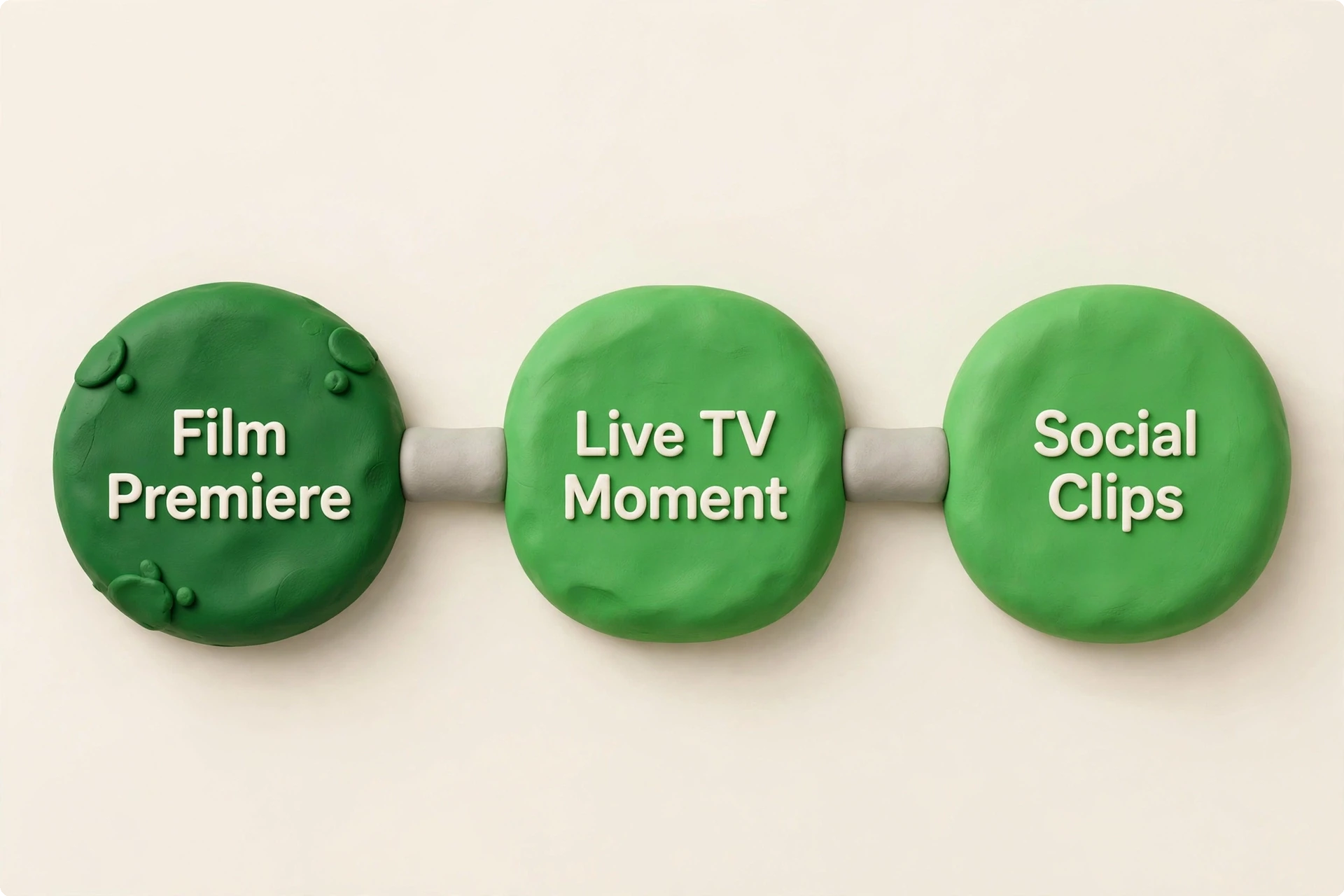
Zoom out from the Dakota Johnson SNL monologue itself and the appearance reveals a masterclass in moment-stacking. Consider the calendar: Johnson appears in Swift’s “Patient Zero” music video. She presents Swift with the inaugural Artist Director Honors at the 2026 MTV Video Music Awards. Her film Verity opens in US theaters on October 2. She hosts SNL on October 3. Each moment is individually newsworthy — but sequenced together, they form a story arc that keeps her name in the news cycle for weeks instead of hours. The SNL monologue didn’t just promote a movie; it was the payoff beat of a multi-week narrative the public had been watching assemble in real time.
This is the difference between marketing as a series of launches and marketing as a serialized story. Most businesses promote in isolated bursts: a product launch here, a sale there, a social campaign that lives and dies in a week. The audience experiences each as a standalone interruption. The Dakota Johnson SNL monologue worked as promotion precisely because it wasn’t standalone — by the time Swift walked on stage, the audience had already seen the music video and the awards show. The cameo felt like a chapter, not a stunt, which is why it read as a story worth following rather than an ad worth skipping.
Small businesses can run the same architecture at their own scale. A stacked arc for a local launch might look like: week one, a behind-the-scenes video series showing the work in progress; week two, a customer or partner publicly trying the thing early; week three, the launch event itself with a surprise element; week four, the recap content featuring real customer reactions. Each beat gives the next one context, and the audience that catches beat three mid-stream can binge beats one and two — which is exactly what happened when curious viewers went back to find the “Patient Zero” video after the Dakota Johnson SNL monologue sent them searching.
There’s a compounding math to this that single moments can’t match. One isolated post reaches whoever the algorithm shows it to that day. A four-beat arc reaches the algorithm four times, gives journalists four hooks, and — critically — gives your existing audience a reason to pay closer attention to beat four because beats one through three trained them that something is building. Anticipation is a marketing asset, and arcs manufacture it.
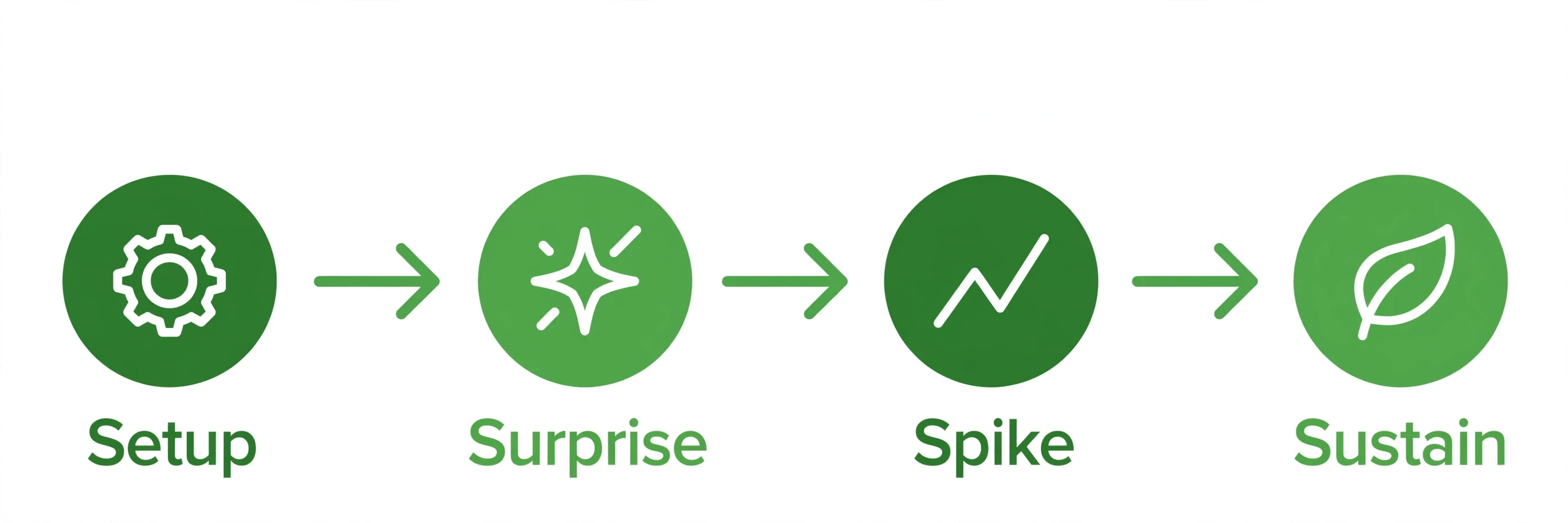
Your move: Map your next launch or campaign as a four-beat arc instead of a single announcement. Name the setup beat, the credibility beat, the main event, and the recap beat — and make sure each one is genuinely interesting on its own, because the Dakota Johnson SNL monologue shows that arcs only work when no single beat feels like filler.
Lesson 4: Authenticity Is the Multiplier on Every Collaboration
Why did the surprise cameo in the Dakota Johnson SNL monologue feel earned rather than engineered? Because the friendship was already public. Audiences had watched Johnson appear in Swift’s “Patient Zero” video. They’d seen her hand Swift a brand-new VMA honor weeks earlier. When Swift walked onto the SNL stage, it didn’t read as a booking — it read as a friend showing up. That authenticity is what separated this cameo from the countless celebrity drop-ins that feel like contractual obligations with better lighting.
This is the multiplier effect most partnership marketing misses. The mechanics of a collaboration — who posts what, when, with which hashtag — are the easy part. The hard part is the backstory: does the audience believe these two parties actually like each other, or does it smell like a media buy? The Dakota Johnson SNL monologue benefited from weeks of visible, unforced association before the big moment. By the time the Dakota Johnson SNL monologue aired, the collaboration had receipts. Contrast that with the typical brand-influencer deal, where the “partnership” begins and ends with a single sponsored post and the audience can feel the transaction humming underneath.
For businesses, the lesson is to build the relationship before you announce the relationship. If you’re partnering with another local business, a creator, or a community figure, let the audience see you in each other’s world first — the casual tag, the genuine comment, the unprompted recommendation — before the formal collaboration launches. Borrowed trust compounds when it’s real; it evaporates when it’s staged. And in an era when audiences have developed extremely sensitive inauthenticity detectors (the same detectors that shredded the weaker parts of the Dakota Johnson SNL monologue), staged warmth is worse than no partnership at all.
There’s also a subtler point about self-awareness as authenticity. Mid-monologue, Johnson joked that she was still promoting Madame Web because “the movie hasn’t made any money yet” — naming her own high-profile flop before the audience could. That single line did more credibility work than any polished talking point could. Owning the miss in your own voice robs critics of their ammunition and signals confidence.
Brands that publicly acknowledge a misstep — the delayed shipment, the feature that didn’t land, the campaign that missed — earn a hearing for everything they say next. The ones that pretend it never happened teach the audience not to trust the highlight reel either. We covered the mechanics of owning the narrative in our analysis of Jason Kelce’s ESPN apology and its crisis-communication lessons — speed plus candor beats polish plus delay, every time.
Your move: Before your next collaboration goes live, build a two-week runway of genuine public interaction with your partner — no announcements, just visible real-world connection. And find one thing your brand usually avoids mentioning, then say it first, in your own voice. The Dakota Johnson SNL monologue proves audiences reward the brands — and the celebrities — that level with them.
Lesson 5: Design Every Big Moment to Be Clipped
Here’s an underappreciated truth about the Dakota Johnson SNL monologue: most of the 100,000+ searchers never watched the episode. They watched the clip. The monologue’s real distribution happened after broadcast — in the 90-second excerpt on social feeds, the reaction videos, the quote-tweets of the “literal therapist” exchange, the articles embedding the segment. Live television in 2026 is not really a broadcast medium anymore; it’s a clip factory. The broadcast is just the raw-material stage.
Smart marketers now design for the clip, not the show. Notice how the Dakota Johnson SNL monologue was structurally clip-ready: a self-contained bit with a clear setup (the dating-history jokes), a surprise beat (Swift’s entrance), and a quotable exchange (the wine-bottle therapy riff) — all inside a few minutes. That’s not an accident of comedy writing; it’s the shape of content engineered for excerpting. Every beat works with or without the surrounding context, which is exactly what a clip needs to travel.
Your business doesn’t need a television show to use this. It needs a clip-first mindset applied to everything it publishes. That webinar you’re planning? The value isn’t the 45 minutes — it’s the three 60-second answers you can cut from it. That customer testimonial? The gold is the 20-second sentence, captioned and framed for a feed. That event you’re hosting? Plan one photogenic, quotable, self-contained moment the way SNL plans a monologue beat — because the attendees’ phones are your real broadcast network. Our guide to short-form video strategy breaks down the mechanics of building a content system where every long-form asset feeds a clip pipeline.
The deeper principle: attention now flows to the most portable unit of your message. If your big moment can’t survive being cut into pieces, it won’t survive the feed. The Dakota Johnson SNL monologue traveled because its best ninety seconds needed no introduction. Ask the same of your next launch video, announcement, or event: what is the ninety seconds someone would share, and does it work for a stranger who never sees the rest?
Your move: Take your next piece of long-form content — a video, a webinar, a talk — and storyboard its three most clip-worthy moments before you produce it. Script the quotable line, stage the visual beat, and plan the caption. The Dakota Johnson SNL monologue didn’t go viral by luck; it went viral because its best moments were built to leave the building.
Lesson 6: A Divided Reaction Is Data — Treat It Like a Focus Group, Not a Verdict
The most instructive thing about the Dakota Johnson SNL monologue may be the split itself. One audience segment was thrilled by the surprise; another found the whole thing thin. The instinct — for celebrities and brands alike — is to treat a divided reaction as a crisis to be managed or a victory to be claimed. The smarter move is to treat it as free market research. A polarized response is the audience telling you, in high resolution, exactly which parts of your message landed and which didn’t.
Look at what the split actually revealed. Nobody criticized the concept of the surprise cameo — the mechanism was universally understood as exciting. The criticism concentrated on the writing around it: repetitive jokes, over-reliance on the guest. That’s an incredibly specific product insight, delivered within hours, at zero research cost. The Dakota Johnson SNL monologue essentially A/B tested “surprise + thin material” versus audience expectations and returned a clean read: the surprise format is validated, the material needs work. Any brand would pay dearly for feedback that precise.
Too many businesses respond to mixed reactions by either retreating (“the audience is wrong”) or overcorrecting (“scrap everything”). Both waste the data. The disciplined response has three steps: segment the criticism (what exactly are they objecting to — the idea, the execution, or the messenger?), weigh it by source (are the critics your actual customers or just loud bystanders?), and iterate on the execution while keeping the validated concept. The SNL team, notably, had the rest of the episode to adjust tone — and reporting suggests the show improved after the Dakota Johnson SNL monologue, which is live iteration in its purest form.
For a business, this discipline matters most in the first 48 hours after any launch or campaign. Set up your listening before you need it: social mentions, review notifications, comment sections, even a simple spreadsheet of recurring phrases. When the reaction splits, resist the urge to declare victory or defeat on day one. Instead, extract the pattern — because the Dakota Johnson SNL monologue shows that a divided audience is usually agreeing about what worked and disagreeing only about what didn’t, and that agreement is a roadmap.
Your move: For your next launch, pre-write a “reaction triage” plan: who watches the first 48 hours of feedback, how criticism gets categorized (concept vs. execution vs. messenger), and what a same-week iteration looks like. The Dakota Johnson SNL monologue proves the audience will do your research for you — but only if you’re listening like a researcher instead of reacting like a defendant.
Lesson 7: Borrowed Star Power Has a Half-Life — Plan the Afterglow
The final lesson from the Dakota Johnson SNL monologue is about time. Surprise cameos and celebrity moments decay fast. The search spike — 100,000+ queries at 600% growth — is a wave, not a new waterline. Within days, the conversation moves on; within weeks, the Dakota Johnson SNL monologue is a footnote. That’s not a failure of the strategy; it’s the physics of attention. The mistake brands make is treating the spike as the outcome instead of treating it as the opening.
What separates a moment from a movement is the afterglow plan: the content, offers, and follow-ups engineered to catch the wave’s energy before it dissipates. In Johnson’s case, the afterglow machinery was the film itself — Verity in theaters, the thing the whole appearance was ultimately promoting. The monologue’s job wasn’t to be remembered forever; it was to convert a weekend of attention into opening-weekend ticket interest. Whether it succeeded is a box-office question, but the architecture is right: every attention spike needs a somewhere for the attention to go.
Most businesses build the spike and forget the landing zone. The viral post links to a homepage that doesn’t mention the thing that went viral. The press hit drives traffic to a site with no matching offer. The event packs the room and nobody captures an email. The Dakota Johnson SNL monologue had a clear conversion path — awareness → curiosity → a movie in theaters right now — and that path is what made the ephemeral moment commercially meaningful. Attention without a next step is just entertainment; attention with a next step is marketing.
So the question for your next big moment isn’t just “how do we get people talking” — it’s “where does the talking lead, and is that destination ready?” Before you chase any spike — a collaboration, a stunt, a launch — build the afterglow first: the landing page that continues the story, the offer that matches the moment’s energy, the email capture that turns viewers into a list, the retargeting that keeps the conversation going after the wave passes. Spikes are rented; the afterglow is what you get to keep.
Your move: For your next campaign, write the afterglow plan before the launch plan. Define the single next step a newly attentive stranger should take, build the page or offer that receives them, and make sure it references the moment that sent them. The Dakota Johnson SNL monologue will fade from the trends list within days — but the businesses that learn its real lesson will have built the machinery to catch the next wave.
Conclusion: The Monologue Fades, the Playbook Doesn’t
The Dakota Johnson SNL monologue will follow the lifecycle of every viral television moment: a weekend of clips and arguments, a week of think pieces, and then the slow dissolve into “remember when.” The search spike will flatten. The takes will cool. But the mechanics underneath it — surprise as a distribution engine, borrowed audiences as amplifiers, stacked moments as story arcs, authenticity as the multiplier, clip-first design, divided reactions as data, and the afterglow as the real prize — those don’t expire. They’re the operating system of modern attention, and they work whether your stage is Studio 8H or a Shopify store.
The brands that win the next few years won’t be the ones with the biggest celebrity contacts. They’ll be the ones that run the celebrity playbook without celebrities: engineering genuine surprise at human scale, borrowing audiences only to multiply something real, stacking small moments into arcs worth following, leveling with their audience before the audience levels them, building every asset to be clipped, listening to divided reactions like researchers, and always — always — having somewhere for the attention to go.
If you want that operating system installed in your business instead of assembled from blog posts, that’s what we do. KKeyQik designs campaigns that earn attention on purpose — and convert it — so your next big moment isn’t a lucky spike, but a system.
Want to put this to work for your business? KKeyQik plans and delivers social media campaigns for small businesses, with an in-house team available 24/7. See our social media marketing service or get a quote within 24 hours.
Frequently Asked Questions
Dakota Johnson hosted Saturday Night Live (Season 52, Episode 2) for the third time. Midway through her opening monologue — a bit about her dating history — Taylor Swift walked out unannounced as a surprise guest. Johnson introduced Swift as her "literal therapist," and the two riffed on their real-life friendship. The moment became the most replayed and discussed segment of the episode.
The cameo capped a visible run of collaboration between the two: Johnson had appeared in Swift's "Patient Zero" music video and presented Swift with the inaugural Artist Director Honors at the 2026 MTV Video Music Awards. The SNL appearance was the third beat in that sequence, which is why it felt like a chapter in an ongoing story rather than a random stunt.
A vocal share of viewers felt the monologue's writing was weak and repetitive and leaned too heavily on Swift's surprise appearance to carry the segment — with some calling it one of the weakest monologues by a working actor in recent years. Others enjoyed the episode, especially later segments. The split reaction is itself a useful case study in how audiences judge borrowed star power.
It's the practice of inserting an unexpected, high-interest element — a guest, an announcement, an unlisted bonus — into an otherwise expected experience. Surprise triggers the brain's novelty response, turning passive viewers into active sharers. The key lesson from the SNL monologue: surprise buys about ninety seconds of goodwill, so the content surrounding it still has to be strong.
Borrowed-audience marketing works at any scale: guesting on a popular podcast, co-hosting a webinar with a respected peer, partnering with a complementary local business, or inviting a well-known creator to try your product. The rule stays the same — borrow audiences to multiply something that's already good, never to cover for something weak, because a bigger spotlight exposes flaws faster.
It means sequencing several newsworthy beats — a behind-the-scenes series, an early-access moment, a launch event, a recap — into one connected story arc instead of promoting in isolated bursts. Johnson's arc ran from a music-video appearance to an awards show to a film premiere to SNL hosting. Each beat gave the next one context, keeping her in the news cycle for weeks rather than hours.
Build self-contained, quotable moments into everything you publish: a clear setup, one memorable beat, and a line that works without surrounding context. That webinar's value is often the three 60-second answers you can cut from it; that event's reach is the one photogenic moment attendees film. If your big moment can't survive being cut into pieces, it won't survive the feed.
Treat it as research, not a verdict. Segment the criticism (is the objection to the concept, the execution, or the messenger?), weigh it by whether critics are actually your customers, and iterate on the execution while keeping whatever the audience validated. Avoid both extremes: dismissing all feedback and scrapping everything.
It's the follow-up machinery built to catch a spike's energy before it fades: a landing page that continues the story, an offer matched to the moment, an email capture, and retargeting that extends the conversation. Attention spikes decay fast — the afterglow plan decides whether the moment becomes a memory or a pipeline.
Audiences have highly sensitive inauthenticity detectors. The SNL cameo landed because the Johnson–Swift friendship was already public and visible; it read as a friend showing up, not a booking. Partnerships perform best when the relationship exists before the announcement — visible, unforced, and real — because staged warmth erodes trust faster than no partnership at all.