

Introduction
On October 1, 2026, one of the fastest-rising searches in America was “taco bell duolingo hot sauce” — up more than 600% on Google Trends in under a day. The Taco Bell Duolingo hot sauce collab sounds like the setup to a joke: a fast-food chain and a language-learning app walk into a kitchen. But the result is dead serious marketing — a limited-edition Duo Habanero Sauce, sauce packets printed with taco wisdom in nine languages, a free month of Super Duolingo for loyalty members, and restaurant takeovers from New York City to Mumbai.
This is not just a novelty condiment. The Taco Bell Duolingo hot sauce collab is one of the cleanest co-branding case studies of the year, and it arrived gift-wrapped for marketers: two beloved brands, a genuine cultural insight, a product people can hold, and a rollout engineered for social buzz. If your business has ever wondered whether brand partnerships are worth the effort, the Taco Bell Duolingo hot sauce collab answers with a full playbook.
Co-branding is the quiet growth lever most small businesses ignore. Done well, it lets you borrow another brand’s audience, credibility, and creative energy — and give something back in return. The Taco Bell Duolingo hot sauce collab shows exactly how the mechanics work at the highest level, from packaging-as-media to scarcity design to global localization. Below are seven lessons you can steal, plus a practical playbook for running your own micro-collab on a small-business budget. And if you’d rather have a team architect the partnership strategy for you, KKeyQik helps brands turn creative marketing systems into measurable growth.
What Actually Happened With the Taco Bell Duolingo Hot Sauce Collab
Before the lessons, the facts — because the Taco Bell Duolingo hot sauce collab only makes sense as a campaign once you see how deliberately it was built:
The announcement. On September 30, 2026, Taco Bell announced it was taking its National Taco Day celebration global for the first time — declaring October 6 “Global Taco Day” — in partnership with Duolingo, the language-learning platform. The Taco Bell Duolingo hot sauce collab is the centerpiece: a limited-edition Duo Habanero Sauce created exclusively for the partnership.
The product. The Duo Habanero Sauce is described as tangy with fruity notes and a kick of habanero heat. The packets come in Duolingo green and do something no sauce packet has done before: each one carries taco-inspired sayings — “taco wisdoms” — in nine languages: English, Spanish, French, Hindi, Portuguese, German, Korean, Mandarin, and Japanese. Internationally, the language mix shifts by market to reflect local languages and the ones Duolingo users study most in each country.
The cultural insight. The whole Taco Bell Duolingo hot sauce collab hangs on one observation: the word “taco” needs no translation. It stays nearly identical across more than 30 languages — Spanish, French, German, Japanese (takosu), Hindi (taiko) — a thread of shared vocabulary running through wildly different cultures. That is the bridge between a taco chain and a language app, and it is genuinely clever.
The mechanics. In the U.S., the sauce is free with any Doritos Locos Tacos order, one packet per qualifying item, while supplies last; it is also rolling out at participating restaurants in Canada, Australia, China, India, Spain, and the U.K. through market-specific promotions. From October 1 through October 6, Taco Bell Rewards members can claim one free month of Super Duolingo. The campaign includes a Duolingo x Taco Bell restaurant takeover in New York City on October 6, plus in-store activations in Mumbai, Toronto, and Shanghai, limited-edition Taco Bell x Duo plushies and tote bags, and appearances from Duo the Owl himself.
The leak. The Taco Bell Duolingo hot sauce collab did not arrive unannounced to everyone. On September 21, the food blog Sporked reported the sauce after a Reddit user who appeared to be a Taco Bell employee posted internal documents — a classic internet leak that seeded nearly two weeks of speculation before the official reveal.
The context. This is not Taco Bell’s first culture-jacking rodeo. In 2023, the chain ran its famous campaign to “liberate” the phrase Taco Tuesday from a competitor’s 1989 trademark — a move that generated enormous earned media. And the global angle is strategic, not decorative: Taco Bell has roughly doubled its store count in international markets over the past few years, and its parent company has been steering more marketing dollars toward the international business. The Taco Bell Duolingo hot sauce collab is, among other things, a coming-out party for that global ambition.
That is the campaign in brief: an owl, a taco, a green sauce packet, and nine languages. Here is what marketers should take from the Taco Bell Duolingo hot sauce collab.
Why the Taco Bell Duolingo Hot Sauce Collab Belongs on a Marketing Blog
It is tempting to file the Taco Bell Duolingo hot sauce collab under “fun food news” and move on. That would be a mistake, because every element of this campaign is a marketing decision wearing a costume:
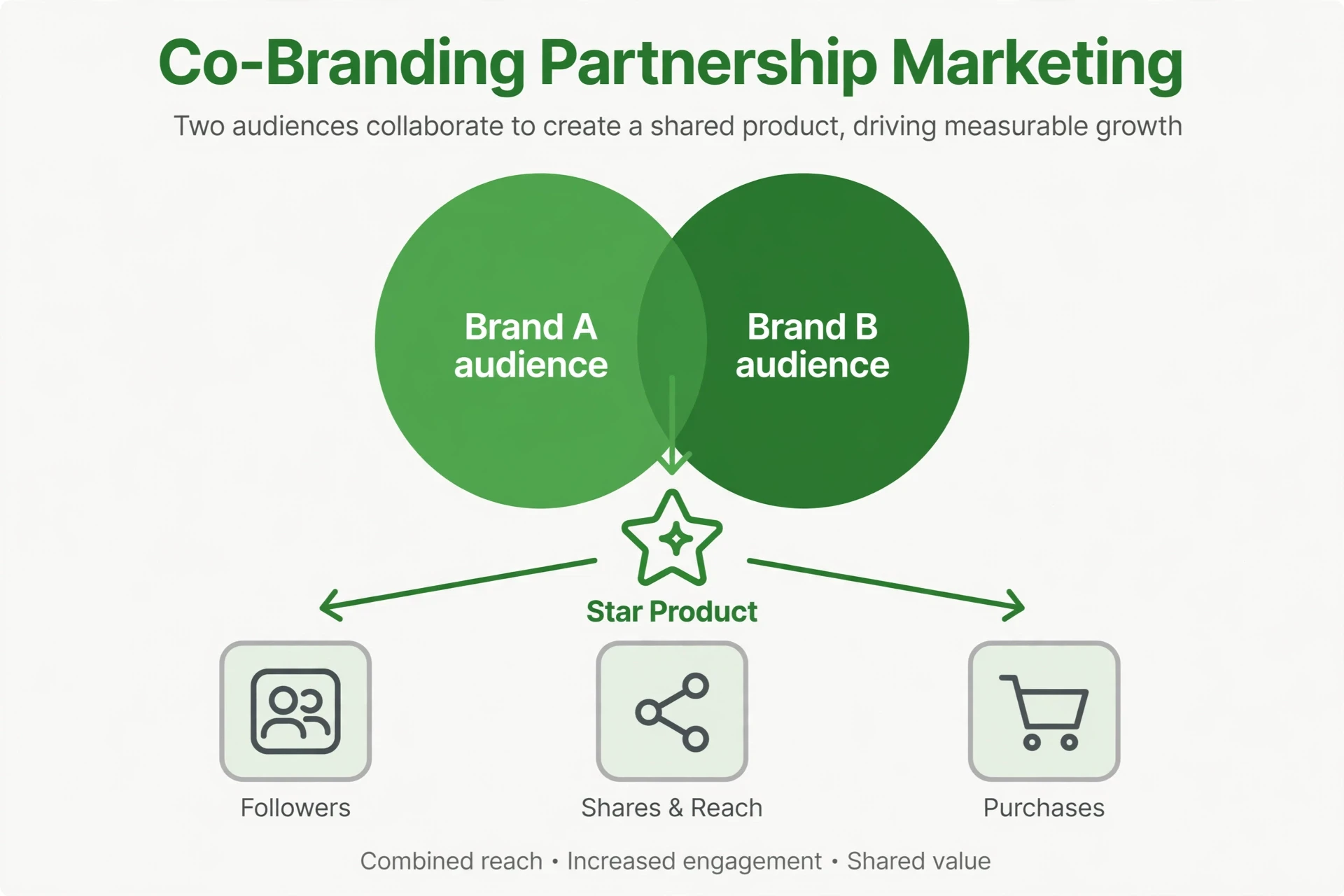
Co-branding is audience arbitrage. Both brands get introduced to the other’s fans at near-zero acquisition cost. The Taco Bell Duolingo hot sauce collab is a masterclass in borrowing trust — each brand’s credibility rubs off on the other.
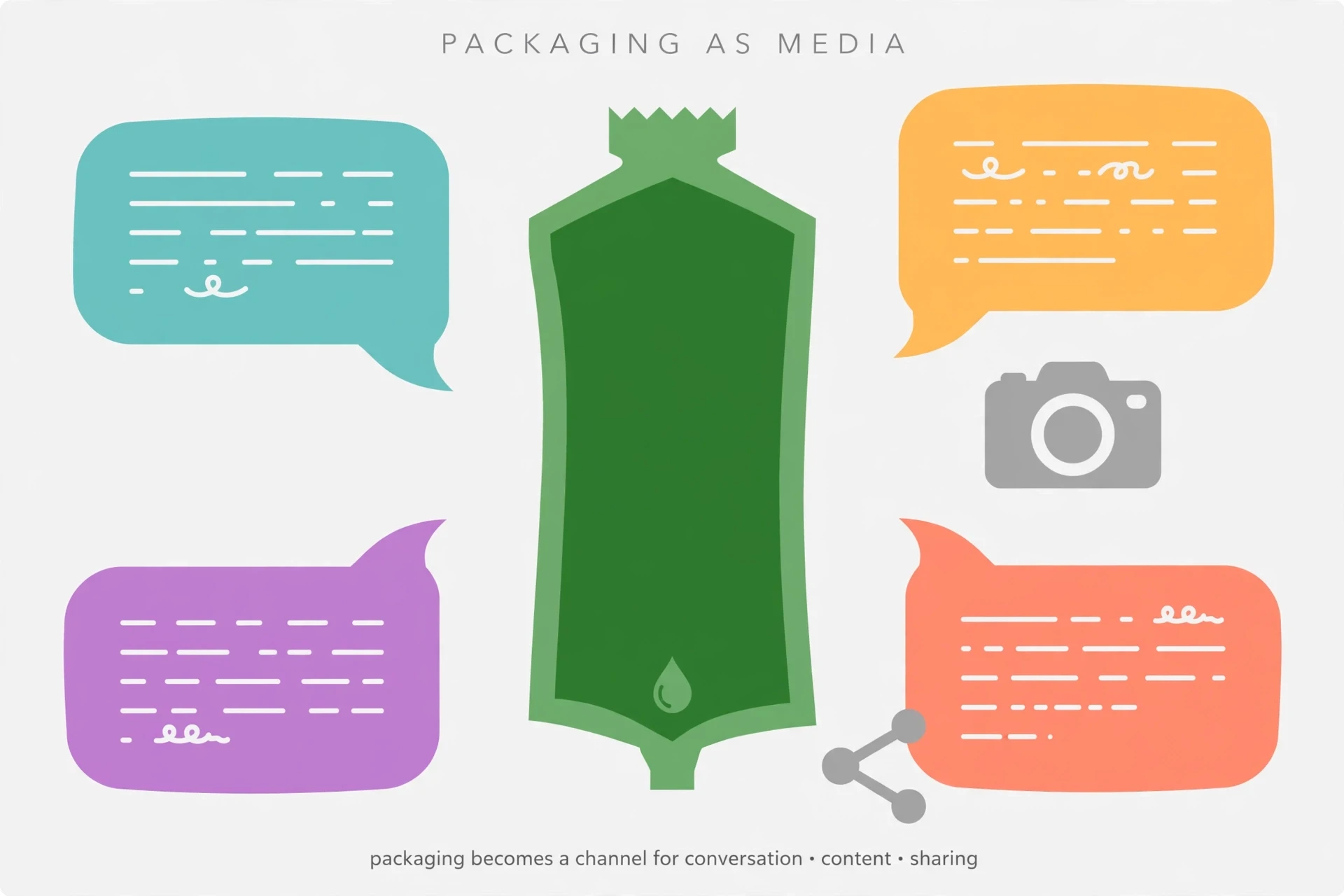
Packaging is a media channel. Those nine-language sauce packets are tiny billboards that travel home in millions of bags. The Taco Bell Duolingo hot sauce collab treats packaging as content, not container.
Scarcity is a demand engine. Limited edition, while supplies last, one-day takeovers — the Taco Bell Duolingo hot sauce collab runs on the oldest persuasion lever in retail, tuned for the social-media era.
Culture beats creative. The campaign’s big idea — a word that needs no translation — came from a cultural observation, not a brainstorm room. The Taco Bell Duolingo hot sauce collab proves the best creative is found, not invented.
Small businesses sometimes assume splashy brand collabs are a big-company game. They aren’t. A bakery teaming with a local coffee roaster, a gym partnering with a smoothie bar, a SaaS tool co-hosting a webinar with a complementary app — these are the same mechanics at neighborhood scale. The Taco Bell Duolingo hot sauce collab just executes them with a bigger budget and a green owl. The seven lessons below translate the playbook to any size.
Lesson 1: Partner Where Your Audiences Already Overlap
The strangest thing about the Taco Bell Duolingo hot sauce collab is how un-strange it feels once you see it. Taco Bell’s core audience skews young, online, and fluent in meme culture — the same crowd that turned Duo the Owl’s unhinged push notifications into an internet legend. Duolingo’s audience is enormous, global, and famously playful. The Taco Bell Duolingo hot sauce collab works because the Venn diagram of “people who love late-night tacos” and “people who laugh at Duo memes” is nearly a circle.
This is the first rule of co-branding, and the one most partnerships violate: overlap beats size. A partner with ten million followers who don’t care about your world is worth less than a partner with fifty thousand who already live in it. The Taco Bell Duolingo hot sauce collab did not try to manufacture a connection between two random brands; it found two brands whose fans were already hanging out in the same group chat and gave them something to talk about.
For your business, the exercise is simple. List the brands, creators, and communities your best customers already love — the apps on their phones, the accounts they follow, the places they eat. Your ideal collaboration partner is already on that list. The Taco Bell Duolingo hot sauce collab is proof that the weirder the pairing looks on paper, the better it performs — as long as the audiences already overlap in real life. If you have been treating brand trust as a solo project, consider what a trusted partner’s endorsement could do for it.
Lesson 2: Turn the Product Into the Billboard
Here is the most underrated move in the Taco Bell Duolingo hot sauce collab: the sauce packet itself is the ad. Millions of Duo Habanero Sauce packets will travel home in delivery bags and drive-thru orders, each one printed with taco wisdom in nine languages, each one a tiny piece of content people photograph, collect, and post. Taco Bell turned a condiment into a media channel — and charged nothing extra for the impression.
Most brands treat packaging as a cost center: a container that holds the thing. The Taco Bell Duolingo hot sauce collab treats packaging as prime real estate — the one surface every single customer is guaranteed to touch. That is an owned-media channel with 100% reach among buyers, and most businesses leave it blank.
The small-business version is everywhere once you look: the coffee sleeve with a QR code to a playlist, the shipping box with a handwritten-style thank-you and a referral offer, the appointment reminder card that doubles as a review request. The Taco Bell Duolingo hot sauce collab just scaled the idea to nine languages. Audit every physical (and digital) surface your customer touches — receipts, boxes, bags, confirmation emails, login screens — and ask what story each one could be telling. Owned surfaces are the cheapest impressions you will ever buy, because you already own them.
Lesson 3: Anchor the Collab in a Real Cultural Insight
Strip away the owl and the habanero, and the Taco Bell Duolingo hot sauce collab rests on a single sentence: “taco” needs no translation. The word survives intact across more than 30 languages, which makes it the perfect meeting point for a taco chain and a language app. Duolingo’s chief marketing officer put it plainly: language and food are two of the most powerful ways people connect with culture, and “taco” is a rare word that travels easily across cultures — a fun starting point for getting curious about language.
Notice what the insight does: it makes the partnership feel inevitable rather than arranged. Nobody asks “why would a taco chain team up with a language app?” because the answer is printed on the packet. The Taco Bell Duolingo hot sauce collab earns its strangeness with a truth. Compare that to the average brand collaboration — two logos slapped on a product with a press release full of “synergy” — and you see the gap.
For your own partnerships, the lesson is to find the insight before you sign the deal. What genuine, interesting truth connects your brand to your partner’s? Maybe your accounting software and a freelancer community share the insight that “invoices are where creativity meets anxiety.” Maybe your pet groomer and the local dog bakery share “dogs are family, and family deserves the good stuff.” The Taco Bell Duolingo hot sauce collab shows that one sharp cultural observation outperforms a hundred clever taglines — because an insight gives the audience a reason to care, and gives the press a sentence to quote. When retail brands face disruption, the ones with a real story to tell are the ones customers remember.
Lesson 4: Engineer Scarcity and Urgency on Purpose
The Taco Bell Duolingo hot sauce collab is a limited-edition sauce, available while supplies last, free only with a qualifying Doritos Locos Tacos order, with one-day-only restaurant takeovers in four cities. Every one of those constraints is deliberate. Scarcity turns a condiment into a collectible; urgency turns “maybe someday” into “Tuesday.” The Taco Bell Duolingo hot sauce collab is engineered so that missing out feels like a real possibility — because it is.
This is the oldest lever in marketing, and the Taco Bell Duolingo hot sauce collab pulls it with unusual discipline. Note the layering: the product is scarce (limited edition), the freebie is gated (qualifying purchase required), the events are time-boxed (one day, specific hours), and even the Super Duolingo offer has a redemption deadline. Each layer gives people a reason to act now rather than later, and each layer gives social media a countdown to talk about.
Small businesses can run the same playbook without a national supply chain. A bakery’s weekend-only collaboration croissant, a consultant’s five-seat joint workshop with a complementary expert, a boutique’s limited capsule collection with a local artist — the mechanics are identical: cap the quantity, bound the time, gate the bonus. The Taco Bell Duolingo hot sauce collab proves scarcity works best when it is real (supplies genuinely run out) and specific (a date, a quantity, a condition) rather than vague (“limited time only!”). And when scarcity is paired with a subscription-style loyalty hook, like the Rewards-member Super Duolingo offer, urgency feeds retention too.
Lesson 5: Give Value First, Then Earn the Attention
Look at what the Taco Bell Duolingo hot sauce collab hands out before asking for anything: a free sauce packet with a qualifying order, a free month of Super Duolingo for Rewards members, free in-store experiences, photo ops with Duo, spin-the-wheel giveaways. The campaign is generous on purpose. Generosity is the price of attention in a feed where everyone is selling — and the Taco Bell Duolingo hot sauce collab pays it gladly, because every freebie is a Trojan horse for something valuable: an app install, a loyalty signup, a store visit, a social post.
The Super Duolingo offer is the sharpest example. A free month of the premium tier costs Duolingo almost nothing at the margin, but it puts the app’s best experience in front of millions of Taco Bell customers — and it gives Taco Bell Rewards members a reason to stay in the loyalty program. Both brands grow a valuable asset (users, members) by giving something away. The Taco Bell Duolingo hot sauce collab understands that in partnership marketing, the giveaway is not the cost of the campaign; it is the campaign.
For small businesses, “give first” scales down beautifully: the free sample that starts a habit, the free audit-style consultation that demonstrates expertise, the free community workshop that fills a room with future customers. The rule the Taco Bell Duolingo hot sauce collab follows is that the free thing must be genuinely good — a sad sample teaches people your product isn’t worth paying for. Give the real thing, in a small dose, and let quality do the converting.
Lesson 6: Stage It in Real Life, Then Let the Internet Amplify It
The Taco Bell Duolingo hot sauce collab is not a digital-only campaign. On October 6, Duo the Owl is physically reporting for duty: a full restaurant takeover in New York City, an in-store activation in Mumbai with a spin-the-wheel and a photo booth, a Toronto takeover with plushies and tote bags, appearances in Shanghai. These are real places, real lines, real photos — engineered to become content. The Taco Bell Duolingo hot sauce collab treats the physical event as the studio and social media as the broadcast tower.
And the internet did its part before the campaign even launched. When Sporked reported the leaked sauce packets on September 21 — sourced from a Reddit post of apparent internal documents — the Taco Bell Duolingo hot sauce collab got nearly two weeks of free speculation, screenshots, and “is this real?” discourse. Whether the leak was planned or not, the campaign was built to survive it: the product is photogenic, the story is simple, and the official announcement landed while curiosity was peaking.
The lesson for smaller brands: experiences are content factories. You don’t need four global cities; you need one photogenic moment worth posting. A pop-up, a launch party, a behind-the-scenes video, a customer challenge — anything that gives your audience something to capture and share. The Taco Bell Duolingo hot sauce collab shows the formula: make the real-world moment remarkable, make it easy to photograph, and let your customers’ phones do the media buying. Even crisis moments can become content events when a brand understands the attention game — the collab just plays it on offense.

Lesson 7: Localize the Global Play
The most operationally impressive part of the Taco Bell Duolingo hot sauce collab is how it bends by market. The nine-language packet lineup shifts internationally to reflect local languages and the languages Duolingo users study most in each country. Activations land in New York, Mumbai, Toronto, and Shanghai — each with local flavor, from the Mumbai photo booth to Toronto’s plushie giveaways. October 6 is “Global Taco Day,” but the celebration speaks the local language everywhere it lands. The Taco Bell Duolingo hot sauce collab is global in concept and local in execution.
This matters because the campaign’s whole premise is international growth — Taco Bell has roughly doubled its overseas store count in recent years — and nothing kills a global campaign faster than a one-size-fits-all rollout. The Taco Bell Duolingo hot sauce collab avoids the trap by letting each market’s version feel native: the right languages on the packets, the right city for the takeover, the right local offers around it.
Small businesses expanding — even just to the next city — should steal this discipline. Translate more than words: adapt the offer, the imagery, the references, and the channel mix to each audience. A campaign that works in Texas may need a different hook in Toronto. The Taco Bell Duolingo hot sauce collab proves that “think global, act local” is not a poster slogan; it is an operations checklist. Start with one market, learn what bends, then scale the bending.
Your Small-Business Micro-Collab Playbook
You don’t need a green owl to run the Taco Bell Duolingo hot sauce collab playbook. Here is how to shrink it to small-business size:
1. Pick one partner. Find a non-competing business whose customers look like yours. The coffee shop next door, the complementary app in your niche, the creator your buyers already follow. One partner, one shared audience — that is enough.
2. Find your “taco needs no translation.” Before you design anything, name the genuine insight that connects you. What truth do both brands’ customers already believe? Write it in one sentence. If you can’t, keep looking — the Taco Bell Duolingo hot sauce collab works because the insight came first.
3. Make one small, exclusive thing together. A co-branded product, a joint event, a limited bundle, a shared challenge. Keep it small enough to execute well and scarce enough to matter — limited quantity, a clear end date.
4. Give something real away. A sample, a trial, a free seat, a bonus with purchase. Make the free thing genuinely good, and attach it to an action that grows an asset: an email signup, an app install, a store visit, a review.
5. Build one photogenic moment. A pop-up, a launch night, a behind-the-scenes reveal — one thing worth photographing. Tell attendees exactly where to post and what to tag. Your customers’ phones are your media plan.
6. Cross-promote like you mean it. Email swaps, social takeovers, in-store signage, packaging inserts. Each partner should put the collab in front of their audience at least three times across different channels — the Taco Bell Duolingo hot sauce collab runs on repetition across touchpoints.
7. Measure the shared win. Agree upfront on what success looks like: new customers, email signups, social mentions, revenue from the exclusive item. Track it separately from your normal marketing so the partnership gets honest credit.
Run this playbook twice a year and co-branding becomes a growth channel, not a stunt. The Taco Bell Duolingo hot sauce collab is the Super Bowl version; your version just needs the same fundamentals: overlap, insight, scarcity, generosity, and one great photo.
The Takeaway
The Taco Bell Duolingo hot sauce collab will be remembered as a funny sauce packet. It should be remembered as a strategy document. In one campaign, two brands demonstrated audience overlap over audience size, packaging as media, cultural insight as creative fuel, engineered scarcity, generosity as acquisition, physical events as content factories, and localization as a growth discipline. That is a semester of marketing education in a green packet.
Trends like “taco bell duolingo hot sauce” spike and fade — that is the nature of the news cycle. But the mechanics underneath the spike are permanent, and they are available to businesses of any size. Pick a partner your customers already love, find the truth that connects you, make something scarce and generous, and give the internet something worth photographing. Do that consistently, and you won’t need a trending topic to get attention — you’ll be the reason for one.
If you want a partner who thinks this way about your brand every week — audience research, partnership strategy, content systems, and campaigns engineered for measurable growth — talk to KKeyQik. We build the playbooks; you keep the results.
Related reading: Disney × McDonald’s Boo Buckets 2026: 8 Brilliant Co-Branding Marketing Lessons You’ll Love · National Taco Day 2026: 8 Marketing Plays Behind Taco Bell’s Global Taco Day Takeover
Want to put this to work for your business? KKeyQik plans and delivers social media campaigns for small businesses, with an in-house team available 24/7. See our social media marketing service or get a quote within 24 hours.
Frequently Asked Questions
It is a brand partnership announced on September 30, 2026, built around Global Taco Day on October 6. Taco Bell teamed up with Duolingo to launch a limited-edition Duo Habanero Sauce, with sauce packets printed with taco sayings in nine languages. The campaign also includes restaurant takeovers in New York City, Mumbai, Toronto, and Shanghai, plus a free month of Super Duolingo for Taco Bell Rewards members.
The partnership rests on a cultural insight: the word "taco" needs no translation and stays nearly identical across more than 30 languages. That makes a taco chain and a language-learning app a natural fit rather than a random pairing. Both brands also share a young, meme-fluent audience — Taco Bell's late-night crowd overlaps heavily with the fans of Duo the Owl's internet-famous personality.
Duo Habanero Sauce is a limited-edition condiment created exclusively for the collaboration, described as tangy with fruity notes and a kick of habanero heat. It comes in Duolingo-green packets featuring "taco wisdoms" in nine languages: English, Spanish, French, Hindi, Portuguese, German, Korean, Mandarin, and Japanese. In the U.S. it is free with a Doritos Locos Tacos order while supplies last.
Co-branding is when two brands team up on a shared product, campaign, or experience so each one reaches the other's audience. Done well, it lets both brands borrow credibility, creative energy, and customer attention at a fraction of the cost of solo advertising. The Taco Bell x Duolingo collab is a textbook example: two beloved brands, one shared product, and a story the press wanted to tell.
Start with one non-competing partner whose customers resemble yours — a neighboring shop, a complementary app, or a creator your buyers already follow. Find one genuine insight that connects both brands, then make one small, exclusive thing together: a limited bundle, a joint event, or a co-branded product. Give something real away to earn attention, build one photogenic moment for social sharing, and agree upfront on how you will measure the win.
A real cultural insight. The Taco Bell x Duolingo collab works because "taco needs no translation" gives the partnership a reason to exist beyond two logos on a packet. Before signing any deal, write the one sentence that genuinely connects both brands in the customer's mind. If you cannot find that sentence, the partnership will feel like a stunt — and audiences can tell the difference instantly.
Scarcity turns a product into an event. The Duo Habanero Sauce is limited edition and available only while supplies last, with one-day-only restaurant takeovers in four cities — every constraint gives people a reason to act now instead of later. For smaller brands, the same mechanics work at any scale: cap the quantity, set a clear end date, and gate the bonus behind a specific action. Real, specific limits outperform vague "limited time" claims every time.
It means treating every surface your customer touches as an advertising channel. The collab's nine-language sauce packets are tiny billboards that travel home in millions of bags — content people photograph, collect, and post. Small businesses can apply the same idea to coffee sleeves, shipping boxes, receipts, and confirmation emails. These are owned impressions with near-total reach among buyers, and most businesses leave them blank.
Agree on success metrics before launch: new customers acquired, email or loyalty signups, social mentions and user-generated posts, foot traffic or event attendance, and revenue from the exclusive item. Track these separately from your normal marketing so the partnership gets honest credit. If the collab cannot move at least one of these numbers, the creative was entertainment, not marketing.
The biggest risk is audience mismatch — if the partner's customers do not care about your world, the borrowed attention never converts. Reputation risk runs both ways: a partner's misstep can splash onto your brand, so vet carefully. There is also execution risk: a complicated collab with fuzzy ownership usually ships late and underwhelms. Keep the concept simple, the timeline tight, and the value exchange balanced so both sides stay motivated.