


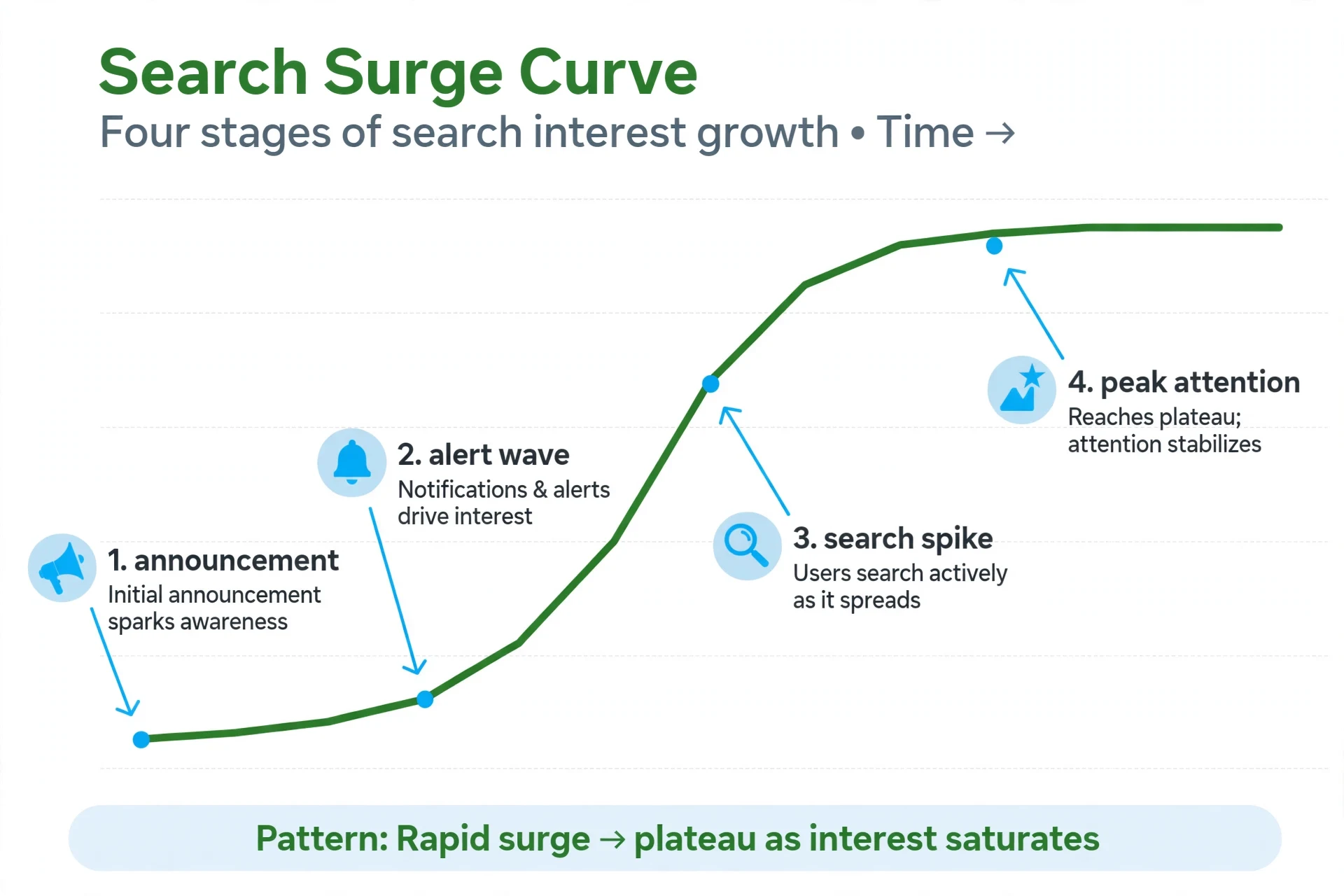
On Thursday, November 5, 2026, the Internal Revenue Service published the numbers that will shape next year’s paycheques, and within hours Americans were searching for them in force. “Tax brackets 2027” jumped more than 600 percent on Google Trends in the United States, passing 50,000 searches and still climbing, as workers, freelancers, and small business owners all asked the same question at the same time: what changes for me?
The answer is both simpler and more useful than the headlines suggest. The tax brackets 2027 announcement does not change a single tax rate. The seven rates stay exactly where they are, from 10 percent at the bottom to 37 percent at the top. What moves is the income each rate applies to. Every threshold rises by roughly 3.2 percent to keep pace with inflation, the standard deduction climbs again, and the child tax credit ticks upward. For a small business owner, those quiet adjustments matter more than they look, because they change how much of next year’s income falls into the lower brackets, how much of a paycheque reaches a bank account, and how the final weeks of 2026 should be spent.
This post is not tax advice, and it will not tell you how to file your return. It is a plain-English breakdown of what the IRS actually announced, why the searches exploded, and seven practical moves a small business owner can make before the year ends — including one marketing opportunity that is only open while the surge is still live. If you run a business, the tax brackets 2027 release is not just a news story. It is a planning moment, and the businesses that use it well will start 2027 ahead of the ones that ignore it.
What the IRS Actually Announced
The release arrived in the form the IRS uses every autumn: Revenue Procedure 2026-35, the annual inflation adjustment covering nearly 70 provisions of the tax code. The agency publishes these figures each year so that brackets, deductions, and credits keep pace with the cost of living instead of silently shrinking in real terms. The adjustment is calculated from the chained consumer price index, measured over the twelve months ending in August, and this year’s factor came in at about 3.2 percent — the largest in the last few years, reflecting the inflation that heated up through 2026.
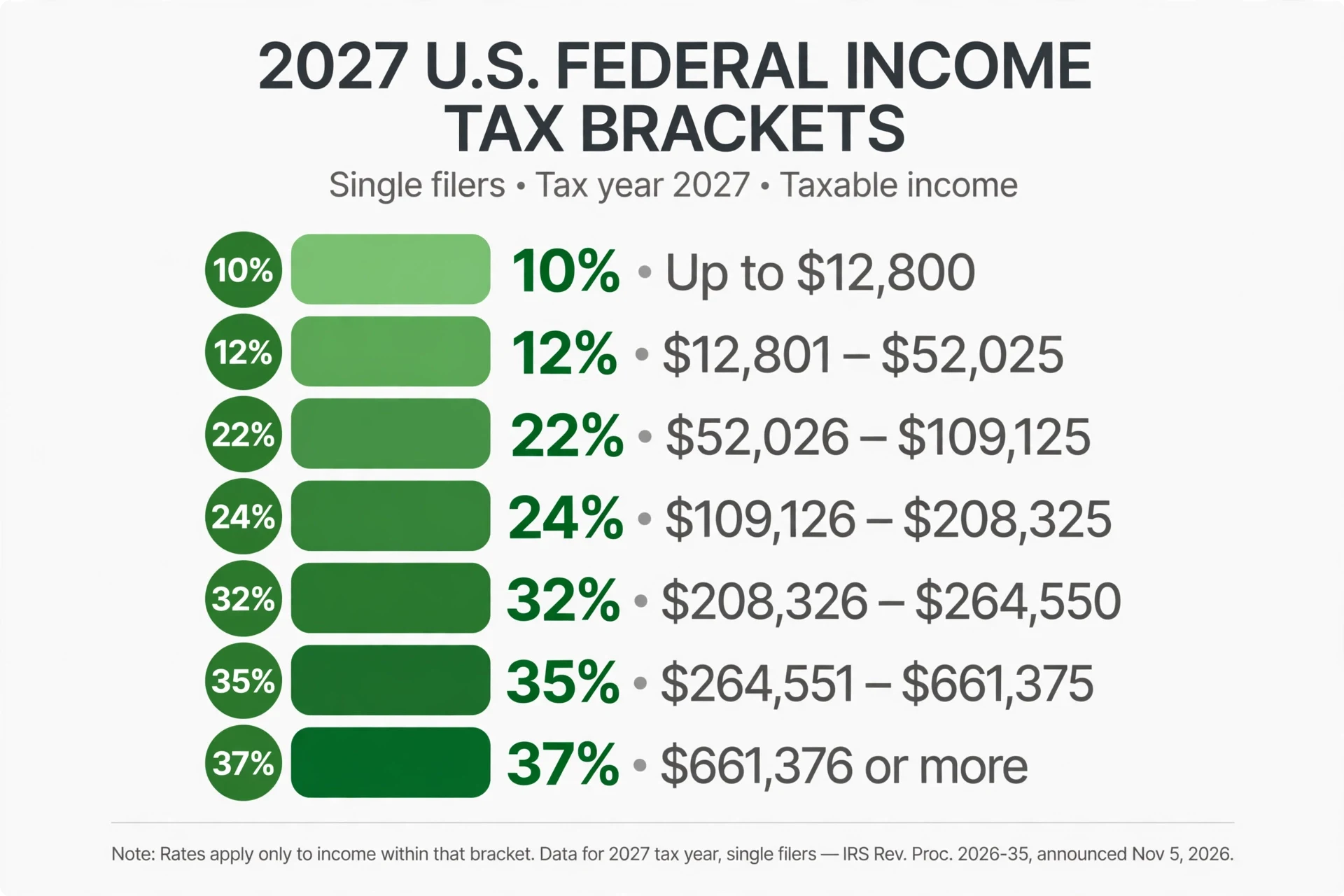
For tax year 2027, the seven federal income tax rates remain 10, 12, 22, 24, 32, 35, and 37 percent. Only the income thresholds move. For a single filer, the 10 percent rate now covers taxable income up to $12,800, up from $12,400 in 2026. The 12 percent band runs through $52,025, the 22 percent band through $109,125, the 24 percent band through $208,325, the 32 percent band through $264,550, and the 35 percent band through $661,375. Everything above that is taxed at 37 percent. Married couples filing jointly see the same shape at roughly double the width: the 10 percent rate covers income up to $25,600, the 12 percent band reaches $104,050, the 22 percent band reaches $218,250, the 24 percent band reaches $416,650, the 32 percent band reaches $529,100, and the 35 percent band ends at $793,650.
The standard deduction rises for every filing status. Single filers and married people filing separately can deduct $16,600, up $500 from $16,100 in 2026. Married couples filing jointly get $33,200, up $1,000 from $32,200. Heads of household receive $24,925, up $775 from $24,150. Because the standard deduction is the flat amount that nearly nine in ten taxpayers subtract instead of itemising, that increase alone puts a little more income beyond the reach of tax for most households.
Two other figures in the release deserve attention. The maximum child tax credit rises to $2,300 per qualifying child, up from $2,200. And the alternative minimum tax exemption climbs to $93,000 for unmarried individuals and $144,700 for married couples filing jointly. The personal exemption remains at zero, and the overall limit on itemised deductions stays eliminated. None of this changes the tax bill on income earned in 2026. The tax brackets 2027 figures apply to income earned from January 1 through December 31, 2027, and to the return filed in early 2028. The return due this coming spring still runs on the 2026 numbers.
Why “Tax Brackets 2027” Searches Exploded Overnight
A search surge is not simply a popular topic. It is a sudden, measurable spike in demand for answers, concentrated in a window of hours, and the tax brackets 2027 announcement produced a textbook one. Three forces combined to create it.
First, the tax brackets 2027 announcement landed on a question almost every working American asks once a year: how much of my pay will tax take next year? The IRS publishes these figures every autumn, but most people only think about them when the news reminds them. A 600 percent jump in searches is what happens when a routine government release meets a public that had not been thinking about it the day before.
Second, the timing is perfect for attention. Early November is the moment when small business owners start closing the books on the year, when employees start thinking about year-end bonuses and open enrolment, and when freelancers start wondering whether to accelerate income or push it into January. The tax brackets 2027 release arrives at the exact point in the calendar when its audience is already making the decisions it affects.
Third, the numbers are genuinely newsworthy this year. A 3.2 percent adjustment is the biggest in recent years, and the standard deduction crossing $16,600 for single filers and $33,200 for joint filers gives every news outlet a clean, quotable headline. Add the child tax credit increase and the higher thresholds at the top, and the story has a number for every reader. That is why the surge is still active a day later, and why it will keep drawing searches through the weekend as tax software, payroll providers, and financial planners publish their own explainers.
For a marketer, that staying power is the point. Most news surges fade within a day. A tax brackets 2027 surge behaves differently, because the question it answers — what will I owe next year — stays relevant for weeks, and it returns every time someone sits down to plan a budget, a hire, or a purchase. The businesses that publish something genuinely useful while the surge is still building will keep earning traffic from it long after the news cycle moves on.
What Did Not Change — and Why That Matters
The most misunderstood part of the tax brackets 2027 announcement is what it leaves alone. The rates did not move. Nobody’s marginal rate goes up or down because of the tax brackets 2027 release, and nobody’s tax bill changes on income already earned. What changes is the width of each band: more income fits inside the lower rates before the next rate kicks in. For a single filer earning the same amount in 2027 as in 2026, a slightly larger slice of that income will be taxed at 12 percent instead of 22 percent, and a slightly larger slice at 22 percent instead of 24 percent. The saving is modest for most people, but it is real, and it compounds across a household.
That distinction matters for two reasons. The first is accuracy. Content that claims the IRS “cut taxes” or “raised taxes” is wrong in both directions, and readers who spot the error will not trust the rest of what you publish. The second is planning. Because the change is a widening of the bands rather than a change in the rates, the smart response is not a dramatic restructuring of your finances. It is a careful review of timing: which income to recognise in 2026 and which to recognise in 2027, which deductions to take now and which to hold, and which spending to pull forward before the year closes. Those are small decisions with real money attached, and they are exactly the decisions a good accountant earns their fee on.
There is also a wider context worth knowing. The seven rates themselves were locked in permanently by the One Big Beautiful Bill Act, so the annual adjustment now moves only the thresholds, not the structure. That stability is genuinely useful for planning: a small business owner can build a three-year picture of their tax position without worrying that the rate schedule itself will be rewritten. The tax brackets 2027 release is therefore less a shock than a calibration — the system doing what it is designed to do, adjusting for inflation so that a pay rise that merely keeps pace with prices does not push a worker into a higher bracket. Economists call that protection bracket creep, and it is the quiet purpose behind the whole exercise.
1. Do Not Mix Up Your Tax Years
The first move is the simplest, and the one most people get wrong: keep 2026 and 2027 separate in your head. The tax brackets 2027 figures govern income earned in calendar year 2027, reported on the return filed in early 2028. The return you file this coming spring — the one due in April 2027 — still uses the 2026 brackets and the 2026 standard deduction of $16,100 for single filers and $32,200 for joint filers. Confusing the two years is the most common mistake in every November tax story, and it leads directly to bad decisions: people who think the new standard deduction applies to the return they are about to file, or who delay income they should have recognised this year.
For a small business owner, the separation is practical, not academic. If you are deciding whether to invoice a client in December or January, the choice now has two different sets of numbers attached to it. Income recognised in December is taxed under the 2026 brackets; income recognised in January falls under the tax brackets 2027 thresholds, with wider bands and a larger standard deduction. Neither choice is automatically better — it depends on your total income, your filing status, and your deductions — but you cannot make the choice well if you are using the wrong year’s figures. Write the two sets of numbers down, side by side, before you decide anything. The five minutes it takes will save you from the most avoidable error in year-end planning.
The same discipline applies to your content if you publish about the topic. State the tax year in the first paragraph, repeat it when you quote a figure, and never let a reader walk away thinking the tax brackets 2027 apply to the return they are about to file. Clarity here is a trust signal: readers who are planning real money decisions will remember which sources were precise and which were sloppy, and they will come back to the precise ones when tax season arrives.
2. Time Your Marketing Spend With the Calendar, Not the Headlines
The second move is where tax planning meets marketing, and it is the one most small business owners miss entirely. The end of the year is the moment when two clocks run at once: the tax clock, which rewards spending that is deductible in 2026, and the marketing clock, which rewards spending that reaches customers while they are buying. The tax brackets 2027 announcement is a useful reminder to look at both clocks together, because a marketing pound spent in December and a marketing pound spent in January can have different tax treatments and very different commercial returns.
December is the strongest buying month of the year for most consumer businesses, and it is also the last month in which spending counts against 2026 income. That combination makes a year-end marketing push unusually efficient: the same campaign that brings in holiday revenue also reduces the income the 2026 return will tax. January, by contrast, is a quieter commercial month, but spending then falls under the tax brackets 2027 regime, with its wider bands and larger standard deduction. The right split between the two months depends on your business, but the wrong approach is to decide on tax grounds alone and ignore the commercial calendar, or to decide on commercial grounds alone and ignore the tax bill.
A practical way to think about it is to separate the spending into two buckets. Bucket one is the spending that only works in December: holiday promotions, gift guides, year-end clearance, and the seasonal campaigns your customers expect now. Bucket two is the spending that works just as well in January: evergreen content, search optimisation, email automation, and the brand work that compounds over months rather than days. Fund bucket one now, while the commercial return is highest, and schedule bucket two for the new year, when the tax brackets 2027 thresholds give you a little more room. If you want help thinking through where your visibility budget earns the most, our SEO services for small businesses are built around exactly this kind of timing: being findable at the moment your customers are searching, not just when it is convenient to spend.
3. Ride the Search Surge While It Is Still Hot
The third move is the marketing opportunity hiding inside the tax brackets 2027 announcement, and it is only open for a short while. Right now, tens of thousands of Americans are searching for the tax brackets 2027, the new standard deduction, and the new child tax credit. Most of them will land on the same handful of news articles and tax software pages. But a meaningful share will keep searching for the second-order questions those pages do not answer: what does this mean for a freelancer, for a sole trader, for a business with three employees, for someone deciding whether to hire in January?
That gap is the opening. A small business that publishes a clear, accurate, genuinely useful explainer while the surge is still active can rank for the long, specific queries that the big publishers ignore. The mechanism is the same one we broke down in our stock market surge newsjacking lessons, where a market rally sent “stock market” searches past 100,000 in a day and the businesses that published quickly captured the audience at its peak. A tax brackets 2027 surge is even better suited to this play, because the audience is not just curious — it is planning. People searching for tax figures are people making decisions, and decisions are the most valuable traffic a small business can attract.
Speed matters, but accuracy matters more. A tax post with a wrong figure will be corrected in the comments, screenshotted, and remembered. Verify every threshold against the IRS tax brackets 2027 releaseor a reliable secondary source before you publish, state the tax year plainly, and link to the source so readers can check your work. Then amplify the post the way a surge demands: one sharp takeaway per social post, not a link dump, and an email to your list with a subject line that names the tax brackets 2027 announcement, because subscribers who missed the news will open an email that explains it. The surge is active now. By next week, the audience will have its answers, and the window will be closed.
4. Put the Bigger Standard Deduction to Work in Your Planning
The fourth move is the quietest, and for most households it is the most valuable. The standard deduction is the flat amount that nearly nine in ten taxpayers subtract from their income instead of itemising, and the tax brackets 2027 release raises it for everyone: $16,600 for single filers, $33,200 for married couples filing jointly, and $24,925 for heads of household. Those are increases of $500, $1,000, and $775 respectively over 2026, and they arrive on top of the enhanced standard deduction that the One Big Beautiful Bill Act already built into the 2026 figures.
For a small business owner, the practical question is whether to itemise or take the standard deduction, and the higher the standard deduction climbs, the more often the simple answer wins. Itemising only pays when your deductible expenses exceed the standard amount, and every increase in the standard deduction raises that bar. That has a direct consequence for year-end decisions: if you are close to the line, a deductible purchase made in December could be the difference between itemising and taking the standard deduction, and the value of that purchase depends on which side of the line you land on. It is the kind of calculation that takes ten minutes with a spreadsheet and a tax professional, and it is the kind that saves real money when it is done before December 31 rather than discovered in April.
There is a marketing angle here too. The standard deduction is the single most searched figure in the whole tax brackets 2027 release, because it is the one number that affects almost every reader. Content that explains it clearly — what it is, who it helps, how it interacts with itemising — will keep earning search traffic for months, because the question does not fade when the news cycle moves on. It returns every time someone sits down with a tax return. If you publish one evergreen explainer from this surge, make it the standard deduction.
5. Get Payroll and Withholding Ready for January
The fifth move is operational, and it belongs on the calendar now rather than in the first week of January, when every payroll provider is busy. Employers update their payroll tables to the tax brackets 2027 in January, and the tax brackets 2027 thresholds change the withholding calculation for every employee. The 10 percent rate now covers more income, the bands are wider, and the standard deduction is larger, which means take-home pay will shift slightly for most workers even if their salary does not change.
For a small business with employees, the job is to make sure that shift happens cleanly. Confirm with your payroll provider that the 2027 tables are loaded before the first January pay run, check that the new standard deduction is reflected in the withholding calculation, and tell your team what to expect so that nobody is surprised by a slightly different paycheque. It is a small administrative task, but it is the kind that builds trust when it is handled well and erodes it when it is not. Employees notice when their pay is right. They notice faster when it is wrong.
Freelancers and sole traders face the same question from the other side. If you pay estimated tax, the tax brackets 2027 thresholds change the calculation for 2027, and the first estimated payment under the new figures is due in April. Reviewing the estimate now, while the numbers are fresh, is far easier than reconstructing it under deadline pressure. And if you work with an accountant, send them the tax brackets 2027 release and ask one question: does anything in Revenue Procedure 2026-35 change what I should do before December 31? That single question, asked in November, is worth more than a dozen asked in April.
6. Turn One Announcement Into a Quarter of Content
The sixth move is to treat the tax brackets 2027 announcement as the start of a content programme, not a single post. Tax season is the most predictable search event in the American calendar. Every year, the same questions return in the same order: the brackets in November, the deductions in December, the filing deadline in January, the refund questions in February, and the extension questions in April. A business that maps that calendar once can publish into it for years, and the tax brackets 2027 release is the natural starting point.
Begin with the surge post itself — the explainer you publish this week, while searches are peaking. Then plan the follow-ups in order. In December, publish the year-end checklist: the deductions to claim before the 31st, the income to recognise now or defer, and the records to gather before January. In January, publish the payroll and withholding guide for employers, timed to the first pay run under the new tables. In February, publish the standard deduction explainer, aimed at the filers who are deciding whether to itemise. Each piece links to the next, and each one targets a query that the big publishers answer generically and that a small business can answer specifically, for its own audience, in its own town.
That specificity is the advantage. A national tax site can publish the brackets; it cannot publish what the brackets mean for a bakery in Austin, a gym in Denver, or a consultancy in Miami. Localising the content — the city, the industry, the kind of customer you serve — is what turns a generic news story into a lasting search asset. It is also what turns a one-day spike into a library. The Outback Steakhouse closures showed the same idea from a local angle — a neighbourhood search spike that rewarded the businesses which published clear answers quickly, as we covered in our local SEO lessons from the closures. The stories change; the method stays the same.
The habit compounds. Every surge a business covers leaves behind two things — one timely post and one lasting guide — and that growing collection is what builds authority over time. A single post about the tax brackets 2027 announcement will earn traffic for a week. A four-part series that carries a reader from the announcement through to the filing deadline will earn traffic for a season, and it will still be ranking when the next November brings the next release. That is the difference between chasing attention and owning it.
7. Talk to a Tax Professional Before You Act
The seventh move is a guardrail, and it matters most on a tax story. Tax law is specific to each person’s circumstances, readers act on what they read, and a confident-sounding suggestion from a non-expert can cost someone real money. The rule is simple: explain the news, share the framework, and leave the personal advice to a qualified professional. This post does that by design. It reports the tax brackets 2027 figures, explains how they work, and suggests the questions to ask — and it deliberately avoids telling anyone what to do with their own return.
That boundary is not a limitation. It is what makes the content trustworthy, and trust is the asset a small business is actually building. The same guardrail applies to every surge. A health trend is not an invitation to give medical advice. A legal story is not an invitation to interpret the law. A market rally is not an invitation to recommend investments. The businesses that last are the ones that know where their expertise ends and say so. Readers respect that honesty far more than they respect a confident guess, and search engines increasingly do too — content that overreaches its authority is exactly the kind that loses visibility over time.
Practically, the move is to make the call now, while accountants still have diary space. November is the month when good tax professionals do their most useful work: reviewing a client’s year, spotting the timing decisions that still have time to matter, and flagging the deductions that disappear on December 31. By January, the same professional is buried in filing season, and the advice you needed in November will arrive too late to use. Book the conversation this week, bring the IRS release with you, and ask the one question that matters: given my income, my filing status, and my business, what should I do before the year ends? The answer will be specific to you, which is precisely why it is worth paying for.
Your Year-End Checklist
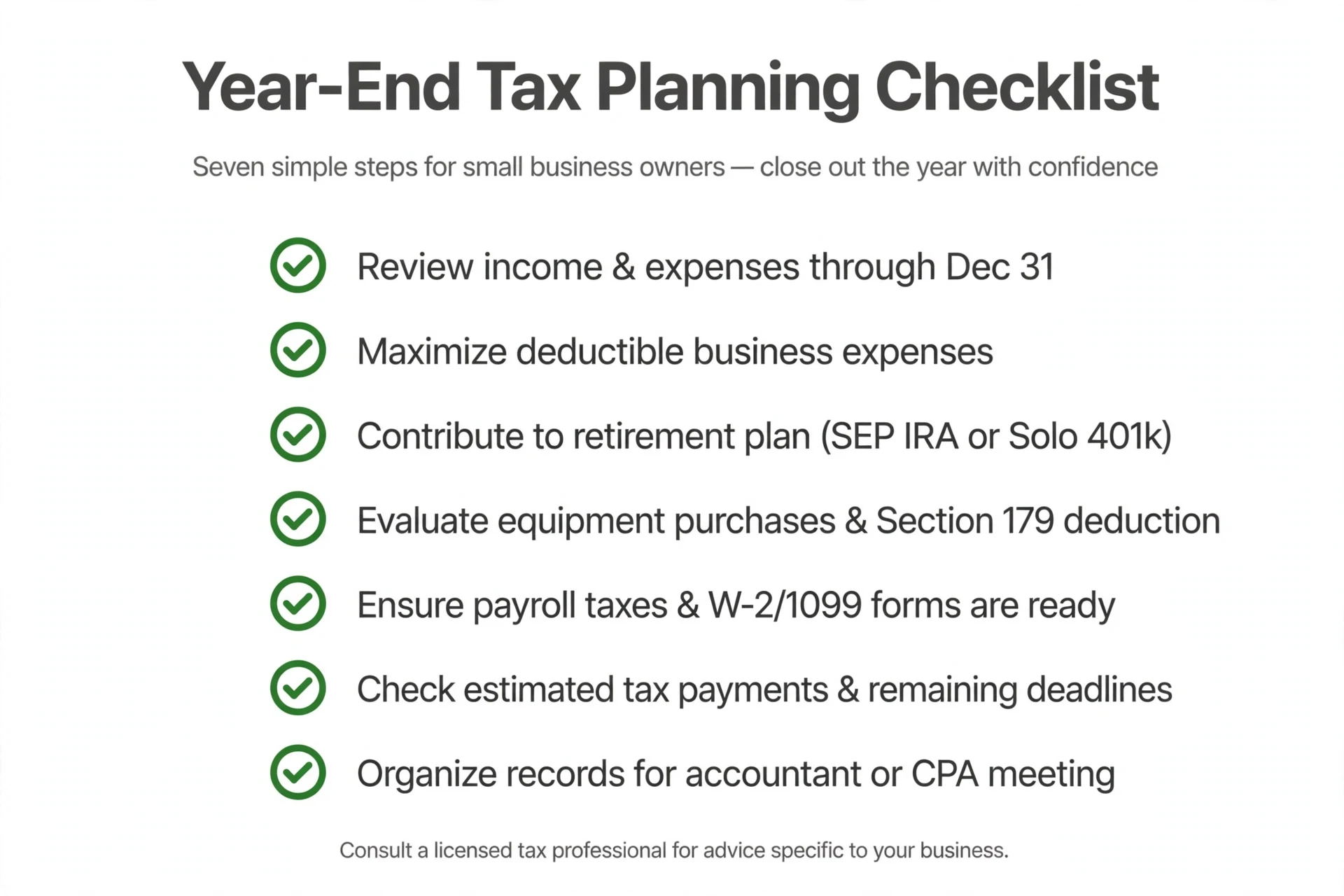
Pulling the seven moves together, here is the checklist in one place. Work through it before December, and start 2027 with the planning already done.
- Separate the tax years. The return due in April 2027 uses the 2026 figures. The tax brackets 2027 numbers govern income earned in 2027 and the return filed in 2028. Do not mix them up.
- Decide your December versus January spending. Fund the marketing that only works in December now, and schedule the evergreen work for January, when the new thresholds give you more room.
- Publish while the surge is live. The tax brackets 2027 search spike is active now. A clear, accurate explainer published this week will keep earning traffic for months.
- Review the standard deduction. At $16,600 for single filers and $33,200 for joint filers, the bar for itemising has risen again. Check which side of the line you are on before December 31.
- Prepare payroll for January. Confirm your provider has the 2027 tables loaded, and tell your team what to expect from the first pay run of the year.
- Plan the content series. One announcement becomes four posts: the brackets now, the year-end checklist in December, the payroll guide in January, and the standard deduction explainer in February.
- Book your accountant. November is when the advice is cheapest and most useful. Ask what you should do before the year ends, and do it while there is still time.
The Bottom Line
The tax brackets 2027 announcement is not a dramatic story, and that is precisely why it is valuable. No rates changed. No one’s bill moved overnight. What changed is the shape of the year ahead: wider bands, a larger standard deduction, a higher child tax credit, and a little more room in every household budget. For a small business owner, those quiet adjustments are a planning tool, a content opportunity, and a reminder that the best time to prepare for tax season is the month before it starts, not the week it arrives.
The search surge tells the same story from the other side. Tens of thousands of Americans are asking what the new brackets mean, and they are asking now, while the numbers are fresh. The businesses that answer clearly, accurately, and quickly will earn the traffic, the trust, and the customers that follow. The ones that wait until January will be writing for an audience that already has its answers.
If you want your business to be the one customers find at the moment they are searching — whether the surge is a tax announcement, a market rally, or a viral phrase like the one we broke down in our Habibi viral phrase marketing lessons — that is what we do. Talk to KKeyQik about building the kind of always-on visibility that turns a news moment into a lasting advantage, starting with the surge that is happening right now.
Frequently Asked Questions
The 2027 tax brackets are the federal income tax thresholds the IRS announced on November 5, 2026, in Revenue Procedure 2026-35. The seven rates stay at 10, 12, 22, 24, 32, 35 and 37 percent, but every income threshold rises by about 3.2 percent. For single filers, the 10 percent rate covers taxable income up to $12,800, and the top 37 percent rate applies above $661,375.
The tax brackets 2027 figures apply to income earned from January 1 through December 31, 2027, and to the tax return filed in early 2028. They do not affect the return due in spring 2027, which still uses the 2026 brackets and standard deduction. Keeping the two tax years separate is the most common mistake to avoid when planning around the announcement.
For 2027, the standard deduction is $16,600 for single filers and married people filing separately, $33,200 for married couples filing jointly, and $24,925 for heads of household. Those are increases of $500, $1,000 and $775 respectively over 2026. Because nearly nine in ten taxpayers take the standard deduction instead of itemising, this is the figure that affects the most households.
No. The tax rates did not move at all — they remain 10, 12, 22, 24, 32, 35 and 37 percent. Only the income thresholds moved, widening each band so that more income falls into the lower rates. The seven rates were locked in permanently by recent legislation, so the annual adjustment now moves only the thresholds, not the structure.
The wider bands and larger standard deduction change the timing maths for year-end decisions: which income to recognise in 2026 versus 2027, which deductions to take before December 31, and how payroll withholding is calculated from January. The effect is modest for most owners, but the decisions are worth reviewing with a tax professional while there is still time to act on them.
The maximum child tax credit rises to $2,300 per qualifying child for tax year 2027, up from $2,200 in 2026. It was one of nearly 70 provisions adjusted in the IRS release. Like the brackets, it applies to the 2027 tax year and the return filed in early 2028.
The brackets are a prompt to review timing, not a reason to spend for its own sake. December spending counts against 2026 income, while January spending falls under the 2027 thresholds, so it can make sense to fund holiday campaigns now and schedule evergreen work such as content and search optimisation for the new year. The commercial calendar should lead the decision; the tax treatment follows it.
Employers update their payroll tables to the new brackets in January, and payroll providers load the 2027 figures before the first pay run of the year. Confirm with your provider that the update is in place, check that the new standard deduction is reflected in withholding, and let your team know what to expect so nobody is surprised by a slightly different paycheque.
Bracket creep is what happens when inflation pushes wages higher on paper without increasing real purchasing power, moving taxpayers into higher brackets even though they are no better off. The IRS annual inflation adjustment exists to prevent it: by raising the thresholds each year, a pay rise that merely keeps pace with prices does not push a worker into a higher rate.
The official figures are in IRS Revenue Procedure 2026-35, published November 5, 2026, which covers the annual inflation adjustments for nearly 70 tax provisions. The IRS announcement and reliable summaries from tax publishers reproduce the full tables for every filing status, including the standard deduction and the child tax credit.